


 Français
 2026.10.26
Can Optimizers Replace Rapid Shutdown? What NEC 690.12 Really Requires
Content
Few code questions come up as often on our support desk as this one: can an optimizer replace a rapid shutdown device? The short answer is yes — sometimes. The longer answer depends far less on the word printed on the box and far more on how that box was tested and listed. If you are specifying a rooftop array in a jurisdiction that enforces the NEC, or you are a distributor fielding the same question from installers, it helps to separate what the code actually asks for from what marketing brochures imply.
Below we walk through the requirement, where module-level power electronics fit into it, and the practical checks that decide whether a given optimizer can serve as your rapid shutdown solution.
What Rapid Shutdown Is Actually Asking For
Section 690.12 of the National Electrical Code exists for one reason: to give firefighters a predictable, low-voltage zone inside the array boundary during an emergency. The core requirement has stayed stable since the 2017 edition — conductors inside the array boundary must be reduced to 80 volts or less within 30 seconds of the initiator being actuated. The array boundary itself is defined as one foot out from the array in all directions.
The editions since then have tightened the edges rather than the voltage limit:
- 2014: the first version, with a 30 V limit, a 10-second window, and a boundary measured 5 ft from the array and 10 ft from the point of entry.
- 2017: relaxed to 80 V and 30 seconds, with the boundary pulled in to 1 ft.
- 2020: added clearer language on equipment listing and on the initiator itself.
- 2023: sharpened the definitions of rapid shutdown equipment and the rapid shutdown initiator, and reinforced the role of UL 3741 as an alternative system-level path.
Two details get overlooked constantly. First, the requirement applies to conductors, not to the existence of a switch — a device must actually collapse the voltage. Second, there must be an initiator at a readily accessible location, and the system has to behave predictably when the control circuit is damaged or severed. Fail-safe behavior is part of the design, not a bonus feature.
Can an Optimizer Replace a Rapid Shutdown Device?
Yes, provided the optimizer is listed as PV Rapid Shutdown Equipment. A power optimizer is a module-level DC-DC converter, and when it is designed and tested to reduce its output to the 80 V / 30 s threshold, it satisfies the same function as a dedicated rapid shutdown box. The listing is the whole argument. Under UL 1741, rapid shutdown equipment is evaluated specifically for this role; an optimizer carrying that classification can be installed as the code-compliant shutdown means, while an optimizer evaluated only for maximum power point tracking, monitoring, or yield gains cannot — even if it happens to reduce voltage when powered down.
That distinction matters commercially because the two product families look identical on a datasheet. Before you sign off on a bill of materials, confirm three things:
- The optimizer's certificate explicitly references rapid shutdown equipment (often written as PV RSD) under UL 1741.
- The published shutdown voltage and time meet 80 V and 30 seconds at the array boundary, not just at the module terminals.
- An initiator is available and compatible — frequently built into the inverter, sometimes a separate transmitter — and the pair has been tested together.
There is also a second, increasingly common route. Under UL 3741, an entire PV hazard control system — modules, module-level devices, inverter, and wiring — can be evaluated as a combination. When a project uses a listed UL 3741 system, the array conductors may remain energized under defined conditions, and the equipment combination carries the compliance rather than any single component. That approach is elegant when all the pieces come from a tested matrix, and awkward when a substitution breaks the listing.
Optimizers vs. Microinverters vs. Dedicated RSD Hardware
All three families can satisfy 690.12, but they solve different problems and carry different cost structures. The table below is the comparison we walk through most often with installers and project buyers.
| Option | Meets 690.12? | What it adds | Typical fit |
|---|---|---|---|
| Power optimizer with RSD listing | Yes, with a compatible initiator | Module-level monitoring, shade mitigation, per-module data | Shaded or multi-orientation roofs with a string inverter |
| Power optimizer without RSD listing | No | Yield optimization only | Markets that do not require rapid shutdown |
| Microinverter | Yes, by design — no high-voltage DC on the roof | Panel-level MPPT, simple expansion, no DC arc risk in array | Small arrays, complex roofs, phased builds |
| Dedicated RSD receiver per module | Yes, with its transmitter | Nothing beyond shutdown | Keeping an existing string inverter in place |
| UL 3741 listed system | Yes, as a combination | A tested module-device-inverter matrix | Standardized designs where substitutions are controlled |
Where Optimizers Earn Their Place — and Where They Don't
On a roof with a chimney shadow, two orientations, or a client who wants to see per-panel production, an optimizer with the right listing does two jobs for one install cost. That is genuine value, and it is why the product family keeps growing.
The trade-offs are equally real. Every module gains an electronic component exposed to the same thermal cycling as the roof, plus two extra DC connections. Some optimizer architectures tie you to a single inverter brand or a specific transmitter, which constrains future service. On a clean, unshaded, single-plane array, a dedicated receiver or a microinverter design is often simpler and easier to troubleshoot a decade later.
Microinverters deserve a fair hearing here. Because conversion happens at the module, there are no high-voltage DC conductors on the roof at all, so compliance is inherent rather than conditional. For small or irregular arrays, that simplicity usually outweighs the modest efficiency trade-off. We cover the architecture in more depth in this guide to how microinverters work and where they fit.
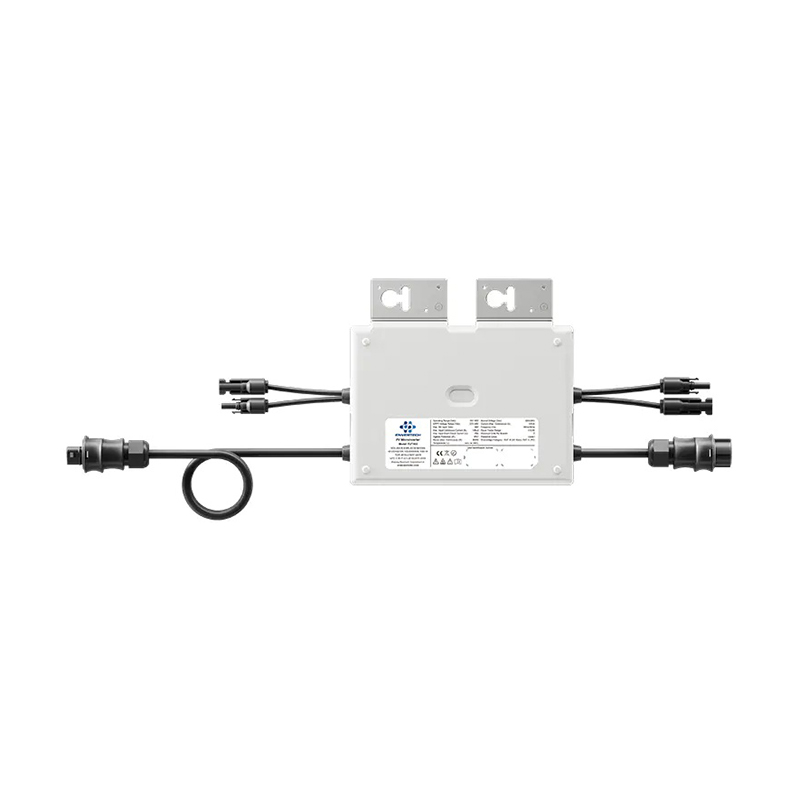 Envertech EVT800W Module-Level Micro InverterA module-level micro inverter for small or irregular PV arrays, with two MPPT channels and an outdoor-rated enclosure for per-panel conversion.View Product →
A Practical Selection Checklist
When a project lands on your desk, run it through these steps before committing to hardware. It takes fifteen minutes and saves a failed inspection.
- Confirm which NEC edition your authority having jurisdiction enforces. A 2017-compliant design may not satisfy a 2023 reviewer.
- Pull the certificate, not the brochure. Look for the UL 1741 rapid shutdown classification or the UL 3741 system listing.
- Verify the 80 V threshold at the array boundary, one foot out from the array, not at the module output.
- Confirm the initiator location, wiring method, and fail-safe response if the control conductor is cut.
- Check that the optimizer, inverter, and monitoring platform are supported as a set by the manufacturer.
- Plan the labels: rapid shutdown equipment and initiator signage are inspected as strictly as the hardware.
- Think about serviceability — how a technician reaches a failed unit in year eight matters more than a fraction of a percent of yield.
In markets outside North America, rapid shutdown in the NEC sense generally does not apply, and requirements come from IEC 62548, local fire codes, or standards such as AS/NZS 5033. Even so, the underlying logic — limiting DC hazard for emergency responders — is spreading, and module-level shutdown is increasingly specified in commercial tenders as a safety feature rather than a code obligation.
Matching the Hardware to the Compliance Path
Once the compliance route is settled, the rest of the system follows. A rooftop design using optimizers with an RSD listing will usually pair with a hybrid or string inverter that carries the initiator and the monitoring gateway — for North American residential work, a split-phase hybrid unit is the natural anchor. Larger commercial arrays lean toward three-phase string inverters or a UL 3741 combination where the module, device, and inverter are all part of a tested matrix.
 Deye US Version SUN-8K Split-Phase Hybrid InverterA split-phase hybrid inverter for North American residential systems, combining PV, 48V battery storage, and backup output in one cabinet.View Product →
From our side of the supply chain, the most common cause of a stalled project is not a technical mismatch but a documentation gap: the device is correct, yet nobody can produce the certificate or the compatibility statement at inspection time. We keep those documents alongside the products, and stock is held across EU and US warehouses so a substitution does not turn into a four-week delay.
So, can an optimizer replace a rapid shutdown device? Yes — when it is listed to do that job, paired with a compatible initiator, and documented well enough to survive an inspector's questions. When it is not, no amount of per-module monitoring data will change the outcome. If you are weighing an optimizer design against microinverters or dedicated shutdown hardware, send us the array layout and the code edition you are working to; we will tell you plainly which route we would take, and where the documentation lives. You can reach the team through our contact page.







3+ Branch Offices
1+ Factory
Required fields are marked


Copyright @ Hangzhou Seetek New Energy Sci-tech Co., LtD. All rights reserved Solar Energy Storage Solution Solar Energy Storage Products Supplier
