


 Français

Industry Knowledge
What "On-Grid" Really Means for Your Project's Grid Connection
An on-grid inverter has one job: take the DC power from your solar array and convert it into AC power that matches your utility grid's voltage, frequency and phase — perfectly, and continuously. There's no battery in the loop, so the energy your panels produce either powers your loads directly or flows out to the grid in real time.
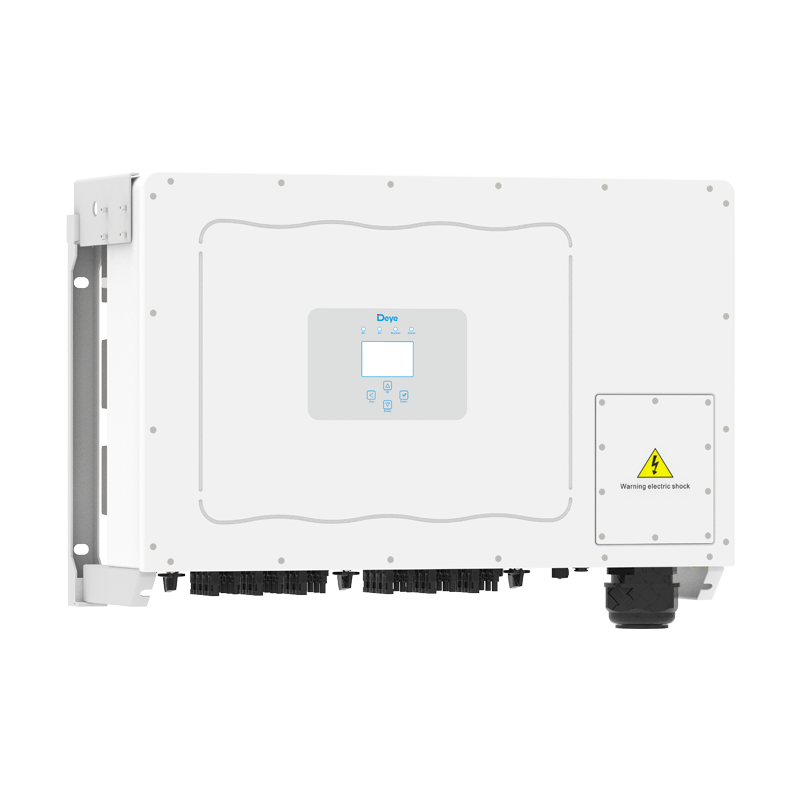
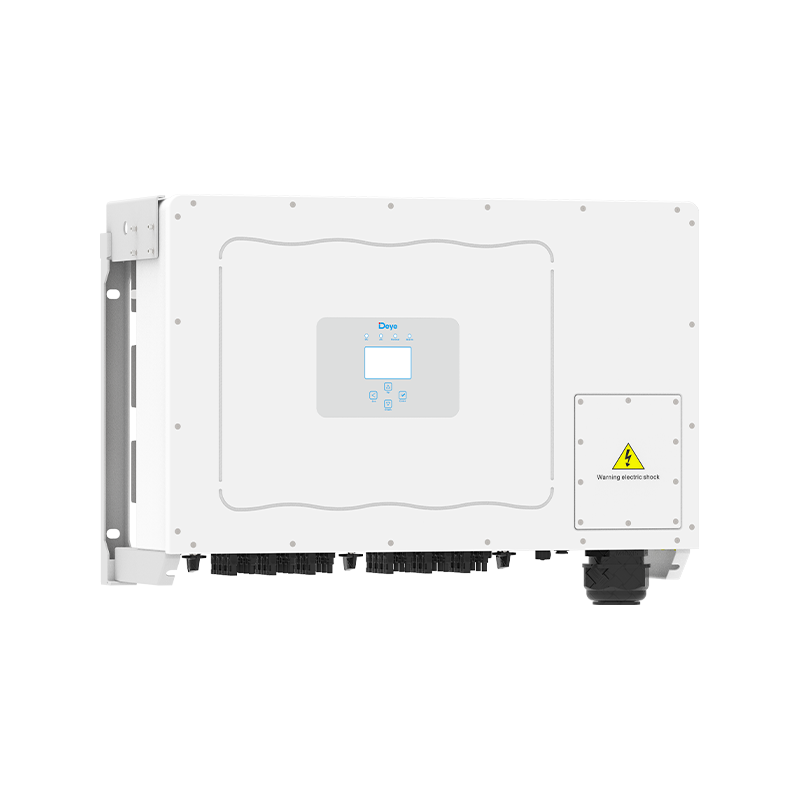
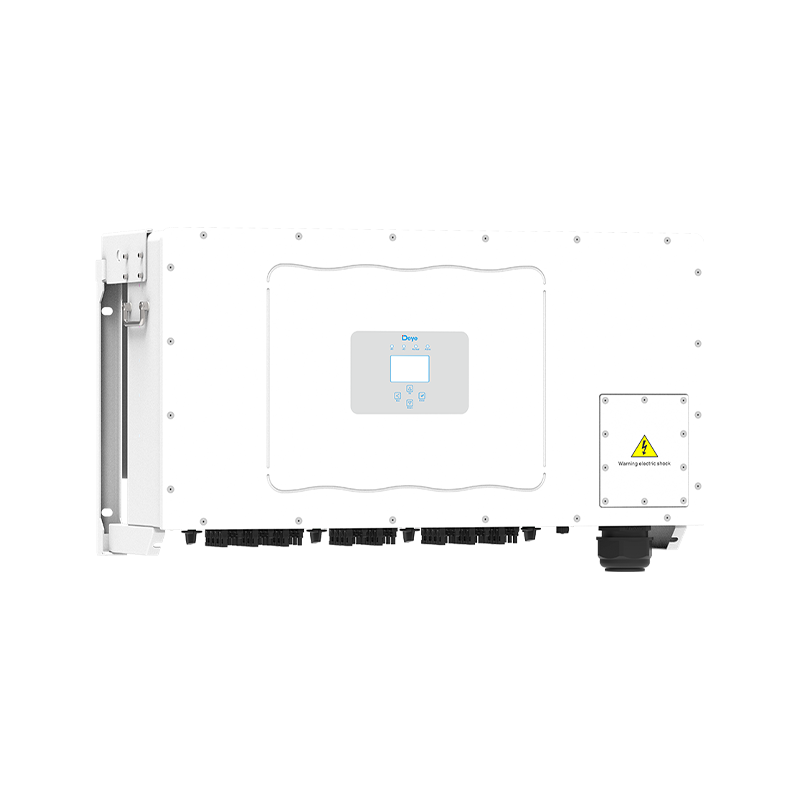
This also means the inverter needs to speak the same "language" as your local grid. Our SUN-100K-G03, for example, supports three-phase output at both 220/380V and 230/400V, covering the two most common regional standards. Built-in anti-islanding protection automatically disconnects the system if the grid goes down, keeping both the network and your equipment safe.
If a project calls for backup power or stored energy, that's a job for a hybrid system instead. On-grid units are purpose-built for the opposite case — projects where direct grid-tied generation is the priority, keeping the system simpler, lighter and lower in cost.
Conversion Efficiency: The Number That Drives Your Solar ROI
Without a battery to buffer losses, every percentage point of conversion efficiency in an on-grid inverter goes straight to your bottom line. If 2% of your DC output is lost in conversion, that's 2% less energy to power your site or sell back to the grid — every single day, for the life of the system.
That's why Deye's on-grid lineup is built around high peak efficiency ratings, often above 98%. Over a 10 or 20-year project lifetime, that efficiency gap compounds into a meaningful difference in total energy yield — and for commercial projects sized at 80kW, 100kW or 125kW, even small percentage differences translate into real money.
When comparing inverters, efficiency deserves the same attention as price. A slightly cheaper unit with lower efficiency can end up costing more once you factor in years of reduced output.
Scaling Up: How On-Grid Inverters Support Large Solar Installations
Large rooftops rarely have a single, uniform surface. Different roof sections face different directions, some areas get partial shading at certain times of day, and cable runs need to stay manageable. This is where multiple MPPT inputs make a real difference — each tracker can manage its own string independently, so the inverter keeps pulling maximum power from every part of the array, even when conditions vary across the roof.
Our SUN-80K-G03 offers 4 MPPT inputs, giving installers real flexibility when laying out strings across a complex commercial roof. For even larger sites, units like the SUN-100K-G03 and SUN-125K-G01P3-EU-AM8 can be deployed in multiples and operated in parallel, allowing the system to scale from a single rooftop to a multi-megawatt installation without changing the underlying technology.
This modular approach means your inverter strategy doesn't need to change as your project grows — just the number of units.
From Rooftop to Solar Farm: On-Grid Inverters for Growing Projects
Many commercial solar projects don't start at their final size. A warehouse might begin with a partial rooftop installation, then expand to cover the full roof a year later. A developer might start with one site and roll the same design out across a portfolio of properties.
Because our 80kW, 100kW and 125kW on-grid models share a common design platform, expanding a system later on doesn't mean reworking your inverter strategy from scratch — additional units can be added alongside existing ones as the array grows. For developers managing several sites or phased rollouts, this consistency also simplifies spare parts, monitoring and maintenance across the whole portfolio.
If you're planning a phased project, our team can help you map out an inverter strategy that works for both your current capacity and where the project is headed.