


 Français
 2025.03.03
The Future of Solar: Key Trends to Watch in 2026
Content
- 1 I. Milestones in Installed Capacity and Power Generation: Solar Surpasses Coal Power to Become a Pillar of Electricity
- 2 II. Technological Iteration: N-Type Fully Dominates, Perovskite Tandem Cells Usher in a New Era of High Efficiency
- 3 III. Application Revolution: Solar-Storage Integration Becomes a Necessity, Full-Scenario Penetration Accelerates
- 4 IV. Policy and Trade: From Subsidy Dependence to Value Competition, Global Pattern Restructuring
- 5 V. Globalization and Regional Differentiation: Emergence of Emerging Markets, Quality Improvement and Efficiency Enhancement in Mature Markets
- 6 Conclusion: Towards a New Era of Efficient, Inclusive, and Intelligent Solar Energy
2026 will be a critical turning point for the solar industry, shifting from scale expansion to value creation. The global energy structure is undergoing a historic transformation, with solar installed capacity and power generation share both breaking milestones. Technological iteration drives breakthroughs in both efficiency and cost, solar-storage integration restructures the new power system, and the global market and policy landscape are deeply reshaped. Below are the five core trends in the solar industry in 2026, covering the entire chain of technology, market, policy, application, and globalization.
I. Milestones in Installed Capacity and Power Generation: Solar Surpasses Coal Power to Become a Pillar of Electricity
Global solar energy is entering a phase of "dual leap in scale and value," with installed capacity and power generation share simultaneously breaking key thresholds, marking a century-long restructuring of the energy landscape.
-
Installed Capacity Milestone: Predictions from the IEA and multiple national institutions indicate that global renewable energy power generation will surpass coal power for the first time in 2026, becoming the world’s largest source of electricity. China’s solar installed capacity will officially exceed coal power, with the share of non-fossil energy installed capacity rising to 63% and coal power dropping to around 31%. Global new photovoltaic (PV) installed capacity is expected to reach 500–667 GW, with China adding 180–240 GW. Although there will be a phased correction compared to 2025, it will still lay the foundation for high growth in the "14th Five-Year Plan" period.
-
Surge in Power Generation Share and Investment: The share of solar and wind energy in global total power generation will rise from 15% in 2024 to nearly 20% in 2026. Global clean energy investment will reach 2.2 trillion US dollars, of which PV projects will attract 450 billion US dollars, accounting for more than 20%, and energy storage investment will approach 66 billion US dollars. In 2026, US utility-scale new installed capacity will hit a record high of 86 GW, with solar and energy storage accounting for 79% of the annual plan, marking the substantial acceleration of the energy transition.
II. Technological Iteration: N-Type Fully Dominates, Perovskite Tandem Cells Usher in a New Era of High Efficiency
In 2026, PV technology will enter a watershed where N-type fully replaces P-type and diversification proceeds in parallel, with efficiency breakthroughs and cost reductions advancing simultaneously, moving from "mass production popularization" to "value competition."
-
N-Type Technology Fully Dominates, P-Type Accelerates Phase-Out: P-type PERC production capacity will basically withdraw from the mainstream, with TOPCon, HJT, and BC (back-contact) sharing the market. TOPCon will become the main force in mass production due to its production line compatibility and cost-effectiveness, with a market share exceeding 40%. HJT’s advantages of low-temperature adaptation and low attenuation are prominent, suitable for BIPV and flexible scenarios. BC battery laboratory efficiency reaches 27.8%, and mass production efficiency breaks through 28.7%. In 2026, its market share will rise from 15% to more than 30%, becoming the first choice for the high-end market. Leading enterprises have set new records in certified efficiency, with JinkoSolar’s TOPCon battery maximum efficiency reaching 27.79%.
-
GW-Scale Pilot Production of Perovskite Tandem Cells, Efficiency Exceeds 30%: Perovskite/silicon tandem technology is accelerating commercialization. In 2026, there will be 8 global GW-scale production lines, and 23 grid-connected projects will be completed in China. The average efficiency of tandem cells reaches 32%–34%, with laboratory efficiency breaking through 33.08% and energy density reaching 400Wh/kg, laying the foundation for the next generation of PV. Flexible perovskite commercialization is accelerating, with a bending radius of 30cm and an efficiency of over 24%, suitable for household and mobile scenarios.
-
Dual Drivers of System Cost Reduction and Process Innovation: The average price of modules will drop to 0.096 US dollars/watt, a year-on-year decrease of 7%. 1600V high-voltage systems, tracking brackets, and intelligent operation and maintenance will be fully popularized, reducing the levelized cost of electricity (LCOE) of power stations to below 0.014 US dollars/kWh. Process upgrades have achieved remarkable results: ALD passivation technology stabilizes the surface recombination rate below 10cm/s, the line width of metallized electrodes is reduced to below 50μm, module power is increased by 10–15W, and the fluctuation between batches is controlled within 0.1%.
III. Application Revolution: Solar-Storage Integration Becomes a Necessity, Full-Scenario Penetration Accelerates
In 2026, PV + energy storage will upgrade from an "optional supporting facility" to a "necessary standard configuration" for the new power system. Full-scenario penetration and business model innovation will break out simultaneously, improving both energy utilization efficiency and economic benefits.
-
Mandatory Energy Storage Allocation Policies, Solar-Storage Integration Becomes Standard: The energy storage allocation ratio for new industrial and commercial PV projects in China will be raised to 10%–20% with a duration of 2–4 hours. The US IRA’s ten-year tax credit and the EU’s REPowerEU plan promote the joint deployment of solar and energy storage. Solar-storage integration increases the self-consumption rate of PV from 80% to 95%, and participation in peak shaving can bring an additional 25% auxiliary service income, shortening the investment payback period to 5–7 years.
-
Diversified Application Scenarios: Distributed PV will account for more than 65%, becoming the absolute main force of the market. BIPV will move from demonstration to popularization, adapting to building curtain walls and roofs. Large-scale implementation of agricultural-PV, fishery-PV complementarity, and transportation PV (such as highway canopies) will realize the coordination of "power generation + industry + ecology." Zero-carbon parks will be fully covered by solar-storage microgrids, with a single park’s PV installed capacity exceeding 50MW, energy storage exceeding 20MWh, annual carbon reduction exceeding 100,000 tons, and electricity costs reduced by 30%.
-
Source-Grid-Load-Storage Coordination, Large-Scale Virtual Power Plants: AI and big data realize accurate prediction of energy flow. Virtual power plants aggregate distributed PV, energy storage, and controllable loads to participate in power grid dispatching and improve system flexibility. Household solar-storage becomes popular, with the system cost dropping to 0.17–0.22 US dollars/W, and the penetration rate of household energy storage in Europe reaching 60%.
IV. Policy and Trade: From Subsidy Dependence to Value Competition, Global Pattern Restructuring
In 2026, global policies and trade rules will adjust rapidly. China’s PV industry will shift from "scale export" to "value export," and international trade will move from "cost competition" to "technology and localization competition."
-
Cancellation of China’s Export Tax Rebates, Industry Shifts to Value Competition: Starting from April 1, 2026, the export tax rebate for PV products will be fully canceled, and the tax rebate for battery products will be phased down, marking the industry’s transition from "policy support" to "independent development". Policies will force industrial upgrading: leading enterprises’ R&D investment ratio will rise to more than 8%, strict energy efficiency standards will be implemented, and PERC battery efficiency must be ≥24.2% to eliminate low-price vicious competition. The industry will differentiate in the short term, and profit margins will recover in the long term, with the gross profit rate expected to rise to more than 15% in the second quarter.
-
Escalation of Global Trade Barriers, Localized Overseas Expansion Becomes Mainstream: The US maintains high tariffs on China, extending to the Southeast Asian "detour export" market. India, Indonesia, and Laos impose component tariffs of up to 143.3%. The EU’s CBAM policy forces enterprises to undergo low-carbon transformation. Chinese enterprises are accelerating global layout: production capacity of Southeast Asian bases is being released, with overseas shipments accounting for more than 40%, shifting from "product export" to "integrated export of technology, services, and brands". The market is stratified: the high-end European and American markets value technology and brands, with a product premium of 10%–15%; emerging markets focus on cost-effectiveness and services.
V. Globalization and Regional Differentiation: Emergence of Emerging Markets, Quality Improvement and Efficiency Enhancement in Mature Markets
The global solar market presents a pattern of "steady growth in mature markets and explosive growth in emerging markets." Regional differentiated development promotes the balanced advancement of the global energy transition.
-
Regional Growth Differentiation: China and the US are the main growth drivers, with China’s newly installed capacity accounting for nearly 40% of the world's, and the US solar-storage installed capacity hitting a record. India, the Middle East, and Southeast Asia have become new growth poles. India’s power demand grows at a rate of 6.6%, and PV installed capacity in Saudi Arabia and Pakistan expands rapidly. The global share of PV and wind energy rises to more than 19%, and renewable energy becomes the core undertaker of power demand growth.
-
Global Restructuring of the Industrial Chain: China remains the core of the industrial chain, with silicon material, silicon wafer, and module production capacity accounting for more than 70% of the world. India, the Middle East, and Southeast Asia are accelerating localized manufacturing, forming a multi-polar supply system. According to a Wood Mackenzie report, the global clean technology supply chain is entering a stage of strategic integration from overcapacity, and the restructuring of geographical layout is accelerating.
-
Technology and Standard Coordination: The promotion of global unified standards for high-efficiency modules, energy storage interfaces, and intelligent operation and maintenance, and the popularization of international standards such as EN 1004, reduces the cost of cross-market deployment. AI operation and maintenance, and digital twin technology are widely applied, improving power station operation and maintenance efficiency by 30% and shortening fault response time to the hourly level.
Conclusion: Towards a New Era of Efficient, Inclusive, and Intelligent Solar Energy
2026 is a critical year for the solar industry to transform from quantitative to qualitative change. Five major trends—installed capacity surpassing coal power, N-type technology dominance, solar-storage integration becoming a necessity, policy and trade restructuring, and global pattern reshaping—jointly promote solar energy to become the core pillar of the global energy transition. In the future, with the breakthrough of cutting-edge technologies such as perovskite tandem cells and space PV, and the maturity of models such as source-grid-load-storage coordination and virtual power plants, solar energy will achieve "high efficiency and cost reduction, inclusive popularization, and intelligent control," providing solid support for global carbon neutrality goals and energy security.
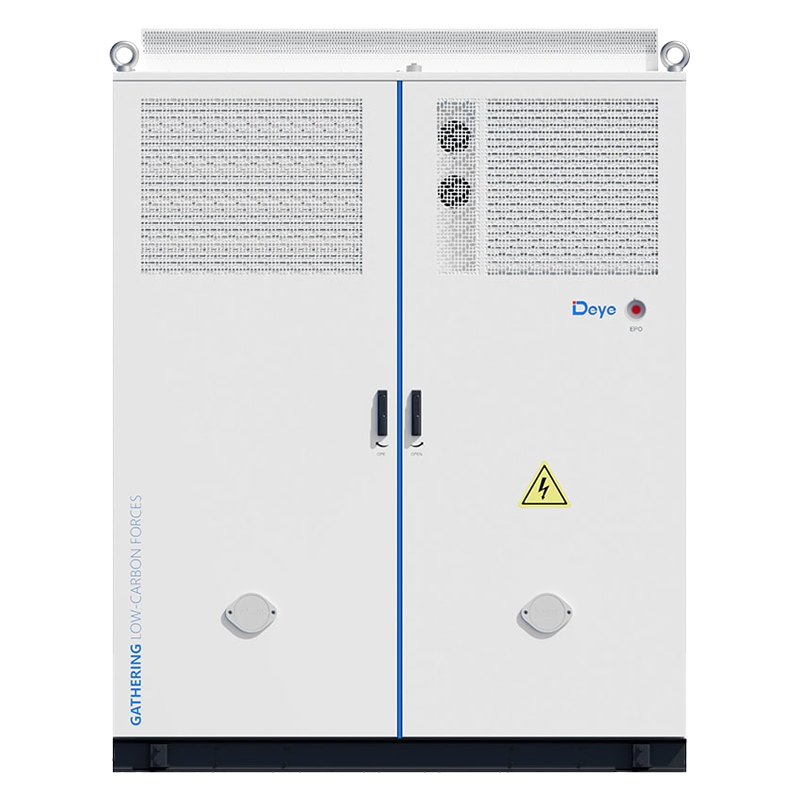
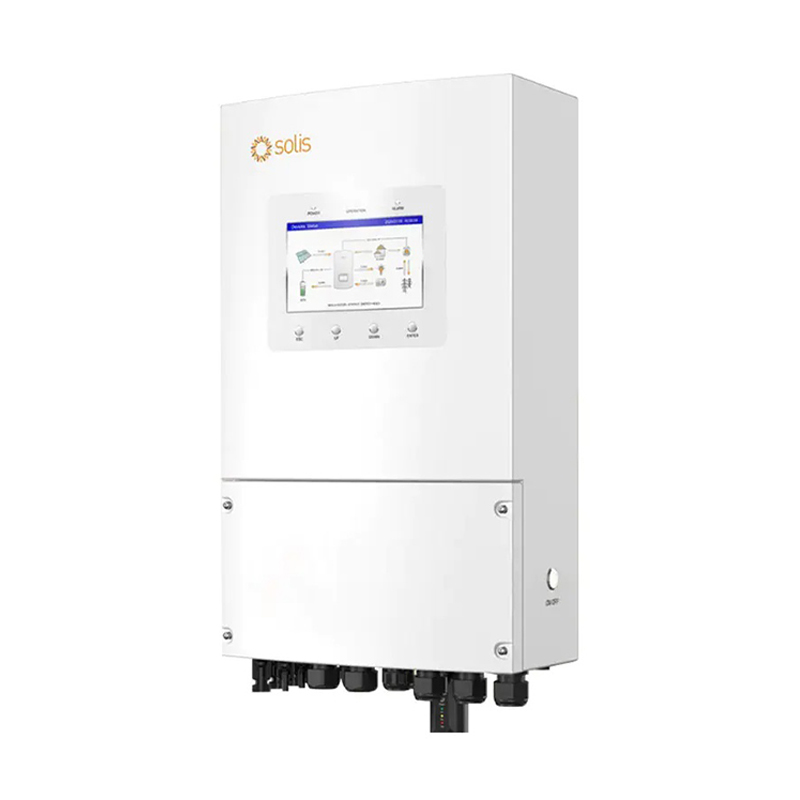
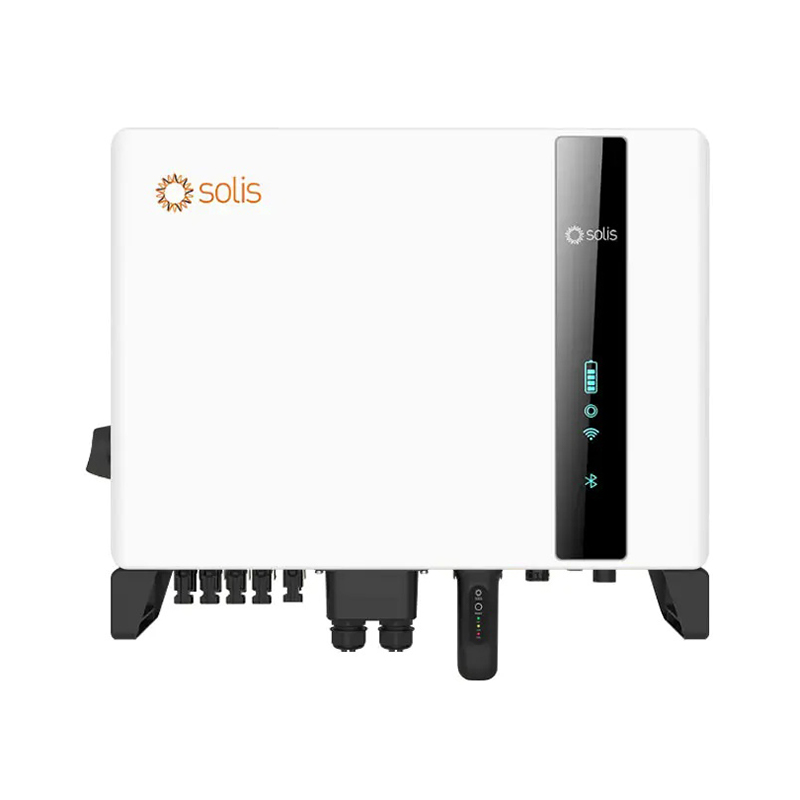
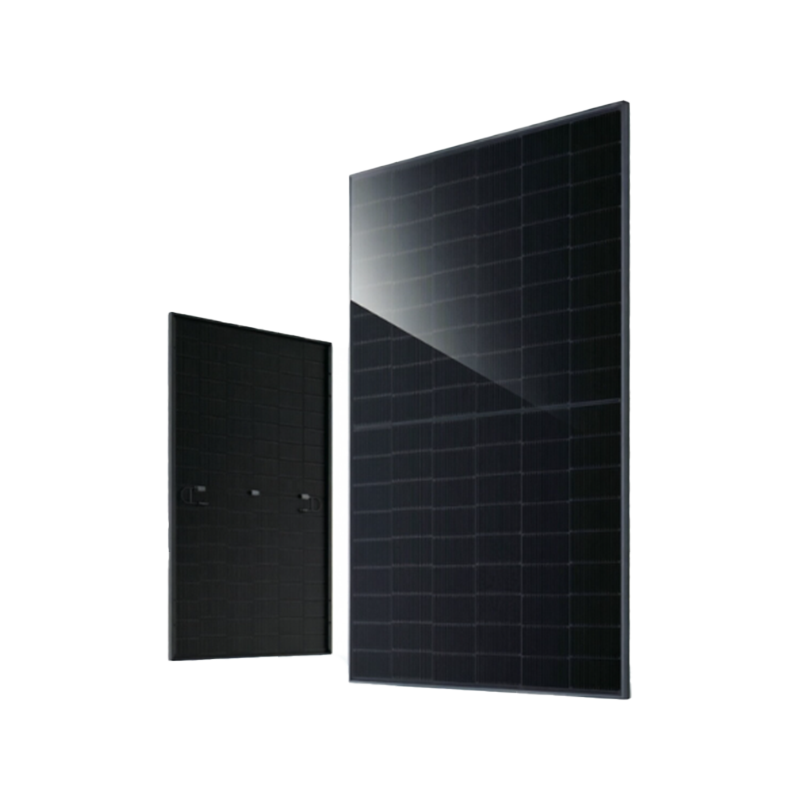
Recommended Products
We select the most popular photovoltaic and energy storage products on the market, guaranteeing quality and offering immediate supply.







7+ Overseas Warehouses
3+ Branch Offices
1+ Factory
3+ Branch Offices
1+ Factory
Get in Touch
Your email address will not be published.
Required fields are marked
Required fields are marked

> Your Trusted Global Supply Platform for Solar Energy Storage Products <

Copyright @ Hangzhou Seetek New Energy Sci-tech Co., LtD. All rights reserved Solar Energy Storage Solution Solar Energy Storage Products Supplier
