


 Français
 2026.09.21
AS/NZS 5033 Photovoltaic Arrays: A Practical Compliance Guide for Installers
Content
Photovoltaic arrays are the only part of a solar installation where live direct current conductors sit exposed on a roof or a frame, often at several hundred volts, and often for decades. AS/NZS 5033, formally titled "Installation and safety requirements for photovoltaic (PV) arrays", exists for exactly that reason. It governs the d.c. side of a solar installation in Australia and New Zealand, from the module output through the string and array wiring to the d.c. input of the inverter.
The current edition dates from 2021, and the amendments published since then have reshaped a few long-standing habits, most notably around rooftop d.c. isolators. Because AS/NZS 5033 is called up by AS/NZS 3000 and referenced by network operators, state electrical regulators and installer accreditation schemes, compliance is a commercial requirement as much as a technical one. Whether you design, install, inspect or supply equipment for these markets, the standard sets the ground rules you will be measured against.
What AS/NZS 5033 Covers, and What It Leaves to Other Standards
AS/NZS 5033 is fundamentally a d.c. standard. It addresses array and string design, voltage limits, cable selection and support, overcurrent protection, isolation devices, earthing and bonding, labelling, and the verification documentation handed over at commissioning. It deliberately stops short of several neighbouring subjects, and knowing where the boundary sits saves a lot of guesswork during design review.
| Standard | Scope |
|---|---|
| AS/NZS 5033 | PV array design, d.c. circuits, protection, isolation and labelling |
| AS/NZS 4777.1 | Grid connection of inverter energy systems and commissioning |
| AS/NZS 3000 | Wiring Rules, general electrical installation requirements |
| AS 5139 | Battery energy storage systems |
| AS/NZS 1170.2 | Wind actions on structures, including mounting frames |
| AS/NZS 1768 | Lightning protection, where the site assessment requires it |
On a grid-connected rooftop system, AS/NZS 5033 sits above AS/NZS 4777.1 and AS/NZS 3000 in the design sequence: the array and its d.c. circuit are settled first, then the inverter's grid interface. Confusing the two is one of the most common sources of documentation errors.
Voltage Limits and String Design
The maximum d.c. voltage of a PV array is capped by the standard, and the cap depends on where the array is installed. Arrays mounted on residential buildings sit under a lower ceiling, while other buildings and ground-mounted arrays may operate at higher limits where the conditions in the standard are satisfied. The practical consequence is simple: string voltage must be calculated at the lowest expected cell temperature, not at nameplate or test conditions, using the module's open-circuit voltage temperature coefficient. A string measuring comfortably below the limit on a mild afternoon can exceed it on a cold, bright morning.
The other half of the calculation looks the other way. Strings must still deliver adequate voltage for the inverter's maximum power point tracking window at the highest expected operating temperature, which is where module choice and channel assignment meet. Getting that balance right is a design exercise in its own right, and our overview of matching modules to MPPT channels explains how channel count and string layout interact on real projects.
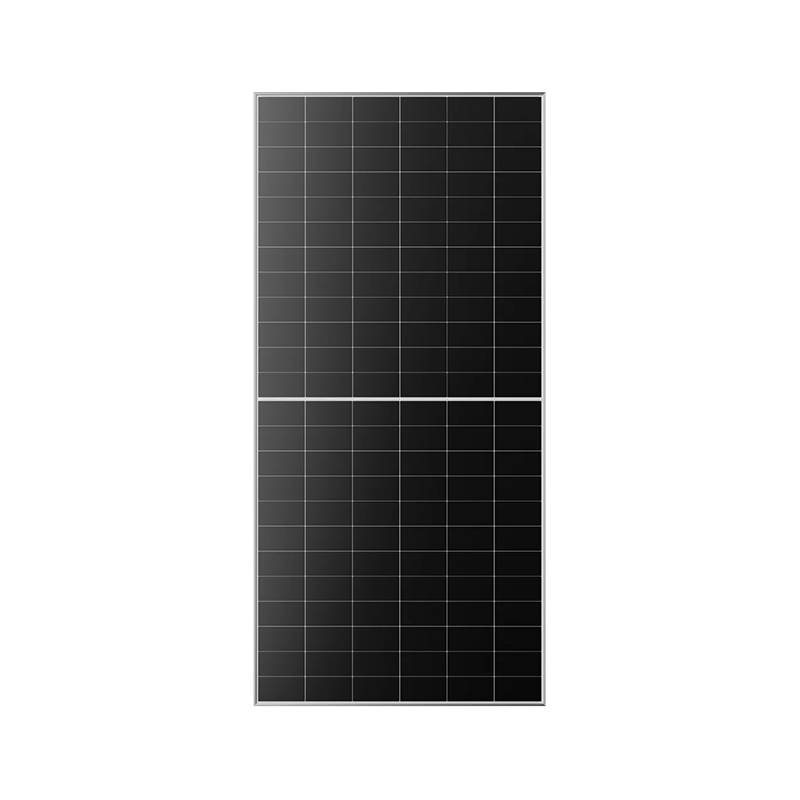 LONGi Hi‑MO X10 Scientist LR8-66HVD-640M PV ModuleThe LONGi Hi-MO X10 Scientist LR8-66HVD-640M is a 640W high-power dual-glass photovoltaic module designed for commercial rooftop solar, industrial distributed PV, larg...View Product →
Isolation, Protection and Switching Devices
Every array needs a means of isolation rated for d.c. operation and for the fault current available at that point in the circuit. This is not a formality. Direct current arcs do not self-extinguish the way alternating current arcs do at a zero crossing, and a switch that was never designed for d.c. can fail in a way that a visual inspection will never reveal. The same logic applies to string overcurrent protection, which becomes necessary once parallel strings can feed a fault between them.
- Array-level and inverter-level d.c. isolation, with load-break rating and enclosure protection suited to the location.
- String overcurrent protection where three or more strings are connected in parallel at a combiner or inverter input.
- Devices rated for the maximum array voltage, with polarity and string identification clearly marked.
- Signage covering maximum array voltage, dual supply warnings, array identification and shutdown information.
The 2021 edition and its amendment changed the long-standing expectation of a d.c. isolator on the roof itself. In defined configurations, typically smaller arrays with limited string counts and adequately protected cable runs, the rooftop isolator may be omitted. That is a documented design decision, not a shortcut, and it should be recorded in the design file with the reasoning behind it.
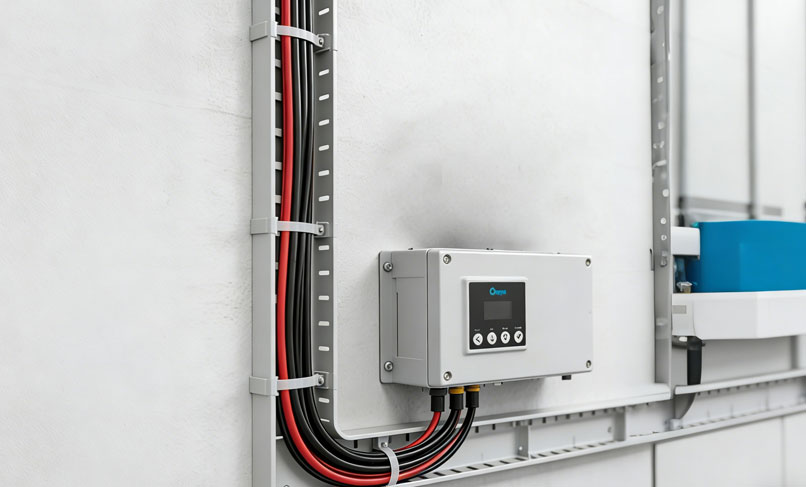 Combiner Box ManufacturersCategories Inverters Hybrid InverterView Product →
Cables, Earthing and Mechanical Protection
PV d.c. cables must be rated for the system voltage, commonly 1.5 kV d.c., and be double insulated, UV stable and suitable for the temperature at the point of installation. Conductor sizing has to satisfy both the current-carrying requirement, typically at least 1.25 times the module short-circuit current, and the voltage drop budget across the whole run. Undersized cable is one of the quieter inefficiencies in rooftop systems, because it costs nothing to notice at design stage and everything to correct afterwards.
Earthing and bonding is the second area where inspections habitually find gaps. Module frames, rails and any exposed conductive parts of the array must be bonded to earth with correctly sized conductors and connectors rated for the outdoor environment. Bonding is not the same as lightning protection; where a site assessment calls for it, AS/NZS 1768 applies and d.c. surge protection becomes worth considering, particularly on exposed or elevated installations.
Mechanically, d.c. cables should be routed in the shadow of the array, clipped or run in conduit, and protected from sharp edges, thermal cycling and wildlife. Mounting structures need a wind rating calculated for the actual site and roof zone, not inherited from a previous project. That single omission accounts for more non-compliance findings than most electrical faults.
Mounting Systems ManufacturersCategories Inverters Hybrid InverterView Product →Verification, Testing and Documentation
AS/NZS 5033 requires that the array be verified and documented before handover, not after. In practice that means carrying out a defined set of tests, recording the results, and leaving an array schedule and layout drawing on site so the next person to open the roof space can understand what they are looking at.
- Visual inspection of polarity, cable routing, enclosure protection ratings and labelling.
- Continuity testing of earthing and bonding conductors across the array.
- String open-circuit voltage, measured per string and compared with the calculated value.
- Short-circuit or operating current measured per string to confirm consistent performance.
- Insulation resistance of the d.c. array circuit, tested at the voltage level appropriate to the array and verified against the minimum acceptable value of 1 MΩ.
- Completion of the array schedule, string configuration records and the compliance checklist.
Whoever signs that paperwork carries the responsibility for it, so the quality of the supporting file matters. Keeping original module datasheets, inverter certificates and string calculations together from day one turns an inspection into an hour of work rather than a week of reconstruction.
Sourcing Components for AS/NZS 5033 Projects
Seetek Power International supplies photovoltaic and energy storage systems to installers, system integrators and project developers worldwide. As an authorised partner and distributor for Deye, we hold the full inverter, battery and accessory range, and we complement it with modules from other leading manufacturers plus the balance-of-system components that a compliant array actually needs. That combination matters for compliance work, because an array is only as documented as its weakest datasheet.
- Certificates of conformity and test reports for modules and inverter d.c. inputs.
- Datasheets stating maximum system voltage ratings and open-circuit voltage temperature coefficients.
- Cable, connector and enclosure specifications that match the array voltage class.
- Mounting and bonding accessories rated for the site's wind and corrosion environment.
We ship from three channels, direct from China, from our EU warehouse or from our US warehouse, and we maintain a technical library of inverter manuals, battery documentation and module datasheets, some of it in German and Polish for European projects. For a design team working to AS/NZS 5033, that library is often the difference between a submission that moves and one that stalls.
AS/NZS 5033 is not a document that rewards shortcuts, but it is not an obstacle either. Arrays are simple systems until one detail is wrong, and the detail is almost always voltage, isolation or documentation. Get the string calculation right at the coldest expected temperature, choose isolation devices rated for d.c., bond the array properly, and record every measurement. Do that, and the standard stops being a compliance burden and starts being the reason your installations pass inspection the first time.








3+ Branch Offices
1+ Factory
Required fields are marked


Copyright @ Hangzhou Seetek New Energy Sci-tech Co., LtD. All rights reserved Solar Energy Storage Solution Solar Energy Storage Products Supplier
