


 Français
 2026.09.28
Battery Storage Regulations: A Practical Guide for Solar and Storage Pros
Content
- 1 What "Battery Storage Regulations" Actually Covers
- 2 Layer One: Product Safety and Market Access
- 3 Layer Two: Grid Connection Codes
- 4 Layer Three: Fire, Building and Installation Rules
- 5 A Market-by-Market Snapshot
- 6 The Permit and Approval Paper Trail
- 7 Common Compliance Pitfalls
- 8 How SEETEK Supports Compliance-Driven Procurement
Battery storage regulations sit at the crossroads of electrical safety, grid stability, fire protection and environmental policy. For anyone specifying, installing or distributing energy storage systems, the rules are not a single document you can file once and forget. They arrive in layers: product standards that decide whether hardware may legally be sold, grid codes that define how a system interacts with the public network, building and fire requirements that govern where a battery may be installed, and permitting procedures that change from one municipality to the next.
At SEETEK Power International we ship photovoltaic and storage hardware into Europe, North America and other markets every week, and the questions we receive have shifted. A few years ago most buyers asked about capacity and lead time. Today they ask for IEC and UL test reports, country-specific grid certificates, and written confirmation that a battery model is covered by the standards currently in force. This guide summarises how the framework looks in 2026 and what it means in practice.
What "Battery Storage Regulations" Actually Covers
The phrase is used loosely, and that is where confusion starts. In practice, five separate rule sets apply to almost every storage project, and each one has a different owner and timeline.
- Product safety rules: the standards a cell, module or complete system must meet before it can be placed on the market.
- Grid connection codes: the technical conditions an inverter or control system must satisfy to run in parallel with a public network.
- Fire and building codes: requirements covering location, separation distances, ventilation, detection and signage.
- Permitting and registration: the local administrative process, from application to inspection and final sign-off.
- Transport, labelling and end-of-life duties: how batteries may be shipped, marked and eventually taken back or recycled.
Most delayed projects are not blocked by a technical failure. They are blocked because one of these layers was addressed late, after equipment had been ordered or after installation had started.
Layer One: Product Safety and Market Access
Before regulations reach a building, they reach the product. A battery system sold into most established markets is expected to hold third-party certification against recognised standards, and buyers increasingly treat the certificate dossier as a shortlisting tool rather than a formality.
- IEC 62619, safety of lithium cells and batteries for industrial applications.
- IEC 63056, safety requirements for secondary cells used in electrical energy storage systems.
- The IEC 62933 series, covering design and testing of grid-connected and behind-the-meter storage.
- UL 1973 for stationary battery packs and UL 9540 for complete energy storage systems in North America.
- UL 9540A thermal runaway propagation testing, now requested by many fire authorities.
- UN 38.3 transport testing, mandatory for lithium batteries moving by air, sea or road.
Europe layers on CE marking through the EMC and low-voltage directives, and the EU Battery Regulation has introduced phased obligations around carbon footprint declarations, supply chain due diligence and a digital battery passport. We looked at the technology side of this subject in our overview of energy storage battery technology.
For a typical residential retrofit the practical question is whether a low-voltage rack battery is certified for indoor installation and matched to an inverter that already holds the relevant grid approval. Products such as the Deye SE-G5.1 Pro-B are designed around that pairing, and the documentation that ships with them is exactly what an inspector will ask to see.
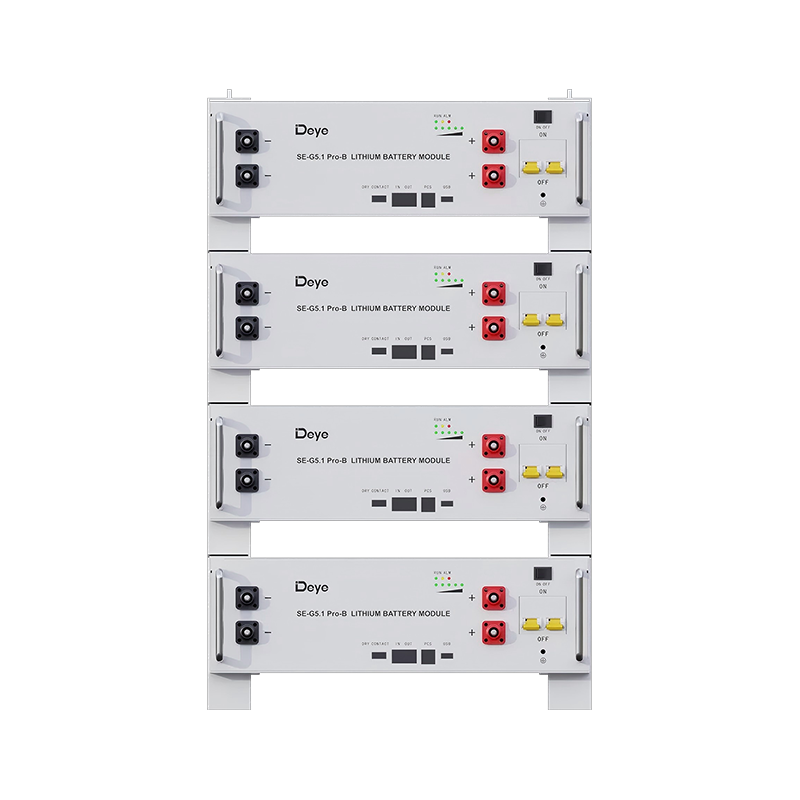 Deye SE-G5.1 Pro B LV batteryThe SE-G5.1 Pro B LV Battery is a compact and versatile lithium energy storage module designed for flexible integration into residential solar systems and small-scale ...View Product →
Layer Two: Grid Connection Codes
Grid codes are where battery storage regulations become genuinely local. The same battery and inverter combination may be accepted in one country and refused next door, because each network operator applies a different standard and expects a different certificate.
- EN 50549-1 and EN 50549-2 for generating plants connecting to European distribution networks.
- National German rules such as VDE-AR-N 4105 for low voltage and VDE-AR-N 4110 for medium voltage.
- G98 and G99 engineering recommendations for connections in Great Britain.
- AS/NZS 4777.2 for inverter energy systems in Australia, with listed models published publicly.
- UL 1741 including the SB supplement, and IEEE 1547 for North American interconnections.
Storage adds a complication that pure generation does not have, because a battery can both import and export. Engineers therefore look at export limitation, anti-islanding behaviour, protection settings and response to frequency events. Approval is granted to a configuration, not to a brand.
Layer Three: Fire, Building and Installation Rules
Fire regulation has become the fastest moving part of the picture. Authorities increasingly treat lithium-based storage as a distinct hazard class, and the result is a set of siting rules that can decide whether a project is feasible at all.
In the United States, NFPA 855 works alongside the International Fire Code and the International Building Code, and many jurisdictions ask for UL 9540A data before granting a permit. In the United Kingdom, PAS 63100:2024 introduced specific guidance for residential battery placement, including separation from escape routes. Elsewhere the principles are similar even when document numbers differ: keep batteries away from sleeping areas and exits, maintain clearance for access and ventilation, protect against mechanical damage, and make the installation visible to emergency responders.
For larger residential and light commercial installations, high-voltage stacks are often the better fit because they reduce current and cable losses. The trade-off is that they demand more careful planning of clearance and thermal behaviour, so the system documentation should be reviewed before the mounting position is fixed.
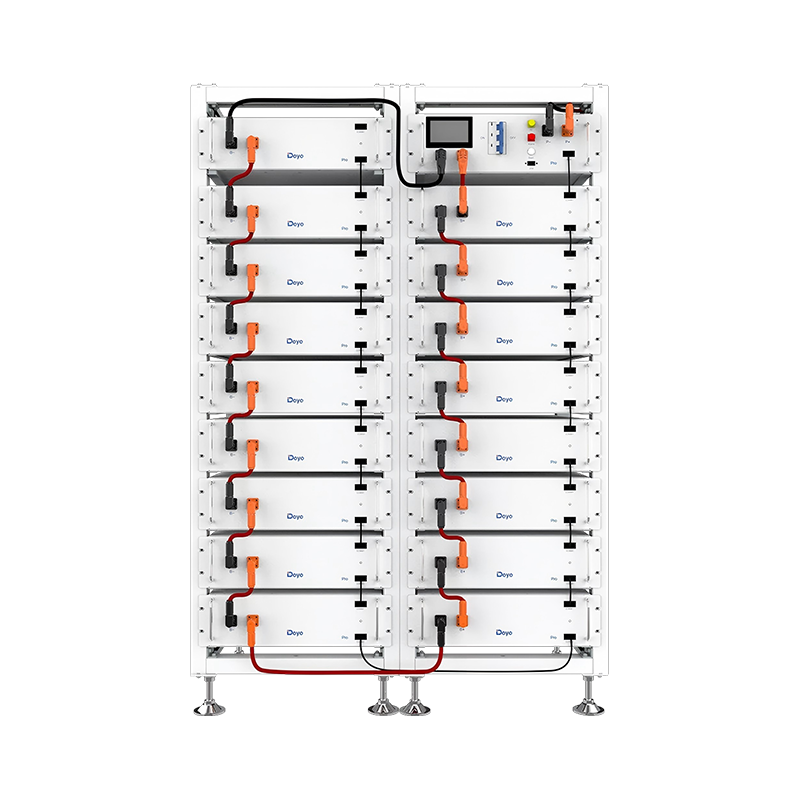 Deye BOS-G80-Pro HV batteryThe Deye BOS-G80-Pro High Voltage Battery is a flagship energy storage solution designed for large-scale and high-load applications. With its expanded cabinet design a...View Product →
A Market-by-Market Snapshot
Every market applies its own mix of the layers above. The table below is a starting point for orientation, not a substitute for local advice.
| Market | Frameworks to check | Practical impact |
|---|---|---|
| European Union | CE marking, IEC 62619 and IEC 63056, EN 50549, EU Battery Regulation | National grid approval is still required, and carbon footprint plus passport data are entering procurement. |
| United States | UL 1973, UL 9540 and 9540A, UL 1741 SB, IEEE 1547, NFPA 855 | Fire code adoption varies by state and city, so permits often depend on propagation test data. |
| United Kingdom | BS 7671, G98 and G99, PAS 63100:2024 | Distribution network operator approval is needed before energising, and residential siting rules are stricter. |
| Australia | AS/NZS 4777.2, AS 5139, state installation rules | Inverters must appear on published lists, and some states add fire separation conditions. |
| Other growth markets | IEC-based import standards, utility-specific codes | Certification is the entry ticket, and utility approval can take longer than shipping. |
The pattern is consistent: certification opens the door, but the connection agreement and the installation approval decide when a system can actually run.
The Permit and Approval Paper Trail
Most compliance work is administrative, and it follows a predictable order. Skipping a step usually costs more time than completing it.
- Classify the system. Confirm whether it is off-grid, grid-tied with backup, or hybrid, because the classification determines which codes apply.
- Apply to the network operator early. Connection queues are long in many regions, and equipment selection can still be revised while waiting.
- Assemble the certification dossier. Product certificates, test reports, declarations of conformity and inverter grid certificates should exist before the application, not after.
- Prepare the installation plan. Siting, clearance, ventilation, signage, cabling and protection design all feed into the permit submission.
- Commission and inspect. Record the settings that were applied, including export limits and protection thresholds, because these are the values the authority approved.
- Register the system. Metering arrangements, incentive claims and, in some markets, battery passport registration follow completion.
Common Compliance Pitfalls
- Quoting a battery without checking whether it is certified for the destination market.
- Assuming an inverter certificate from one country satisfies another network operator.
- Ordering high-voltage equipment before fire separation distances have been confirmed.
- Leaving transport documentation for lithium batteries until the container is booked.
- Storing certificates on one laptop instead of sharing them with the installer and the inspector.
How SEETEK Supports Compliance-Driven Procurement
As an authorised Deye distributor and a one-stop supply platform, our role is to remove friction between specification and approval. That means supplying hardware with the paperwork already attached, holding stock close to the market so that replacements do not wait on a long sea freight cycle, and answering technical questions in the terms that both the installer and the network operator use.
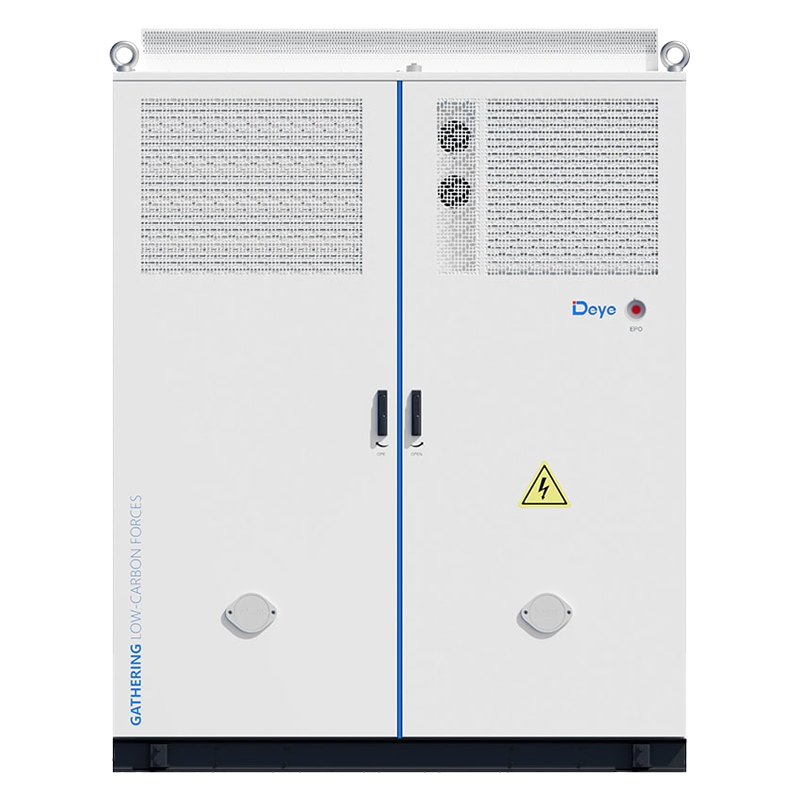
For commercial and industrial projects, cabinet-based systems change the compliance conversation again, because the unit is assessed as a single installation rather than a collection of separate batteries. Products such as the Deye MS-GS215-2H3 are built for that scale, with documentation prepared for the markets we serve most often.
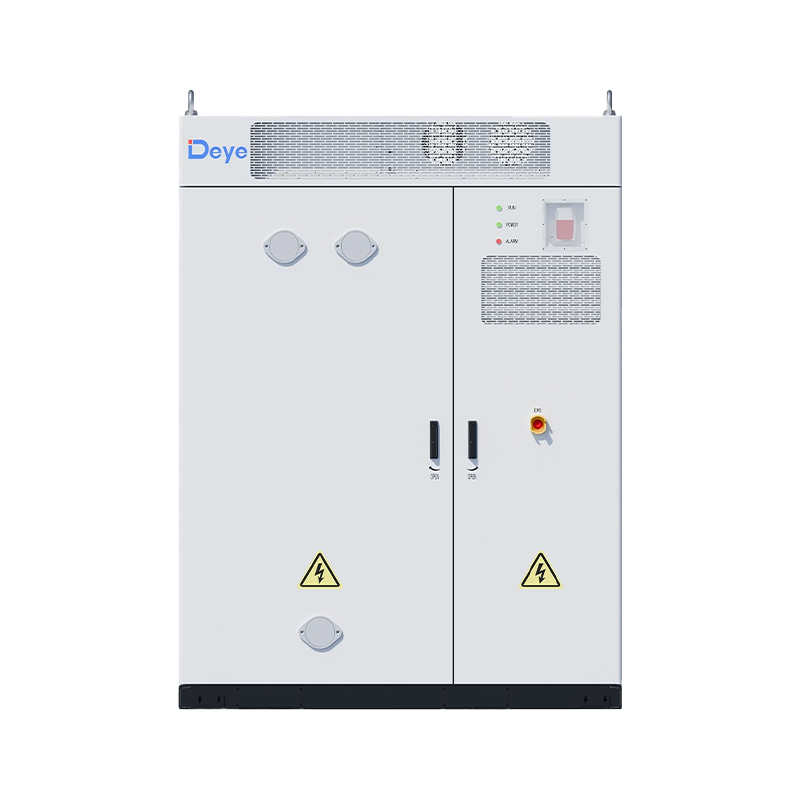 Deye MS-G215-2H3 C&I Energy Storage SystemThe Deye MS-G215-2H3 is a commercial and industrial battery energy storage cabinet created for users who need a dedicated 100kW / 215kWh BESS for peak demand managemen...View Product →
Our EU and US warehouses, together with direct shipments from China, let projects be staged around approval timelines rather than port schedules. To see the hardware and documentation set that fits your market, browse our full PV and storage catalogue and talk to our team about the certificates your project will be asked to produce.
Battery storage regulations reward preparation. Treat product certification, grid approval, fire compliance and permitting as four parallel workstreams rather than four sequential hurdles, and give each one an owner. Confirm the standards that apply in the destination market before a purchase order is raised, and keep the certificate dossier somewhere the whole project team can reach it.
The rules will keep changing, and 2026 will not be the last year that brings updates. What will not change is the advantage held by teams who read the requirements early and choose equipment that already speaks the language of the local authority.








3+ Branch Offices
1+ Factory
Required fields are marked


Copyright @ Hangzhou Seetek New Energy Sci-tech Co., LtD. All rights reserved Solar Energy Storage Solution Solar Energy Storage Products Supplier
