


 Français
 2026.07.14
From 430kWh to 17.2MWh: MC-L430 Modular Scaling & EMS Scheduling
Content
- 1 The Jump From One Cabinet to a Site-Wide Storage Plant
- 2 How One Rack Becomes 17.2MWh
- 3 MS-EMS: The Controller That Makes Ten Cabinets Behave Like One Asset
- 4 From Rule-Based Control to AI-Driven Scheduling
- 5 What Scaling Actually Looks Like in Revenue Terms
- 6 Planning a Scaled Deployment: What to Check First
The Jump From One Cabinet to a Site-Wide Storage Plant
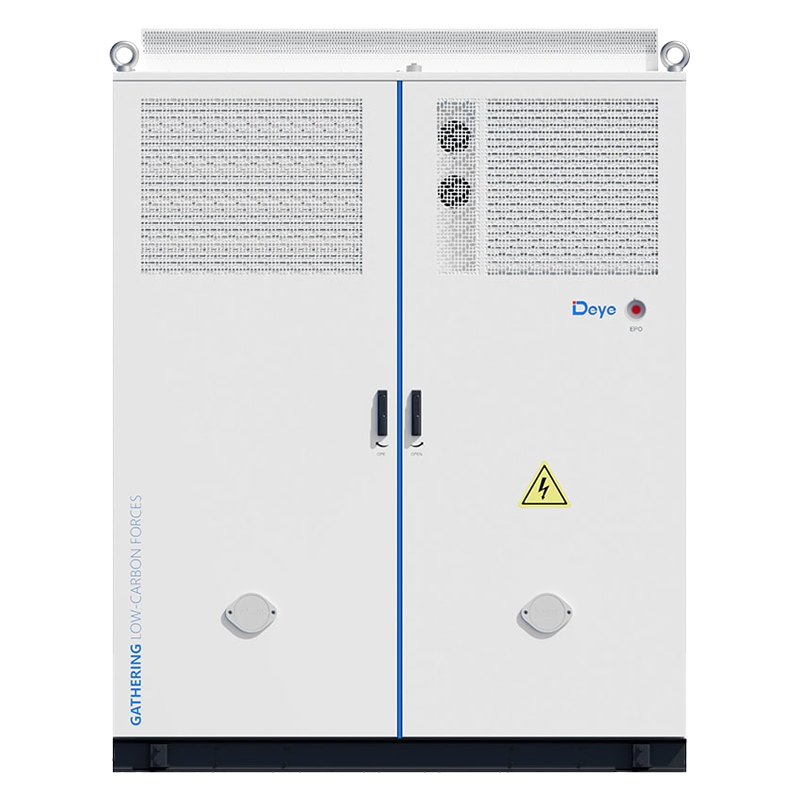
A single MC-L430-2H3 cabinet delivers 430.08kWh — enough to shift a modest load through an evening peak. Ten of them, wired together, deliver 17.2MWh — enough to run a mid-size industrial park through hours of grid outage or arbitrage an entire day's price curve. The battery chemistry, the packaging, the safety architecture don't change between those two scenarios. What changes is the parallel bus design and the layer of software sitting on top of it, deciding when every cabinet charges, discharges, or holds.
That's the real engineering story behind scaling a modular platform like the MC-L430 all-in-one C&I energy storage cabinet: not the size of any one unit, but how cleanly it multiplies, and how much intelligence the EMS layer needs to keep ten or more of them working as a single coordinated asset instead of ten independent batteries that happen to share a fence line.
How One Rack Becomes 17.2MWh
The math starts at the cell level. Each MC-L430 rack is built from 5 packs wired in series, delivering 215.04kWh per cluster. Two clusters combine inside a single cabinet to reach the rated 430.08kWh. From there, scaling is a parallel-bus exercise: the PCS/BMS all-in-one modular design supports up to 10 cabinets in parallel, which is where the platform's published ceiling of 17.2MWh for an off-grid system comes from — 10 cabinets x 430.08kWh, rounded.
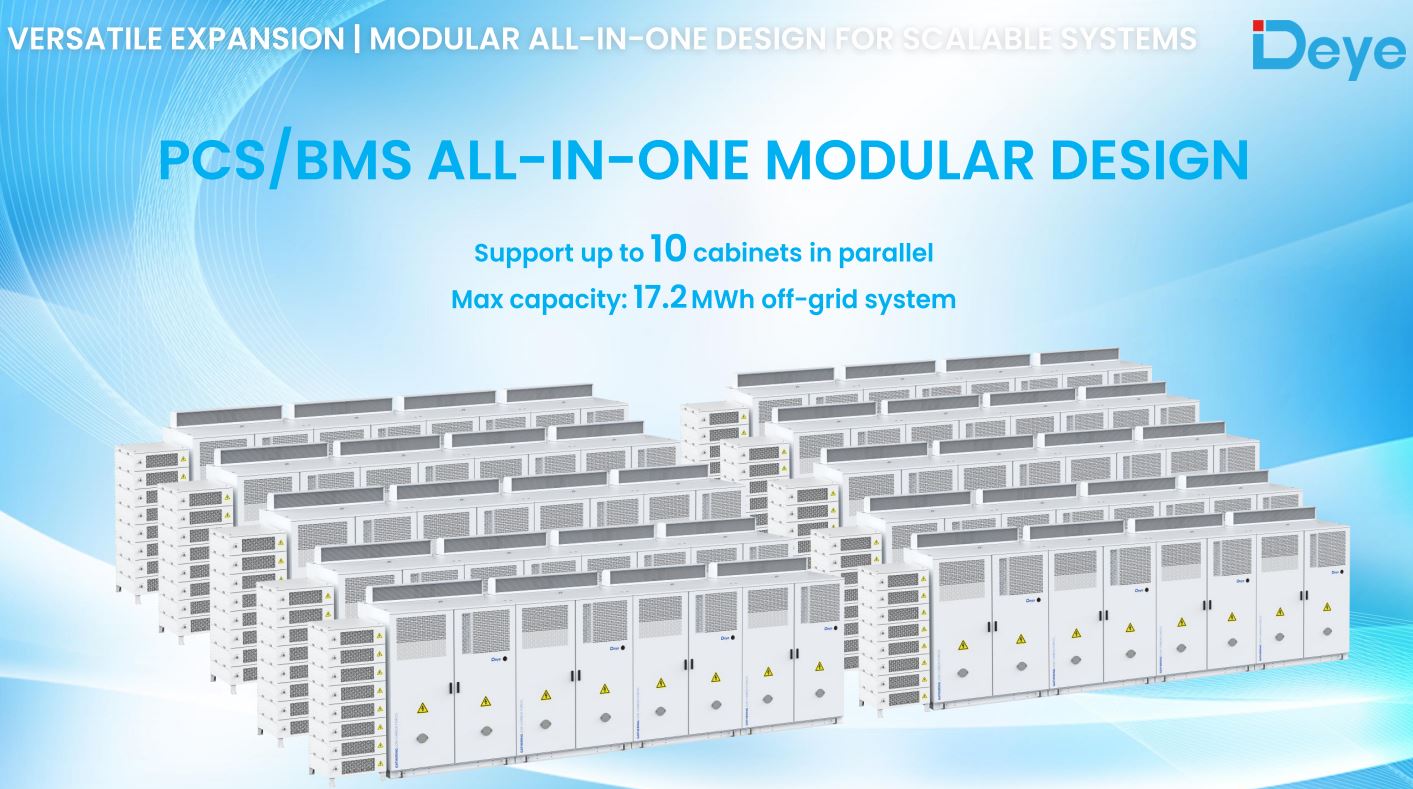
Capacity isn't the only axis of scaling, though. Duration is configurable independently of cabinet count: the same physical cabinet platform supports 2, 4, 6, or 8-hour discharge profiles, which is a rack-configuration decision rather than a different product line. A site that needs short, high-power peak shaving and a site that needs eight hours of overnight backup can both be built from the same cabinet family — they just get racked differently.
| Variable | Range | What It Changes |
|---|---|---|
| Cabinets in parallel | 1 to 10 | Total energy capacity, up to 17.2MWh off-grid |
| Discharge duration | 2 / 4 / 6 / 8 hours | Power-to-energy ratio per cabinet |
| Coupling mode | AC or DC | Whether each cabinet has its own PCS or shares one centrally |
| Battery-only cabinets per string | Up to 3 (without PCS) | How many BC-series cabinets can chain off one AC-coupled unit |
That last row matters for site planning: BC-series (DC-only) cabinets are limited to three in a chain without their own PCS, after which the string needs to terminate into an AC-coupled unit or a shared MPPT/switching cabinet. Getting that ratio wrong is one of the more common design mistakes in early-stage layout planning — it's worth checking against the specific configuration diagram for whatever application scenario a project falls into, whether that's on-grid arbitrage, off-grid backup, or a PV-storage microgrid.
MS-EMS: The Controller That Makes Ten Cabinets Behave Like One Asset
Parallel hardware alone doesn't produce coordinated behavior — it produces ten batteries with no shared logic unless something is telling them what to do collectively. That's the job of the MS-EMS controller sitting above the cabinet layer. It's a compact wall-mounted unit (488 x 188 x 588mm, under 24.5kg) but it's built with a communication backbone sized for a full site: 5 Ethernet channels, 2 fiber optic ports, 3 CAN channels with CAN-FD support, 8 RS485 channels, 17 digital inputs, and 8 digital outputs.
That interface density is what lets one controller talk to every cabinet, every meter, and every switching device on site simultaneously, rather than daisy-chaining through a single slow bus. On the functional side, the EMS runs a defined set of basic functions out of the box: peak-valley arbitrage, anti-backflow protection, main transformer overload protection, load tracking, demand control, backup power switching, phase separation control, and SOC balancing across the parallel bank — plus native Deye Cloud monitoring.
From Rule-Based Control to AI-Driven Scheduling
The functions above are largely deterministic — if the grid price crosses a threshold, discharge; if backflow is detected, throttle. The platform's advanced feature set moves past fixed rules into forecasting: load forecasting, production planning, electricity price planning, and what the platform describes as an optimal economic curve, calculated continuously rather than set once at commissioning.

In practice, this is what separates a battery that responds to conditions from one that anticipates them. A SOC-balancing function keeps ten parallel cabinets from drifting apart in charge state over months of cycling — without it, the weakest cabinet in a bank effectively caps the usable capacity of the whole array, regardless of what the other nine can deliver. Load forecasting and electricity price planning work together to pre-position the battery's state of charge ahead of a predicted peak, rather than reacting only after the peak has already started.
The cloud layer also closes the operations loop: real-time alarm reporting for equipment faults, remote firmware updates over the air, and a combination of local and cloud-based operation and maintenance access, so a fault on cabinet six of ten doesn't require a truck roll to diagnose.
What Scaling Actually Looks Like in Revenue Terms
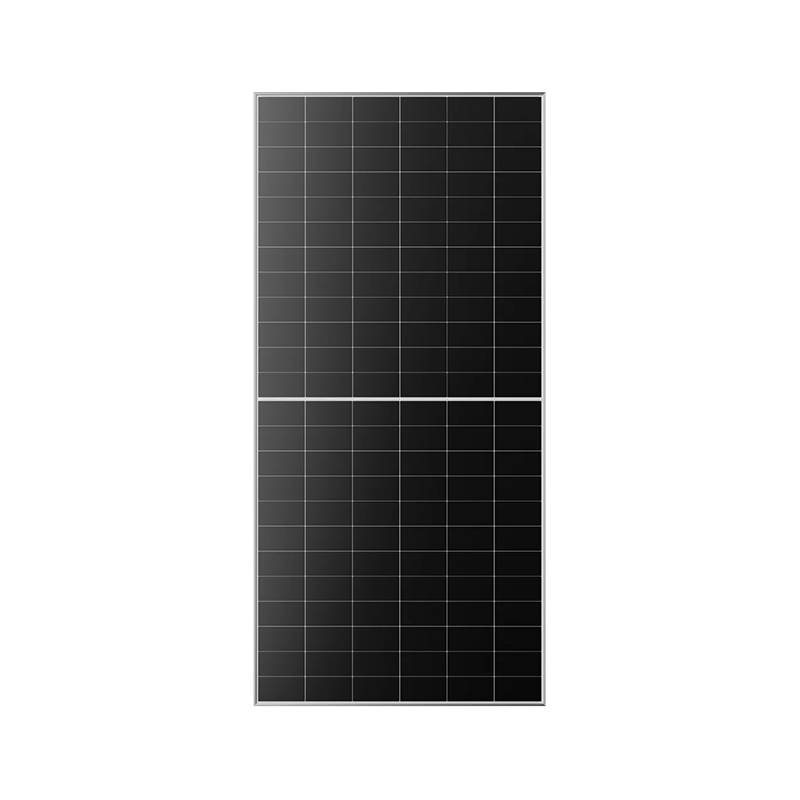
Take a single MC-L430-2H2/3 cabinet paired with 300kW of PV and an 180kW load — a scale small enough to reason about by hand before extrapolating to a ten-cabinet site. During the day, PV covers the load directly for roughly 5 hours, generating savings equal to 180kW x 5h x the local electricity rate. At night, the battery takes over, discharging at 430kWh x 0.95 (accounting for round-trip losses) x the local electricity rate.
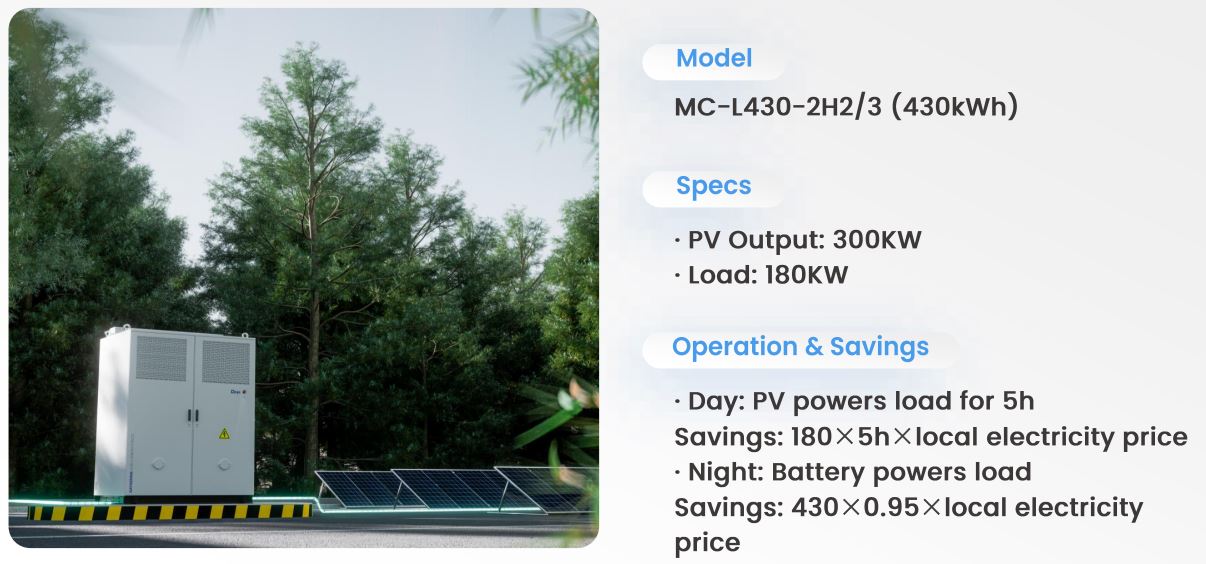
Multiply that single-cabinet case by ten and the arithmetic scales roughly linearly on the energy side, but the demand-charge side scales faster — because a larger parallel bank can shave a proportionally larger peak against a site's contracted demand tariff, which is often billed on the single highest 15-minute interval in a month rather than total consumption. This is precisely where the EMS's demand control and load tracking functions earn their place: without coordinated peak prediction across the full bank, a ten-cabinet system risks discharging early and missing the actual peak it was sized to shave.
Actual performance varies by site — PV output timing, local tariff structure, and load profile all shift the numbers — but the underlying mechanics stay consistent whether the deployment is one cabinet or ten.
Planning a Scaled Deployment: What to Check First
Before committing to a cabinet count, a few sequencing questions tend to save the most rework later:
- Confirm the coupling architecture before the parallel count. AC-coupled and DC-coupled layouts scale differently, and retrofitting one into the other after cabinets are installed is far more disruptive than deciding upfront.
- Size discharge duration to the actual use case, not the maximum available. An 8-hour configuration sized for a 2-hour peak-shaving application wastes capital on capacity that never gets cycled.
- Verify EMS communication capacity against the final site plan. The controller's channel count needs headroom for meters, switchgear, and generator interfaces that often get added after the initial storage design is locked.
- Treat the economic model as a range, not a fixed forecast. Tariff structures and PV output vary enough site to site that revenue projections should be checked against local data before finalizing cabinet count.
Sites weighing peak-shaving payback against full capital cost — particularly industrial parks juggling multiple demand-charge tariffs across shared infrastructure — are exactly the profile this platform's demand-charge reduction solution for industrial and commercial parks is built around, from requirements analysis through ROI optimization.








3+ Branch Offices
1+ Factory
Required fields are marked


Copyright @ Hangzhou Seetek New Energy Sci-tech Co., LtD. All rights reserved Solar Energy Storage Solution Solar Energy Storage Products Supplier
