


 Français
 2026.07.14
AC-Coupled vs DC-Coupled BESS: MC-L430-2H vs BC Series Compared
Content
Two Cabinets, One Battery Chemistry, Very Different Wiring Diagrams
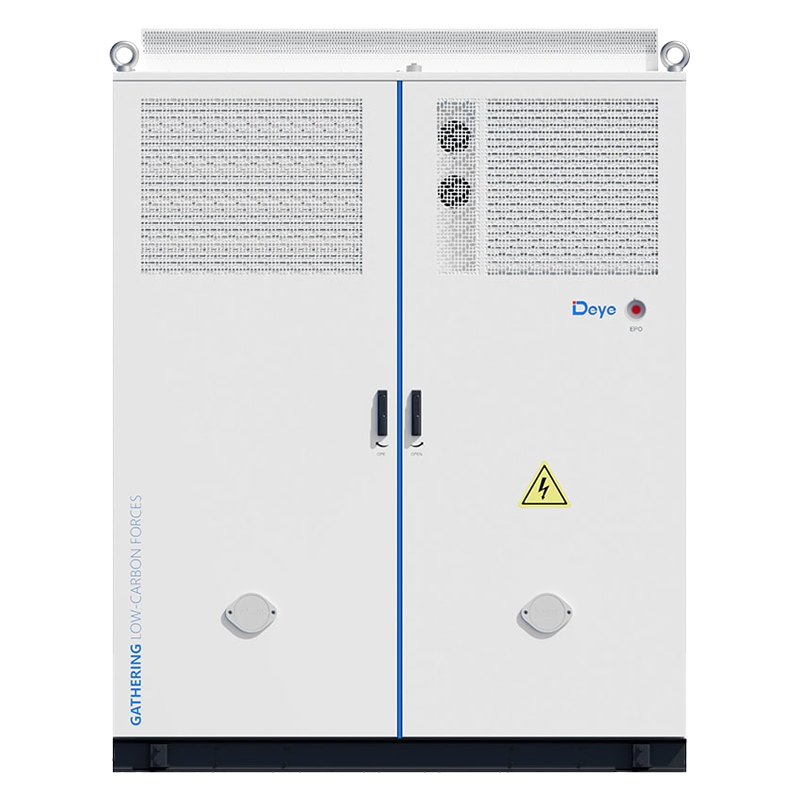
Walk up to an MC-L430-2H3 and an MC-L430-BC-3 side by side and they look almost identical: same 2000 x 1300 x 2480mm footprint, same 280Ah LiFePO4 cells, same 430.08kWh rating. Open the doors and the difference becomes obvious. One cabinet has a power conversion system built into it. The other doesn't. That single design choice — where the AC/DC conversion happens — changes how you wire a site, how much you pay in conversion losses, and how many cabinets you can string together before you need another inverter.
This is the core decision anyone specifying a C&I battery system runs into early: AC-coupled or DC-coupled. Both configurations exist in the MC-L430-2H3 all-in-one energy storage cabinet lineup and its BC-series counterpart, and the right answer depends less on which one is "better" and more on what the rest of the site looks like.
What "With or Without PCS" Actually Means Inside the Cabinet
The MC-L430-2H2/3 is an AC BESS: an AC/DC integrated liquid-cooled cabinet that houses the battery packs and the power conversion system in the same enclosure. Power comes out at 380/400V, 3L+N+PE, rated at 200kW with a 220kW peak. The MC-L430-BC-2/3 strips the PCS out entirely — it's DC data only, delivering the same 430.08kWh at a nominal 768V DC (648V–876V range), with no AC output of its own.
| Parameter | MC-L430-2H2/3 (AC BESS) | MC-L430-BC-2/3 (DC BESS) |
|---|---|---|
| PCS included | Yes, integrated | No |
| Nominal energy | 430.08kWh | 430.08kWh |
| AC rated power | 200kW (220kW max) | N/A |
| Nominal DC voltage | 768V (648–876V) | 768V (648–876V) |
| Cooling (battery / PCS) | Liquid / Air | Liquid only |
| Weight | Up to 5000kg | Up to 4700kg |
| Communication | RS485, Modbus TCP, DIDO | RS485, Modbus TCP, DIDO |
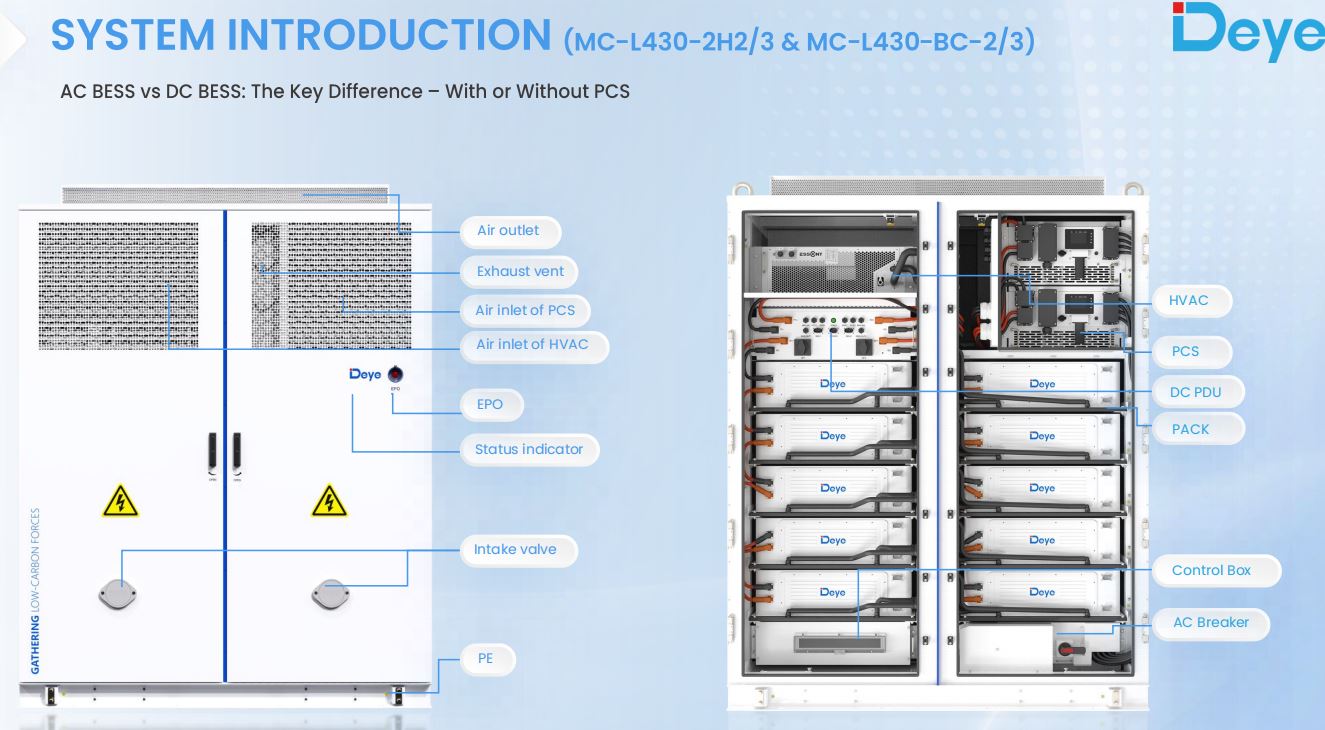
The BC series isn't a lesser product — it's a component. It's designed to sit downstream of a shared MPPT-and-switching cabinet, with the PCS function centralized elsewhere rather than duplicated in every battery enclosure.
Where the Conversion Happens Changes the Efficiency Math
In a conventional AC-coupled layout, solar power gets converted from DC to AC by a PV inverter, then converted back to DC to charge the battery through the BESS's own PCS, then converted to AC again on discharge. Every stage costs a fraction of a percent. DC coupling — pairing the BC-series battery with the MS-MPPT200-2 or MS-MPPT400-2 PV-input cabinet — collapses that chain: solar DC goes straight into the battery DC bus, with only one conversion stage on the way out to the grid or load.
That architectural difference is where the platform's own numbers come from: DC coupling is documented to improve PV-to-storage efficiency by 4% and reduce initial investment cost by 10%, largely because the site needs fewer standalone conversion stages and less cabling between them.
The tradeoff is flexibility. AC coupling lets you retrofit storage onto a site that already has PV inverters installed, without touching the existing solar infrastructure. DC coupling requires the PV and battery to be designed together from the start, sharing a common MPPT and switching cabinet — which is exactly why it tends to show up in new-build C&I projects rather than retrofits.
How Each Configuration Actually Gets Wired on Site
The practical difference between the two shows up clearest in the bus architecture. An AC-coupled layout built on MC-L430-2H2/3 cabinets connects each unit's PCS output directly to a shared AC bus, which then routes through a transformer to the grid, generator, or critical load panel. Each cabinet is a self-contained power source; adding capacity means adding another complete AC-output unit.
A DC-coupled layout looks different. MC-L430-BC-2/3 cabinets connect to each other and to solar strings on a shared DC battery bus, which feeds into a single MS-MPPT400-2 cabinet handling both the PV MPPT function and the on/off-grid switching (STS). Only that one cabinet talks to the AC side. This is also why DC-coupled systems can support up to 10 cabinets in parallel against a single conversion point, rather than scaling as ten independent AC sources.
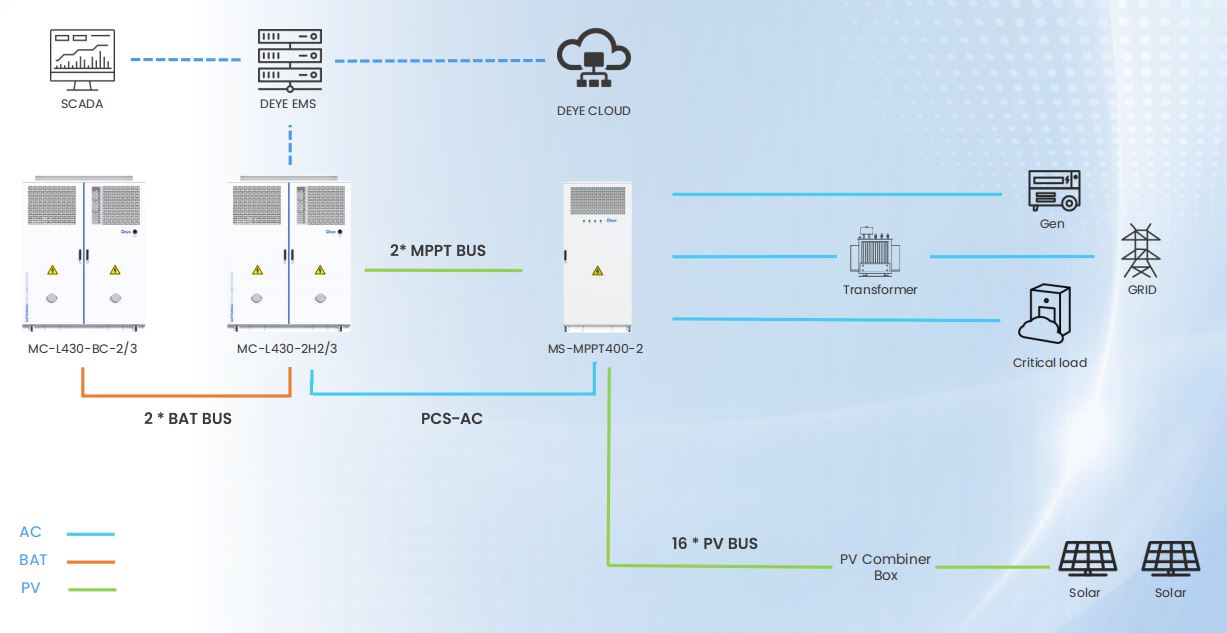
Notice that both series still speak the same communication protocol — RS485, Modbus TCP, DIDO — which is what lets a project mix BC-series battery-only cabinets with a 2H-series AC cabinet on the same site without a separate integration layer.
Choosing Between Them: A Practical Framework
Four questions tend to settle the decision faster than a line-by-line spec comparison:
- Is there existing PV infrastructure? If solar inverters are already installed and working, AC-coupled MC-L430-2H2/3 cabinets bolt on without disturbing them. DC coupling assumes you're specifying PV and storage together.
- How many cabinets will this site eventually need? Sites planning toward the 17.2MWh ceiling at 10 cabinets in parallel generally lean DC-coupled, since the shared MPPT/STS cabinet avoids duplicating PCS hardware across every unit.
- Does the project need standalone AC output from day one? A single MC-L430-2H2/3 cabinet can operate independently with its own 200kW AC output. A BC-series cabinet cannot — it always needs a paired conversion cabinet.
- What's the capital budget tolerance versus the efficiency target? If the 4% efficiency gain and 10% cost reduction from DC coupling matter more than deployment simplicity, BC-series is the better fit; if speed of installation and modularity matter more, AC-coupled wins.
Both configurations pull from the same underlying battery platform, so switching between them later — say, expanding an AC-coupled site with DC-coupled BC cabinets for a second phase — is a matter of adding the right conversion cabinet, not redesigning the battery layer. Teams weighing this decision against the rest of the commercial and industrial battery storage lineup should treat AC versus DC coupling as a site-architecture question first, and a product-selection question second.








3+ Branch Offices
1+ Factory
Required fields are marked


Copyright @ Hangzhou Seetek New Energy Sci-tech Co., LtD. All rights reserved Solar Energy Storage Solution Solar Energy Storage Products Supplier
