


 Français
 2026.07.07
BOS-B Pro-A3 Smart Energy Management: Integrated EMS & ToU Control
Content
- 1 Why the BOS-B Pro-A3 Skips the Extra EMS Cabinet
- 2 Zero-Export and Time-of-Use Control Built Into the PCS
- 3 How the STS Module Keeps Power Flowing During Mode Changes
- 4 Battery-Side Management: BOS-B Pro-A3 and Independent BMS
- 5 Monitoring and Adjusting the System Through Deye Cloud
- 6 Where This EMS Approach Fits
Why the BOS-B Pro-A3 Skips the Extra EMS Cabinet
A 125kW PCS module rated at 98.5% maximum efficiency and paired with an 8-channel MPPT module handling up to 200kWp of PV input sounds like a lot of hardware to coordinate. In most commercial and industrial storage systems, that coordination job falls to a separate energy management system, adding a cabinet, a controller, and another point of failure. The BOS-B Pro-A3 platform folds that logic directly into the PCS module itself.
This matters for installers and system integrators who need to keep footprint and commissioning time down on a C&I site. Instead of specifying, wiring, and configuring a standalone EMS, the PCS ships with zero-export and time-of-use control functions already built in.
Zero-Export and Time-of-Use Control Built Into the PCS
The PCS module reads CT and meter data to hold site export at zero when required by grid connection rules, and it applies time-of-use charging and discharging schedules to shift consumption away from peak tariff windows. Both functions run on the PCS itself rather than through an external controller layer.
Charging and discharging currents scale with the PCS rating: the 100kW unit supports 175A charge and discharge current, while the 125kW unit steps up to 200A. Both models share a battery voltage range of 630-1000V and adapt automatically to the connected BMS, so the charging strategy doesn't need to be hand-tuned for each battery pack configuration.
How the STS Module Keeps Power Flowing During Mode Changes
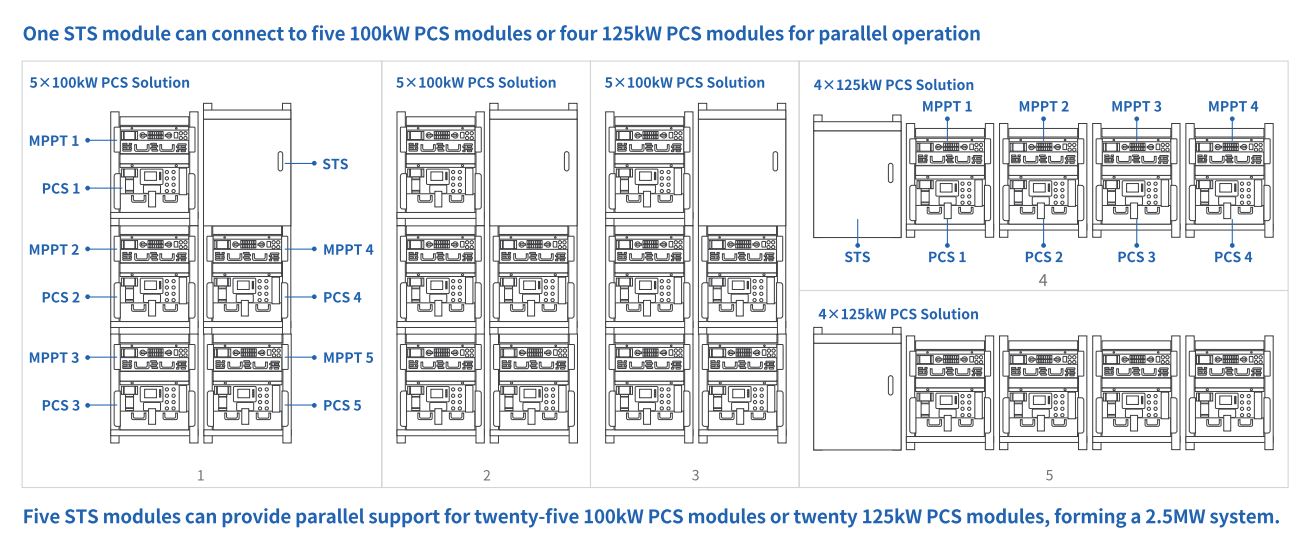
Zero-export and ToU scheduling only matter if the system stays online while conditions change. The STS module handles that continuity, switching between on-grid, off-grid, and diesel generator modes in under 10ms. Grid, load, and generator connections are wired as three independent paths, each rated for 500kW, so a fault or switch on one path doesn't interrupt the others.
One STS module can support up to five 100kW PCS units or four 125kW PCS units in parallel, which is the practical ceiling to keep in mind when sizing a cluster around a single STS module.
Battery-Side Management: BOS-B Pro-A3 and Independent BMS
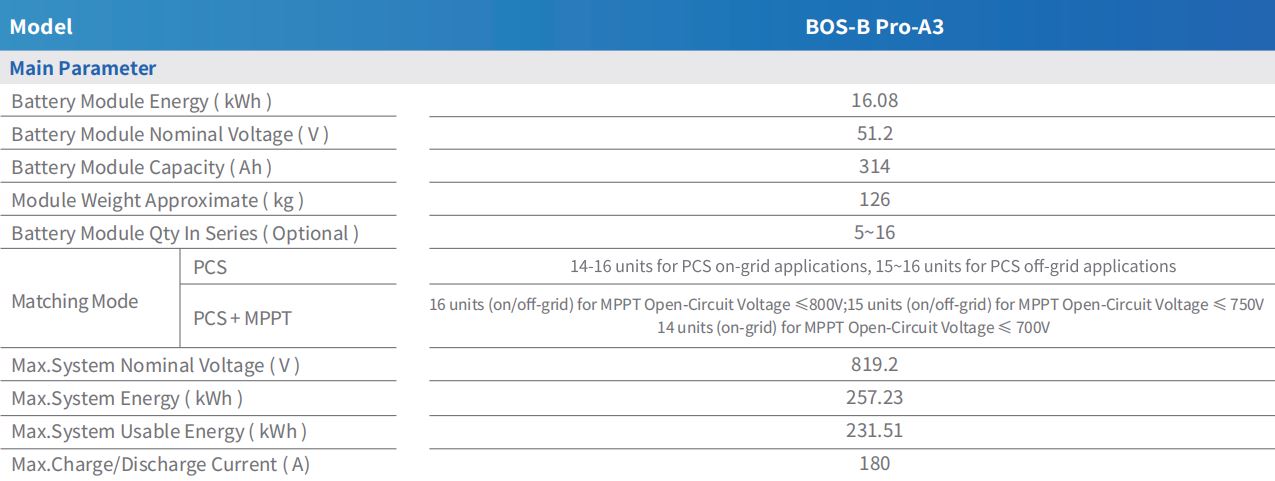
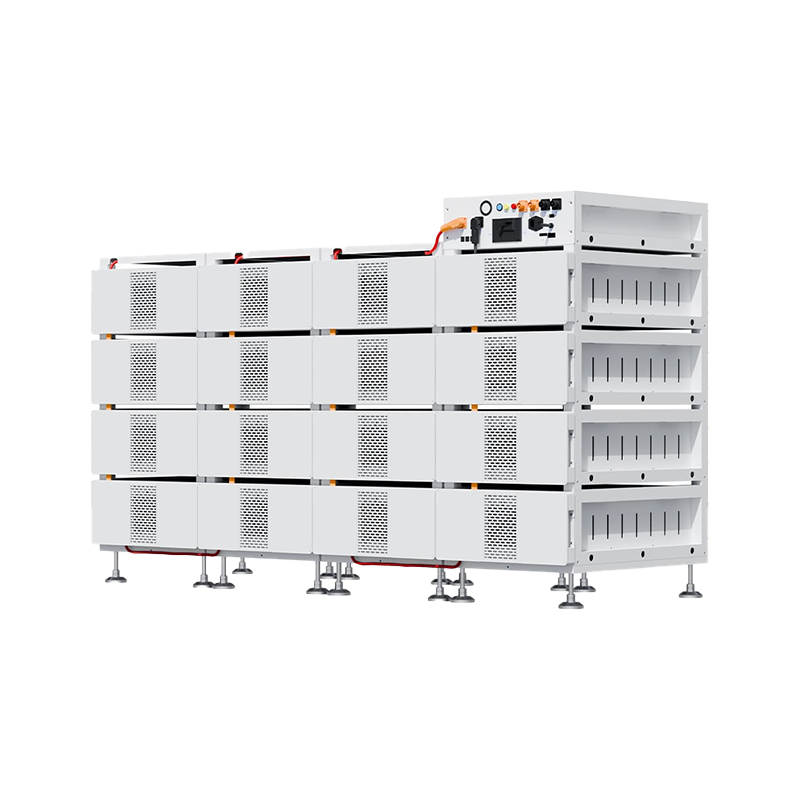
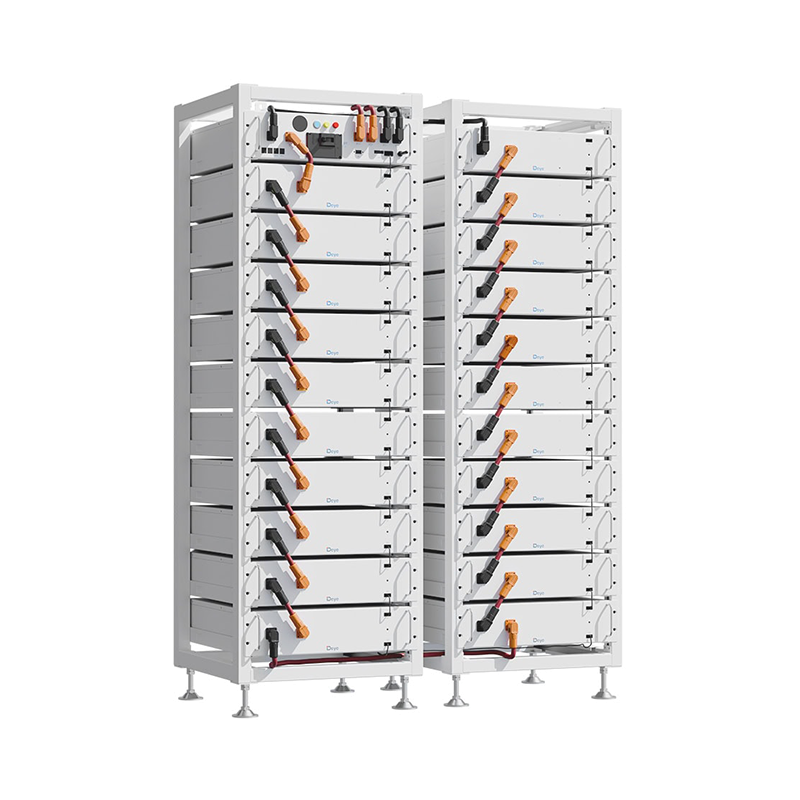
Each BOS-B Pro-A3 rack pairs a 314Ah, 16.08kWh LFP battery module with an independent BMS that balances charge distribution across packs and extends usable battery life. A single rack can carry 5 to 16 battery modules in series, reaching a maximum system energy of 257.23kWh and up to 231.51kWh of usable energy per cluster, with one PCS able to manage up to 16 racks in parallel.
The rated cycle life sits at over 6000 cycles at 25±2°C and 0.5C charge/discharge to 70% end-of-life capacity, and the recommended depth of discharge is 90%. These numbers feed directly into the EMS logic, since the system needs accurate state-of-charge and thermal data to make correct ToU dispatch decisions.
Monitoring and Adjusting the System Through Deye Cloud
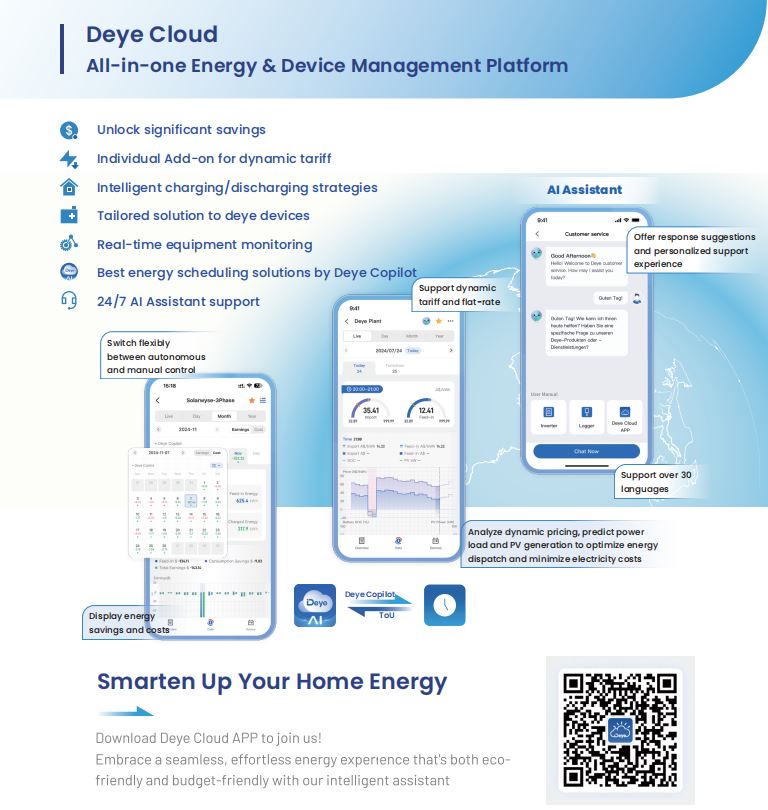
Local control happens through a color touchscreen on the PCS, but day-to-day operation for most sites runs through Deye Cloud. The platform gives real-time equipment monitoring, supports both dynamic tariff and flat-rate billing structures, and lets an operator switch between autonomous and manual control without visiting the site.
The Deye Copilot function inside the platform analyzes dynamic pricing alongside predicted power load and PV generation to adjust dispatch and reduce electricity costs, while the built-in AI Assistant answers operational questions in more than 30 languages. For teams managing several commercial and industrial energy storage installations, this remote layer is what turns individual PCS units into a fleet that can be tuned from one dashboard.
Where This EMS Approach Fits
The combination of an EMS-equipped PCS, an 8-channel MPPT module, and a fast-switching STS module is aimed at sites that need backup continuity and tariff optimization without adding a separate control layer. With up to 32 hours of backup available at 16 racks per PCS and a system that scales from 125kW to 2.5MW, the same integrated logic applies whether the deployment is a single PCS or a multi-unit cluster tied together through one STS module. Anyone comparing storage chemistries and control approaches before specifying a system can find more background in this overview of energy storage battery technology and its operational benefits.








3+ Branch Offices
1+ Factory
Required fields are marked


Copyright @ Hangzhou Seetek New Energy Sci-tech Co., LtD. All rights reserved Solar Energy Storage Solution Solar Energy Storage Products Supplier
