


 Français
 2026.07.06
Deye BOS-B Pro-A3: Efficiency, Capacity & Power Output Explained
Content
One Rack, Many Configurations: What BOS-B Pro-A3 Actually Is
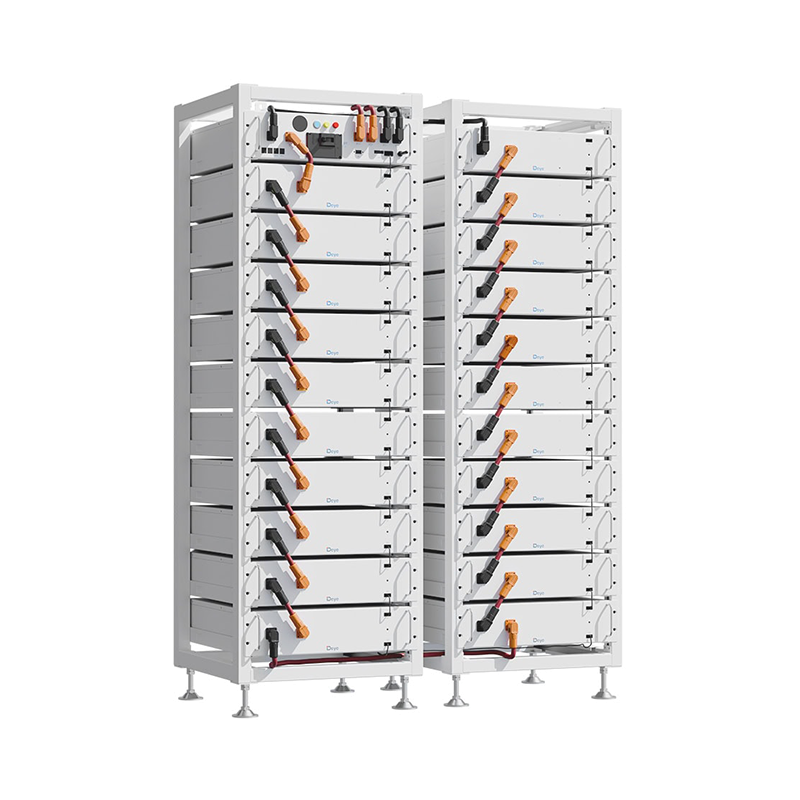
A single BOS-B Pro-A3 module holds 16.08 kWh at 51.2Vdc and 314Ah. Stack five to sixteen of them in series and the rack scales from roughly 80 kWh up to a maximum system energy of 257.23 kWh (231.51 kWh usable at the recommended 90% depth of discharge). That range is what lets Deye position the same battery platform across small commercial sites and larger multi-megawatt installations built from Deye's commercial and industrial battery energy storage lineup.
The system isn't just a battery rack — it's sold as a full 125kW–2.5MW C&I ESS solution built from four module types: the battery pack itself, an STS (static transfer switch) module, an MPPT module for PV integration, and a PCS module for grid conversion. Each piece has a distinct job, and the way Deye specifies module counts changes depending on whether the rack pairs with a PCS alone or with a PCS-plus-MPPT setup.
Battery Capacity and Matching Modes
The module count in series isn't fixed at one number — Deye publishes different recommended ranges depending on the application:
- PCS-only matching: 14–16 modules for on-grid use, 15–16 modules for off-grid use
- PCS+MPPT matching: 16 modules when MPPT open-circuit voltage is ≤800V, 15 modules at ≤750V, or 14 modules on-grid at ≤700V
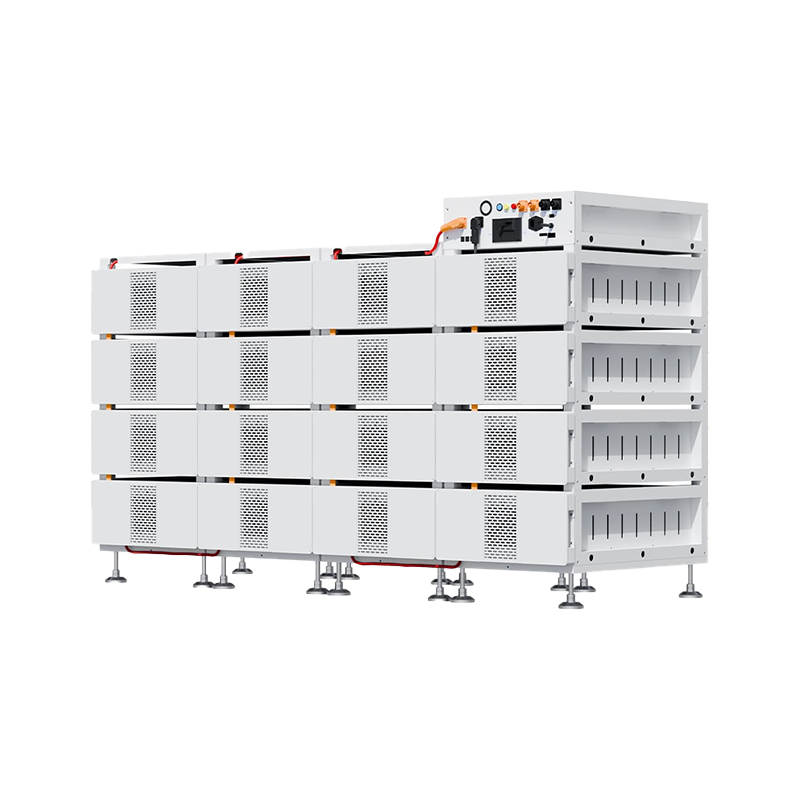
At the maximum 16-module configuration, system nominal voltage reaches 819.2V, with a maximum charge/discharge current of 180A. Cycle life is rated at 6,000 cycles or more to 70% end-of-life capacity under 0.5C/0.5C cycling at 25±2°C, backed by a 10-year warranty. The physical rack measures 2150×1305×800mm and weighs approximately 2,240kg, mounted as a standard rack enclosure at IP20.
Compared with Deye's smaller all-in-one options like the all-in-one C&I energy storage system, BOS-B Pro-A3 trades some plug-and-play simplicity for the flexibility of matching exact module counts to a project's PCS and PV configuration.
PCS, MPPT, and STS: How Power Actually Moves
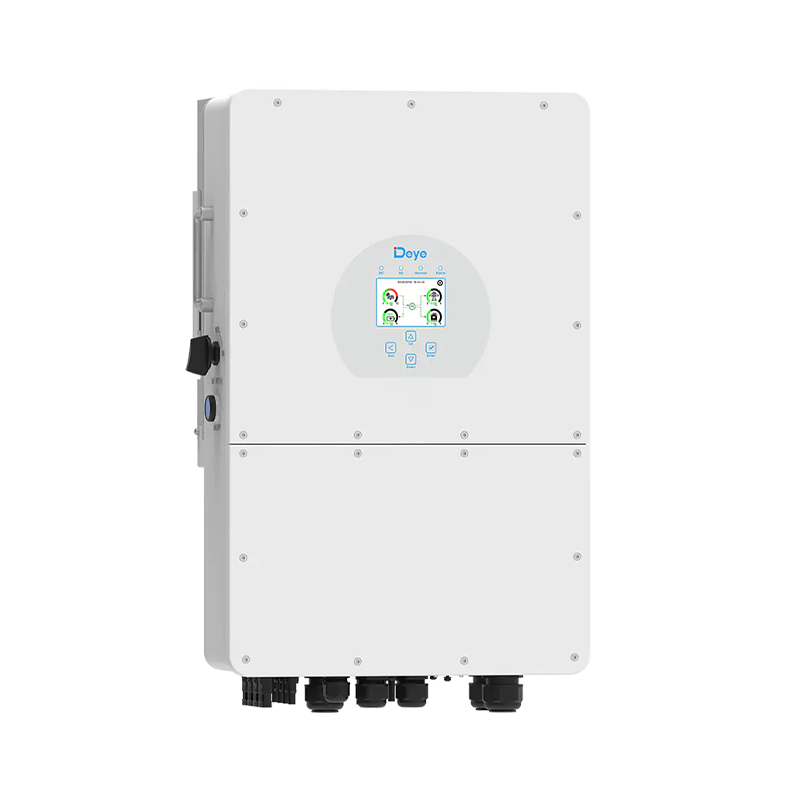
The PCS module comes in two ratings — SUN-100K-PCS01HP3 and SUN-125K-PCS01HP3 — rated at 100kW and 125kW active power respectively, with charge/discharge currents of 175A and 200A. Maximum efficiency reaches 98.5%, with Euro efficiency at 97.8%. One PCS can support up to 16 battery racks in parallel, and multiple PCS units combine to reach the system's full 2.5MW rating.
The MPPT module (SUN-MPPT-L01-EU-AM8) accepts up to 200kWp of PV across 8 MPP trackers at 40A each, with MPPT efficiency exceeding 99.9%. The STS module (SUN-STS500L) handles the switching side: it can move between on-grid, off-grid, and diesel generator modes in under 10ms, with each of the diesel, load, and grid paths independently rated at 500kW. One STS module connects to up to five 100kW PCS units or four 125kW units, which is how the platform reaches multi-megawatt scale without redesigning the battery or switching layer.
Readers sourcing similar-scale hardware may also want to check Deye's C&I energy storage system with integrated PV input for a comparison point on PCS and MPPT sizing.
Deye Cloud and the Case for Skipping a Separate EMS
The PCS module integrates zero-export control and time-of-use charging/discharging directly, which is why Deye markets this as eliminating the need for an additional EMS layer. Site-level visibility runs through Deye Cloud, which layers real-time equipment monitoring, dynamic tariff analysis, and an AI assistant (branded Deye Copilot) on top of the hardware, with support for over 30 languages and localized data centers in the EU and US for data-residency purposes.
Image 4 (located on page 7 of the PDF: Deye Cloud app screenshots showing energy savings dashboards, the AI Assistant chat interface, and a QR code for downloading the app)
For teams comparing LFP-based platforms more broadly before committing to a rack size, it's worth reviewing how modern energy storage battery technology affects long-term project economics, since cycle life and DoD assumptions drive most of the total cost of ownership math for a 125kW–2.5MW deployment.
Where BOS-B Pro-A3 Fits
The module-level numbers — 16.08 kWh per pack, 314Ah cells, 180A max current — stay constant regardless of scale. What changes as a project grows from a single 100kW PCS to a 2.5MW installation is how many racks, PCS units, and STS modules get paralleled around that same battery block. That's a different design philosophy from a fixed-capacity container: it asks an integrator to size the matching mode correctly up front, in exchange for a platform that scales cleanly from a small commercial site to a multi-megawatt one without swapping battery chemistry or rack hardware. Buyers weighing current lead times can check current stock locations before finalizing a bill of materials.








3+ Branch Offices
1+ Factory
Required fields are marked


Copyright @ Hangzhou Seetek New Energy Sci-tech Co., LtD. All rights reserved Solar Energy Storage Solution Solar Energy Storage Products Supplier
