


 Français
 2026.07.27
Deye On-Grid Inverters: A Buyer’s Guide to Reliability and Value
Content
Why the Skepticism Around Deye On-Grid Inverters?
A project engineer recently asked, “Why do I see so few Deye on-grid inverters on residential rooftops, yet they dominate utility-scale purchase orders?” The answer cuts straight to a common confusion in the solar market. Deye has spent over a decade building massive OEM capacity and core power-electronics expertise, serving as a manufacturing backbone for several global brands. The brand’s own label is far more established in commercial and industrial (C&I) bulk contracts than in the consumer-facing reseller channel—and that mismatch creates the perception of obscurity.
Two other factors fuel the doubt. First, informal online forums often feature DIY modifications or isolated complaints, which get disproportionate visibility. Second, installers accustomed to legacy tier-1 marketing narratives sometimes mistake a shorter direct-to-consumer track record for a lack of quality. The reality is more nuanced. Thousands of megawatts of Deye on-grid inverters are already operating in large solar parks and commercial rooftops, with performance data that matches the best in the industry. The skepticism stems mainly from visibility, not from engineering.
Deye On-Grid Inverter Technology & Performance
Key Specifications That Matter
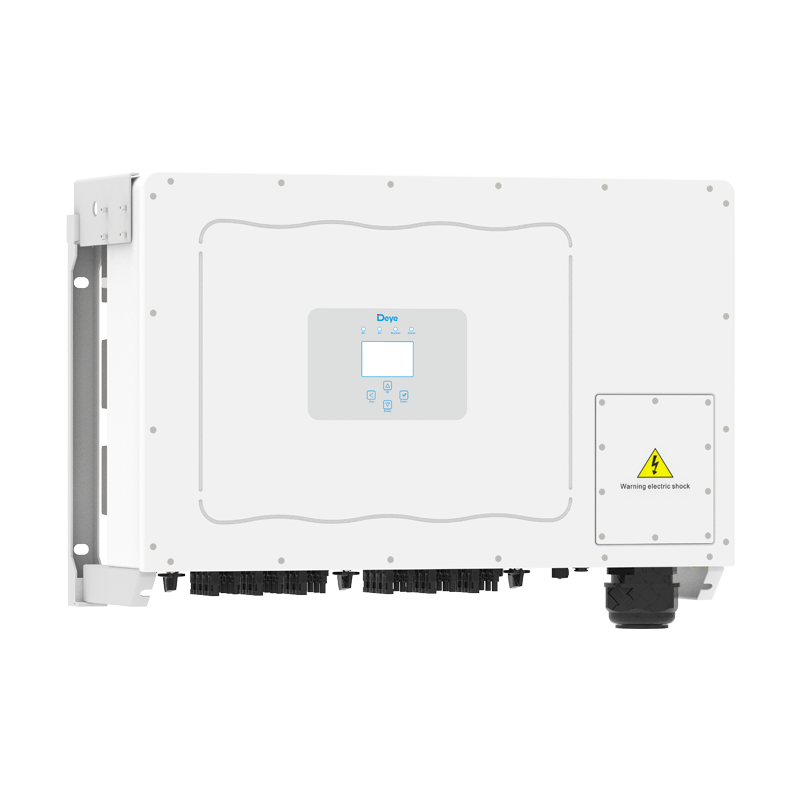
When you strip away the brand noise, on-grid inverters are judged by three hard metrics: conversion efficiency, MPPT capability, and thermal resilience. Deye’s string inverter line (the SUN series) consistently posts peak efficiencies of 98.5% or higher across 8 kW to 125 kW models—a figure that sits squarely alongside the most efficient units on the market. The wide MPPT voltage range, often 200–1000 V, lets designers handle irregular roof planes and partial shading without sacrificing string yield.
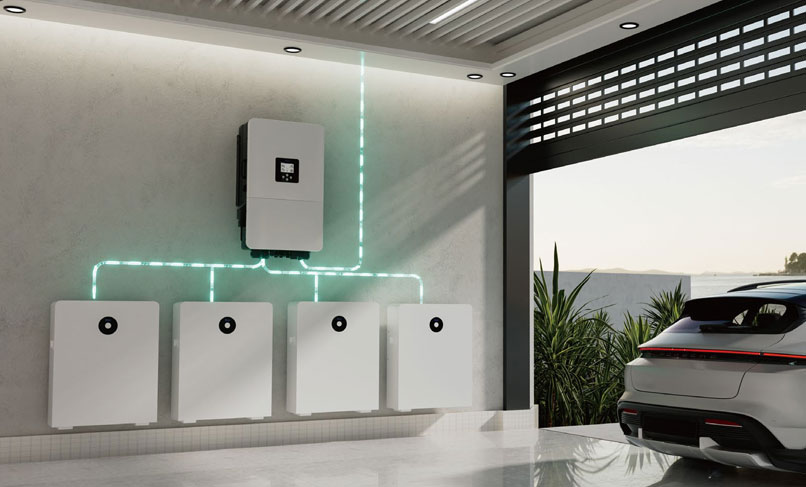
Equally important are the communication interfaces. Deye on-grid inverters come standard with RS485 and optional Wi‑Fi/GPRS dongles, allowing direct integration with major monitoring platforms. The firmware supports reactive power control, export limitation, and remote curtailment commands, which are becoming mandatory for grid-code compliance in many US utility territories. For developers, this means a single hardware platform can meet diverse interconnection requirements without external controllers. To see how these technical capabilities compare with Deye’s hybrid and off-grid siblings, explore the full Deye inverter lineup and assess the on-grid family side by side.
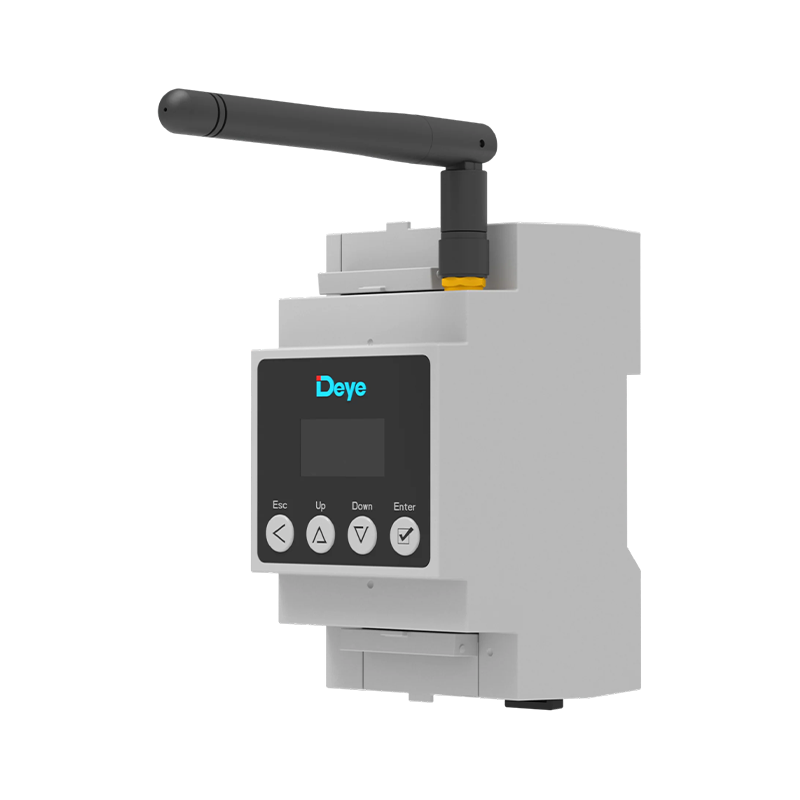
 Inverters - Seetek Power International Co.,LtdInverters - Seetek Power International Co.,LtdView Product →
Real-World Reliability & Case Studies
Reliability is the question that matters most in the procurement room. Field data from European and Asian C&I installations shows that Deye on-grid inverters routinely log 6–8 years of uninterrupted service, with failure rates under 0.5% in the warranty period. Much of that robustness comes from conservative component selection: IGBT modules from established semiconductor suppliers, conformal-coated PCBs for humid environments, and oversized heat sinks that keep internal temperatures well below derating thresholds even at 50°C ambient.
Consider a 2.4 MW carport installation in Southeast Asia that placed 14 SUN‑125K‑G units under daily 1,100 W/m² irradiance. After four tropical monsoons, the fleet’s average availability remained above 99.7%. The same topology—fan‑cooled, transformerless with active anti‑islanding—is mirrored across Deye’s 50 kW, 80 kW, and 100 kW models, so the reliability signature scales predictably. The practical lesson: Deye on-grid inverters deliver commercial-grade durability at a price point that makes repowering programs economically viable.
How to Choose the Right Deye On-Grid Inverter for Your Project
Selection typically boils down to system voltage, phase count, and the physical layout of the array. For a small commercial shed or a multi-tenant building, a 15–25 kW three-phase unit such as the SUN‑25K‑G provides the right balance of string flexibility and AC output capacity. Utility-scale ground-mounts and large roofing fleets lean toward the 80–125 kW range, where multiple MPPT inputs and high power density keep balance-of-system costs low.
The table below gives a quick sizing reference for the most commonly deployed Deye on-grid platforms. Use it as a starting point before engaging with your local distribution network requirements.
| Model Series | Max AC Power | Peak Efficiency | Best Suited For |
|---|---|---|---|
| SUN‑10K‑G | 10 kW | 98.4% | Residential / small commercial |
| SUN‑25K‑G | 25 kW | 98.5% | Medium commercial roofs |
| SUN‑80K‑G / SUN‑100K‑G / SUN‑125K | 80–125 kW | 98.6% | Large commercial & utility-scale |
Once you have a rough size, the next step is to verify grid compliance for your specific utility. All Deye on-grid inverters carry IEC 62109‑1/2 safety certification and support the IEEE 1547‑2018 standard through field‑adjustable grid profiles. View the entire on-grid inverter range to compare detailed datasheets and confirm the protection features your project requires.
On-Grid Inverter Manufacturers, FactoryAs On-Grid Inverter Manufacturers and Wholesale On-Grid Inverter Factory, SEETEK Provide On-Grid Inverter Solutions.View Product →Installation & Support: What to Expect
An on-grid inverter is only as good as the commissioning and after‑sales support behind it. Standard installation follows the familiar string‑to‑combiner‑box‑to‑inverter sequence, with lightweight (often <80 kg for 80 kW models), wall‑ or floor‑mount enclosures that simplify logistics. Built‑in DC disconnect switches and string monitoring eliminate the need for external transition boxes, cutting field wiring time.
What distinguishes a good distributor from a box‑mover is technical guidance. A partner that provides pre‑commissioning grid‑code checks, G99 or IEEE 1547 test‑report templates, and fast‑response spares can shave days off the project schedule. For teams still deciding between storage‑inclusive and plain grid‑tie architectures, read our hybrid vs. on-grid comparison to understand where battery readiness changes the equation. When the supply chain and tech support are aligned, the site‑level installation risk drops dramatically.
Final Verdict: Are Deye On-Grid Inverters Worth It?
The decision reduces to a clear trade‑off between value and perceived brand comfort. On the value side, Deye delivers high‑efficiency, reliability‑proven hardware at a capital cost that is frequently 15–20% below comparable tier‑1 units. That margin difference, when projected over a 1 MW portfolio, can fund monitoring upgrades or extended warranty coverage. On the comfort side, the main hurdle is unfamiliarity—but that fades quickly once a build team experiences a first bulk deployment and sees the 99%+ uptime data.
For contractors and integrators who evaluate on technical merit rather than marketing heritage, the conclusion is straightforward. Deye on-grid inverters offer a performance‑to‑price ratio that few competitors can match, backed by a mature manufacturing ecosystem. If your project’s success criteria are efficiency, uptime, and CAPEX control, the SUN series deserves a short‑list position on every commercial solar tender.







3+ Branch Offices
1+ Factory
Required fields are marked


Copyright @ Hangzhou Seetek New Energy Sci-tech Co., LtD. All rights reserved Solar Energy Storage Solution Solar Energy Storage Products Supplier
