


 Français
 2026.08.07
How to Choose an Off-Grid Inverter: Sizing, Battery Pairing, and Protection
Content
- 1 Why the Inverter Decides Whether Your Off-Grid System Actually Works
- 2 What Distinguishes an Off-Grid Inverter from Grid-Tied and Hybrid Units
- 3 Five Specifications That Decide Off-Grid Performance
- 4 How to Size an Off-Grid Inverter in Four Steps
- 5 Off-Grid or Hybrid: Which Should the Project Choose?
- 6 Deye Off-Grid Inverters: What the Range Covers
- 7 Procurement Risks That Show Up After the Sale
- 8 The Bottom Line on Choosing an Off-Grid Inverter
Why the Inverter Decides Whether Your Off-Grid System Actually Works
Grid extension quotes for a remote home, farm, or workshop regularly run into five figures before a single cable is pulled. That is why so many property owners choose a standalone solar and battery system instead. Once that decision is made, the off-grid inverter becomes the most critical component in the bill of materials. The battery supplies energy; the inverter creates the usable electricity. If the inverter cannot start a motor, tolerate a cloudy week, or charge the battery bank correctly, nothing else in the system compensates for it.
This guide explains what an off-grid inverter does, which specifications matter most, how to size one, and what to check before buying. The short version: match continuous output to your normal load, match surge capability to your largest motor, and match battery voltage to the inverter's DC input. Get those three things right, and the rest of the design becomes much simpler.
What Distinguishes an Off-Grid Inverter from Grid-Tied and Hybrid Units
An off-grid inverter is an inverter-charger that operates with no grid reference. It generates its own AC voltage and frequency on the output, so a household can run entirely on solar and battery power with no utility connection at all. A grid-tied inverter, by contrast, synchronises to the utility waveform and shuts down when the grid disappears. A hybrid inverter can work with or without the grid, but its design priorities lean toward energy shifting and backup rather than permanent isolation.
Core Functions in a Standalone System
Most off-grid inverters combine three jobs in one enclosure. First, they convert DC from solar panels and battery banks into pure-sine-wave AC for the property. Second, they charge the battery from PV through one or more MPPT channels, acting as the system's charge controller. Third, they accept an AC input from a backup generator and blend generator, solar, and battery power according to user-defined priorities. In a well-designed system, that third feature is the difference between weeks of autonomy and a property that still goes dark in winter.
Batteryless Operation and Connection Limits
A subset of off-grid inverters can operate without a battery, using DC from solar panels as the only input. That mode keeps the cost of a minimal solar-powered workshop low, but it makes output fluctuate with irradiance. For anything beyond temporary use, we recommend a battery bank as the reference for the inverter's DC bus. If you plan to add a grid connection later, keep in mind that a pure off-grid inverter cannot export power; for that path you would need a hybrid or on-grid design. If you are still deciding between architectures, our comparison of hybrid and grid-tied inverter options explains the trade-offs in more detail.
Five Specifications That Decide Off-Grid Performance
Manufacturer brochures emphasise maximum efficiency and visual design; field experience points to very different numbers. When comparing quotes, put these five parameters at the top of your checklist.
1. Continuous Output vs. Surge Power
The most common off-grid failure is a motor that will not start. A water pump, refrigeration compressor, or workshop saw draws three to five times its running power for a few seconds during startup. A 5 kW inverter with only 8 kW of surge may still fail to start a 1.5 kW borehole pump with high locked-rotor current. Check the surge rating and, more importantly, the surge duration (5 s, 10 s, or 30 s), and ask the manufacturer to explain how overload is handled after the surge window closes.
2. Battery Voltage and Charging Profile
Low-voltage systems at 48 V dominate residential off-grid installations because they are safe, serviceable, and compatible with most LiFePO4 batteries. High-voltage systems, typically above 200 V, reduce cable losses and suit larger commercial arrays, but they demand stricter installation practice. The inverter and the battery must agree not only on nominal voltage but also on the charging profile. Check the maximum charge current as well, because a large battery bank paired with a small charge controller will take much longer to refill after a heavy discharge.
3. PV Input Voltage and MPPT Channels
Off-grid inverters specify an input voltage window for the solar array. If the temperature-corrected winter open-circuit voltage of a series string exceeds that limit, the inverter can be damaged. If the operating voltage falls too low, the MPPT tracker loses efficiency. Two independent MPPT channels allow the system to host panels on different orientations, which is common on residential roofs. For agricultural buildings, a single oversized array in one or two strings can also work well; the priority is to size the array voltage with temperature-corrected calculations.
4. Standby Consumption
Unlike a grid-tied system, an off-grid system runs the inverter 24 hours per day. Standby, or no-load, consumption is therefore a real autonomy cost. A unit drawing 40 W does nothing dramatic, but over 24 hours that is nearly 1 kWh from the battery. On a two-day autonomy basis, the difference between a 30 W and a 60 W standby draw can require one additional battery module. Long-term running costs and battery cycles matter every bit as much as peak efficiency.
5. Generator Input and Transfer Behaviour
For winter months, a generator input acts as a relief valve. The inverter should accept a reasonably wide generator AC range, allow configuration of the transfer priority, and handle the brief power interruption during transfer without nuisance faults. If the system is expected to power medium industrial loads, ask whether the transfer time and repeated load steps are documented in the manual rather than left to assumption.
| Specification | Why it matters | Typical residential target |
|---|---|---|
| Continuous output | Must cover all loads that can run simultaneously | 5-8 kW |
| Surge rating | Starts motors and compressors | At least 2-3x continuous, validated in the manual |
| Battery voltage | Determines DC wiring and battery compatibility | 48 V low-voltage LiFePO4 |
| Max PV input voltage | Defines the series string limit after temperature correction | 500-750 V depending on model |
| MPPT channels | Allows mixed orientations and shading tolerance | 2 or more |
| Standby consumption | Consumes battery when no load is active | Below 50 W no-load |
| Generator input | Enables operation during long low-solar periods | Wide AC window, configurable priority |
How to Size an Off-Grid Inverter in Four Steps
Fast and accurate sizing moves from the load analysis to the battery bank and only then to the inverter. Working backwards from a target inverter price usually produces either an under-sized unit or an oversized battery bank.
- List every electrical load and its daily running time. Sum the products of power and hours to get a daily energy figure in kWh. Do not forget pumps, heating controls, and devices with own standby consumption.
- Identify the largest surge load. The inverter's surge rating must exceed the starting current of the biggest motor that can run at the same time as the rest of the household baseline.
- Size the battery for autonomy. Take the daily kWh demand, multiply by the number of overcast days you want to survive, and divide by a realistic depth of discharge, usually around 90% for LiFePO4. The battery bank voltage then has to match the inverter's DC input.
- Check the PV input against the array design. Temperature-corrected open-circuit voltage must stay below the inverter limit, and the maximum charge current from PV should be at least 10% of the battery bank capacity in ampere-hours.
Run this calculation twice: once for the best case and once for the worst case, for example winter with the generator unavailable. The inverter should satisfy the worst-case surge requirement, while the battery and PV array handle the worst-case daily energy requirement.
Off-Grid or Hybrid: Which Should the Project Choose?
If the property will never have a grid connection, a dedicated off-grid inverter is usually the better value because it concentrates design effort on surge capacity, generator integration, and standalone stability. If the site may gain a grid connection within the project lifecycle, or if energy export is part of the business case, a hybrid inverter adds flexibility without replacing the whole system. Hybrid units run in off-grid mode when the grid is absent, and they synchronise and export when a grid becomes available. That combination is attractive for buildings that start standalone and later connect to a new utility line. You can compare the available hybrid inverter models in the SEETEK catalog if your requirement sits between the two categories.
Deye Off-Grid Inverters: What the Range Covers
As a core partner and authorised distributor of Deye, SEETEK carries the Deye off-grid inverter family from 2 kW to 80 kW. The range spans single-phase and three-phase units, with model families that repeat the same operating logic across power classes. That consistency is useful for installers who want to standardise on one brand across multiple projects.
Residential and Small Property Models
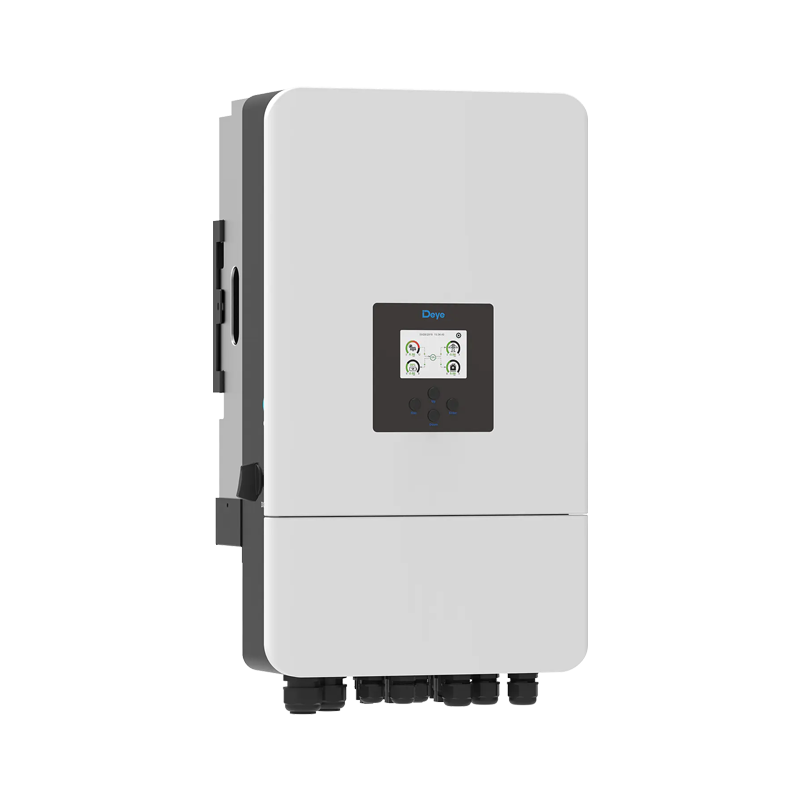
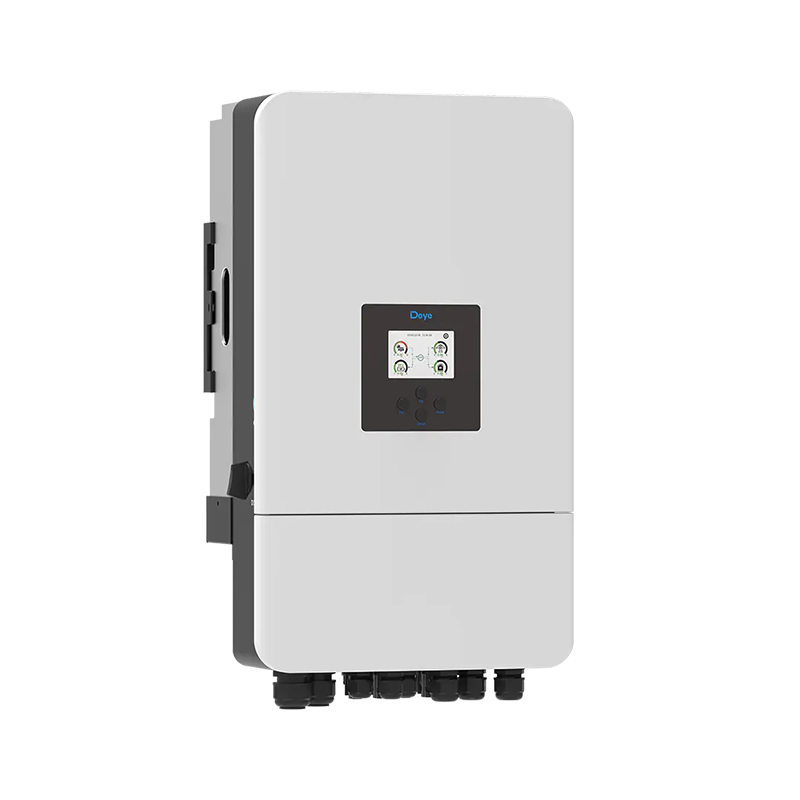
For a cabin, farmhouse, or small workshop with a typical 6-12 kWh daily load, a 5 kW or 8 kW unit covers the household baseline with margin. The Deye SUN-5K off-grid inverter suits small homes with modest surge requirements, while the Deye SUN-8K off-grid inverter adds headroom for a pump or heat pump and still fits a 48 V battery bank. Both support PV charging through MPPT, generator input, and parallel expansion where the model allows it.
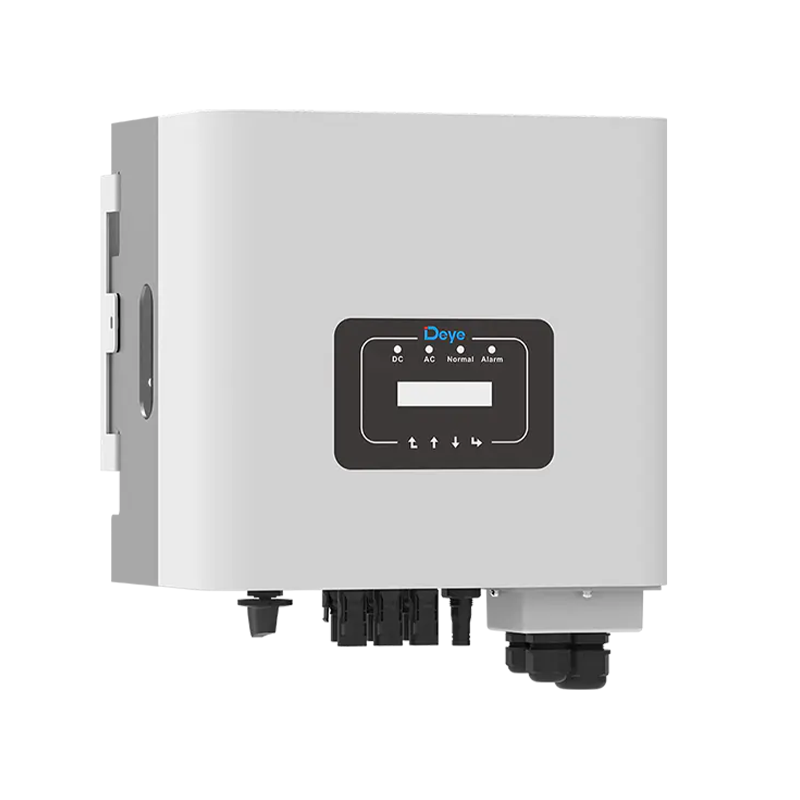 Deye SUN-8K-G02P1-EU-AM2 Suppliers, Distributors - Seetek Power International CoSEETEK is Deye SUN-8K-G02P1-EU-AM2 Supplier and Distributor, Deye SUN-8K-G02P1-EU-AM2 for sale, The Deye SUN-8K-G02P1-EU-AM2 is a single-...View Product →
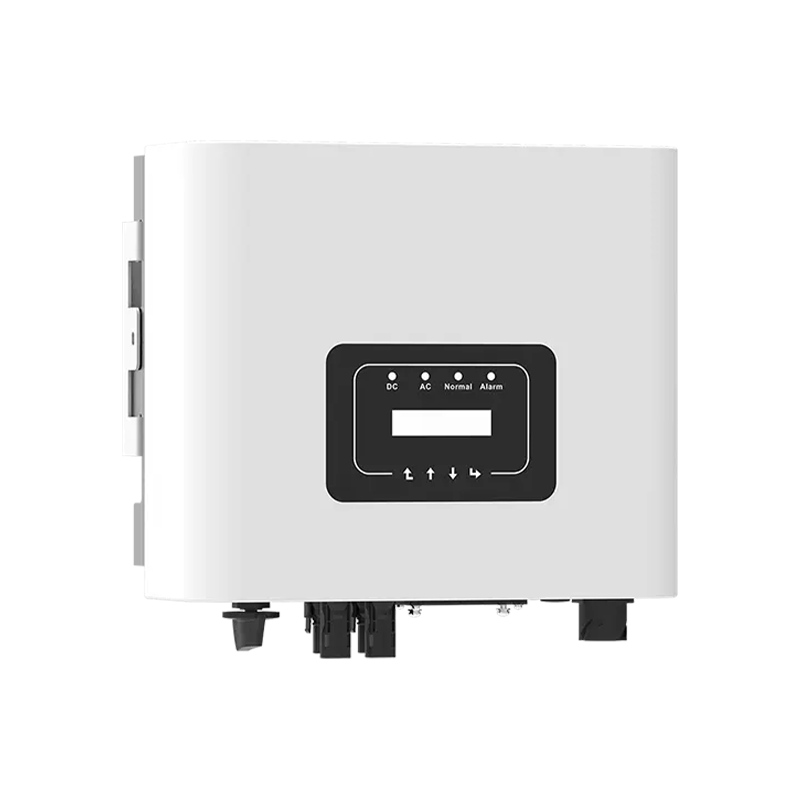 Deye SUN-5K-G04 Suppliers, Distributors - Seetek Power International Co.,LtdSEETEK is Deye SUN-5K-G04 Supplier and Distributor, Deye SUN-5K-G04 for sale, The Deye SUN-5K-G04 is a single-phase grid-tied string inve...View Product →
Three-Phase and Larger Standalone Systems
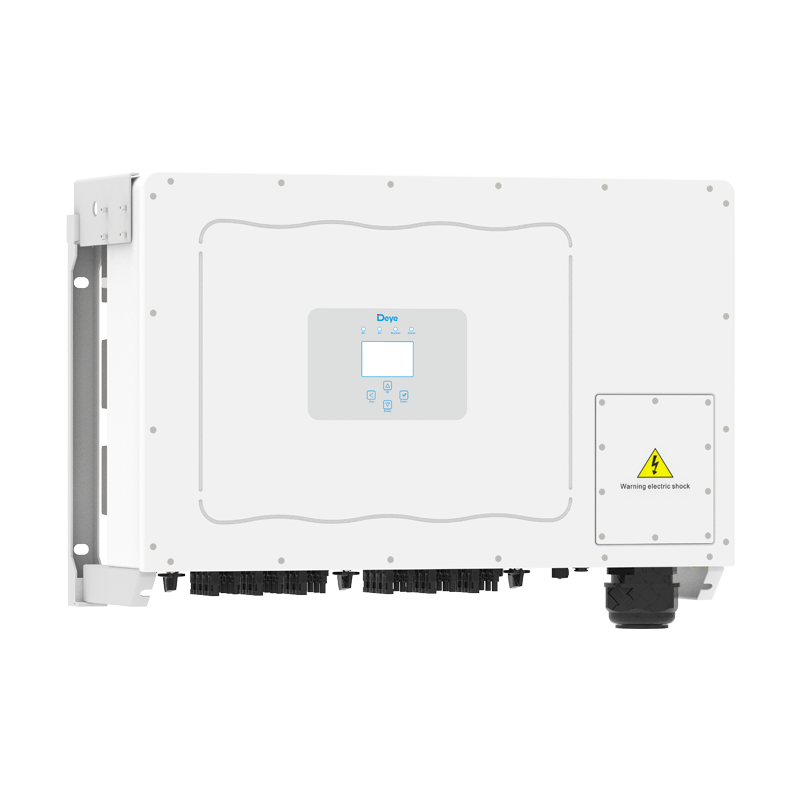
Larger properties, agricultural buildings, and small commercial facilities often need three-phase output or higher continuous capacity. The Deye SUN-20K off-grid inverter covers the boundary between residential and light commercial systems, and the range extends to 80 kW classes for larger standalone projects. These units also pair cleanly with Deye LiFePO4 batteries and the Deye monitoring accessories supported by SEETEK.
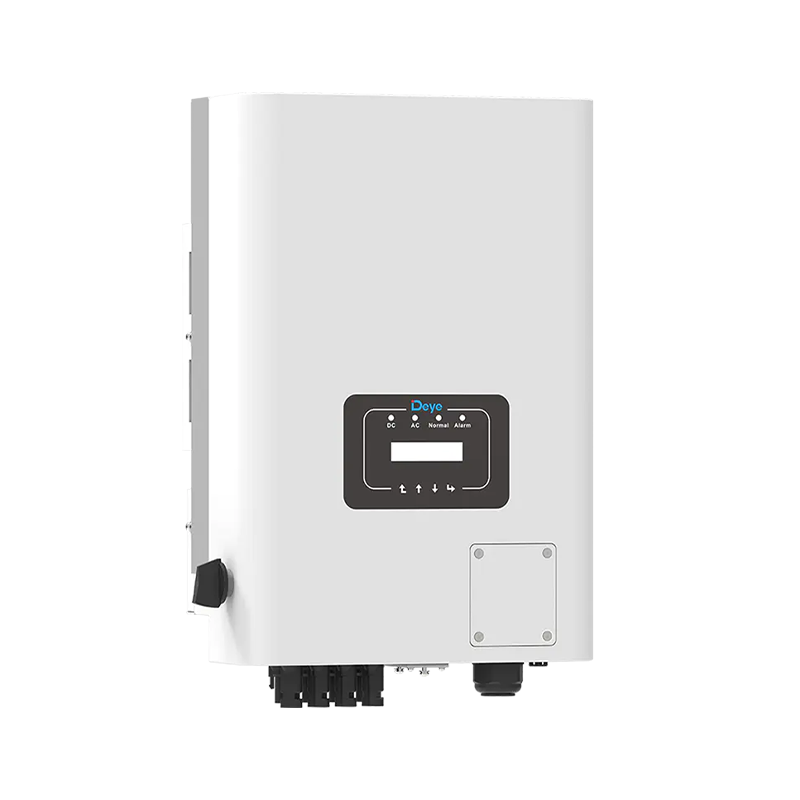 Deye SUN-20K-G05 Suppliers, Distributors - Seetek Power International Co.,LtdSEETEK is Deye SUN-20K-G05 Supplier and Distributor, Deye SUN-20K-G05 for sale, The Deye SUN-20K-G05 is a three-phase grid-tied string in...View Product →
Pairing note: an off-grid inverter without a compatible battery is an unfinished system. In a typical SEETEK residential configuration, a Deye off-grid inverter is paired with low-voltage Deye LiFePO4 batteries, while commercial configurations move to the high-voltage BOS-G battery series. Confirm the battery voltage and discharge current against the inverter data sheet before assembly.
Procurement Risks That Show Up After the Sale
Off-grid inverters are long-life assets; the cheapest quote is often the most expensive one in operation. Four risks deserve attention before a purchase decision.
- Unverified surge claims. Ask for the surge curve in the technical manual, not just the marketing data sheet. The difference between a 5 s and a 30 s surge rating changes whether a motor starts on a hot day.
- Incomplete certification. Even a fully off-grid system needs CE marking, electromagnetic compatibility testing, and, where relevant, compliance with national standards for generator and backup configurations. Verify the documents, not the brochure.
- Battery-inverter mismatch. Voltage, charge profile, and communication protocol must be aligned from day one. A mismatch typically shows up as early battery degradation or repeated over-voltage faults.
- After-sales distance. A single order is easy; a replacement unit three years later is the real test. Buying from a distributor with regional warehouses and engineering staff shortens the time between a fault and a fix.
SEETEK positions itself around exactly these concerns, with more than a decade of industry involvement, over 1 GWh of storage product delivery, and international service offices supporting residential and commercial projects.
The Bottom Line on Choosing an Off-Grid Inverter
The best off-grid inverter is not the one with the highest peak efficiency; it is the one that starts your pump on a cloudy morning, charges the battery correctly every day, and runs in standby for years without draining the bank. Start with the load analysis, size the surge requirement honestly, match the battery voltage, and demand documented specifications from the manufacturer. For a complete view of what is available today, review the full off-grid inverter catalog and compare the models by power class and phase configuration.








3+ Branch Offices
1+ Factory
Required fields are marked


Copyright @ Hangzhou Seetek New Energy Sci-tech Co., LtD. All rights reserved Solar Energy Storage Solution Solar Energy Storage Products Supplier
