


 Français
 2026.09.02
Deye SG06 vs SG05: Altitude, Noise & String Count Compared
Content
Three Constraints That Should Drive Your Inverter Choice
Most inverter comparisons start with a spec sheet and work outward. That approach breaks down fast once a real site has constraints a generic comparison never accounts for — a mountain installation above the standard altitude rating, a wall-mounted unit two meters from a bedroom, or a roof with panels facing three different directions.
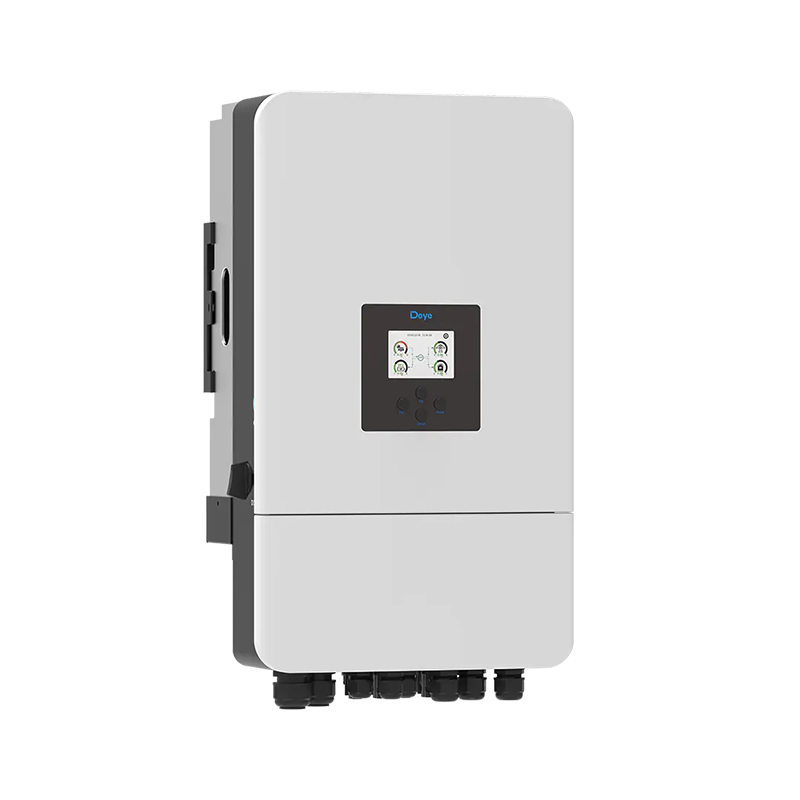
Deye's SG06 series makes three specific improvements that map directly onto these situations: a higher permissible altitude, lower operating noise, and — on select models — an additional MPP tracker. Rather than comparing every parameter side by side, it's faster to start from whichever of these three constraints actually applies to the project in front of you.
Altitude: When 2000m Isn't Enough
Inverters derate as altitude increases — thinner air means less convective cooling, so manufacturers cap the elevation at which a unit is rated to run at full output. Older single-phase models built on the SM2 platform, including the SG05LP1 series' 6kW model, are rated to 2000m permissible altitude.
The SG06LP1 series raises that ceiling to 3000m across both its 3-6kW and 7-12kW model ranges. For installers working in mountain regions, high-plateau agricultural sites, or anywhere above roughly 6,500 feet, that 1000m of additional headroom is the difference between a straightforward install and a project that needs a derating conversation with the client before anyone signs off on system output.
If a project sits comfortably below 2000m, this factor doesn't move the decision much either way. Above that line, it becomes close to a hard requirement rather than a nice-to-have.
Noise: Installing Near Bedrooms or Living Spaces
Where an inverter gets mounted often has less to do with electrical convenience and more to do with where the wall space is — which, in a lot of homes, means somewhere close to where people actually spend time. Noise output matters more in those cases than the spec sheet order usually suggests.
On the three-phase side, the gap is significant. The SG06LP3 series runs under 45dB, while an 8kW three-phase SG05LP3 unit is rated at up to 55dB. That 10dB difference is roughly a doubling in perceived loudness — noticeable in a utility room, and potentially disruptive if the mounting location is closer to a living space than typical installation guides recommend.
For garages, detached outbuildings, or plant rooms with some distance from occupied space, this factor matters less. For anything mounted inside a home's conditioned envelope — a hallway closet, a converted room, an apartment utility cupboard — it's worth checking before finalizing the model.
String Count: Matching MPPT Trackers to Your Roof Layout
A roof with panels facing a single direction and unshaded is the easy case — one or two strings on the same tracker work fine. The complications start when an array gets split: east and west-facing sections, a section shaded partway through the day, or a small addition on a separate roof plane.
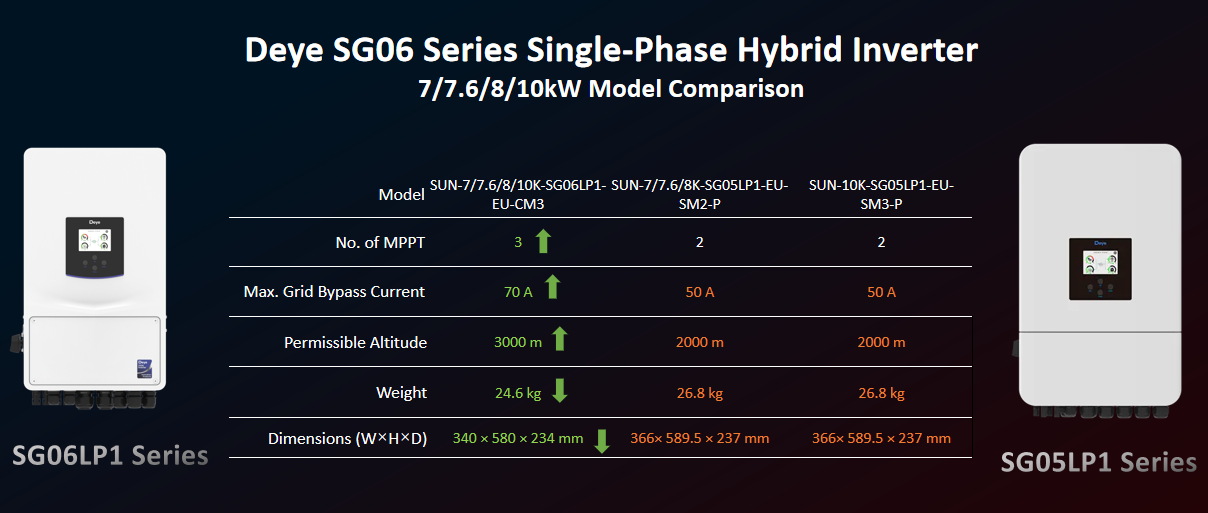
The SG06LP1-CM3 models (7-12kW) run three independent MPP trackers, compared to two on equivalent SG05LP1 units at the same power tier. Each additional tracker is effectively another independent string that can be optimized on its own, rather than being averaged with panels facing a different direction or catching different shade patterns. For a straightforward single-orientation roof, two trackers is plenty. For anything split across multiple planes, understanding how MPPT channels affect string pairing is worth doing before settling on a model, since the wrong tracker count can leave part of an array underperforming for the life of the system.
Putting the Three Factors Together
These three constraints rarely conflict with each other, so there's no real trade-off to weigh — a project either needs the altitude headroom or it doesn't, needs the quieter operation or doesn't, needs the third tracker or doesn't. The practical approach is to check each one against the specific site before comparing anything else on the spec sheet.
Start with altitude, since it's the most binary of the three — either the site clears 2000m or it doesn't. Then check the mounting location against the noise rating, particularly for anything installed inside living space. Finally, map the roof layout against tracker count to confirm the array won't be bottlenecked by string configuration. Working through Deye's full range of hybrid inverters against these three factors first — before comparing headline power ratings — tends to narrow the shortlist faster than starting from the top of a spec sheet.







3+ Branch Offices
1+ Factory
Required fields are marked


Copyright @ Hangzhou Seetek New Energy Sci-tech Co., LtD. All rights reserved Solar Energy Storage Solution Solar Energy Storage Products Supplier
