


 Français
 2026.08.28
BESS EPC in Europe: How EPC Contractors Deliver Battery Storage Projects
Content
Europe crossed a symbolic threshold in 2025: cumulative installed battery energy storage capacity passed 100 GWh, and annual installations grew by roughly 48% over the previous year, according to SolarPower Europe's European Market Outlook for Battery Storage 2026–2030. Every one of those megawatt-hours moved through an EPC contract — engineering, procurement, and construction — before it could earn a single euro of revenue. For developers, installers, and industrial buyers working in this market, the real question is no longer whether BESS demand exists. It is whether the EPC chain, and especially the procurement stage inside it, can hold the schedule that grid connection agreements and revenue models depend on.
This article explains what BESS EPC involves in the European context, where projects typically gain or lose time, and how hardware decisions — cabinet-integrated C&I systems, modular high-voltage batteries, hybrid and string inverters — flow directly into construction and commissioning outcomes.
What BESS EPC Actually Covers in Europe
In a battery storage project, EPC is not three separate tasks loosely stapled together. It is a single delivery responsibility with three disciplines inside it, and the boundaries between them determine who carries risk when something slips.
- Engineering: system sizing against the available grid connection, single-line diagrams, protection and earthing concepts, fire safety and separation distances, civil and cable routing design, and the compliance documentation national grid codes require.
- Procurement: battery enclosures and modules, power conversion, transformers and switchgear, cabling, and monitoring hardware — plus the factory documentation, transport papers, and delivery windows that keep the rest of the plan realistic.
- Construction: foundations and medium-voltage works, enclosure installation, termination and testing, and the witnessed commissioning procedures many distribution system operators require before energisation.
One structural trend matters for planning: across recent European project roundups, EPC and system integration are increasingly awarded together, which pushes hardware compatibility decisions earlier into the contract phase. An EPC contractor that treats procurement as a clerical afterthought usually pays for it during commissioning.
Why European BESS EPC Demand Is Accelerating
The demand signal is unusually clear. Annual European installations grew by about 48% in 2025, cumulative capacity moved past the 100 GWh milestone, and industry initiatives such as the Battery Storage Europe Platform are calling for a tenfold increase in storage by 2030 to support EU energy security goals.
Three forces drive this growth: renewable generation has reached a scale where intermittency must be managed hourly rather than annually; revenue stacking — combining wholesale arbitrage, balancing services, and capacity payments — has matured into a financeable model; and data center power demand is adding load growth that generation alone cannot serve. For teams evaluating the underlying business case, our explainer on the benefits of energy storage battery technology covers how these revenue streams translate into payback.
At project level the pace is visible. Recent EU roundups reported close to 700 MWh of new BESS commissioned across Germany, Estonia, Belgium, Denmark, and Bulgaria, with one developer completing both EPC and integration of two Danish projects totalling 152 MWh inside twelve months. A 2.1 GWh EPC contract award for a flow battery project in Switzerland shows that even long-duration technologies now move through conventional EPC channels. All of this capacity must be built by someone, and in several markets European EPC resources — from grid engineers to commissioning crews — are effectively booked months in advance.
The EPC Delivery Sequence, Stage by Stage
While contracts differ, the delivery logic of a European BESS project follows a recognizable sequence:
- Feasibility and grid pre-application — confirm available connection capacity, export limits, and the revenue model before committing to a design.
- Detailed engineering — single-line diagrams, protection coordination, fire safety concept, foundations, and cable routes.
- Permitting and grid connection agreement — frequently the longest single activity, and one that varies by country and even by network operator.
- Procurement and factory documentation — fix delivery windows, verify certifications and transport papers, and confirm battery–inverter compatibility in writing.
- Construction and installation — civil works, medium-voltage infrastructure, enclosure placement, and DC/AC cabling.
- Commissioning and grid compliance testing — functional tests, communication checks between battery and inverter, and witnessed tests with the network operator.
- Handover and early operation — documentation transfer, monitoring setup, and warranty registration.
Schedules rarely fail at construction. They fail at stages three and four, and at the seam between them: equipment that arrives after the grid connection window, or certification paperwork that arrives after the equipment. A project that misses its commissioned-by date often loses a full trading season of revenue — a cost no EPC margin can absorb.
Procurement Decisions That Make or Break EPC Timelines
Procurement is where engineering intent meets calendar reality, and four decisions matter more than the rest.
- Pre-integrated versus site-assembled. Factory-built cabinets that combine battery modules, power conversion, and control in one enclosure reduce on-site labour, wiring errors, and commissioning risk. Site assembly still makes sense for very large projects, but in the 100 kWh to a few MWh range that dominates European C&I tenders, pre-integrated systems compress the schedule.
- Certification and paperwork. CE marking, IEC 62619 for battery safety, and UN 38.3 for lithium battery transport are not optional line items. Missing documents delay customs clearance and can stall the network operator's witness test.
- Stocking strategy. Direct-from-China shipping gives the best unit economics but the longest, most variable lead time. EU-warehouse stock trades some cost for schedule insurance — see our EU warehouse stock location for what is available on short notice.
- Interface compatibility. A battery and an inverter can each be excellent products and still fail as a pair if communication protocols and voltage windows are not confirmed early. This is where multi-brand distributors, who see which combinations actually ship together, add value beyond the price list.
| Project segment | Typical system size | Primary EPC concern | Hardware approach |
|---|---|---|---|
| Residential and small commercial | 5–50 kWh | Installation speed and installer-friendly documentation | Hybrid inverters paired with low-voltage LFP battery stacks |
| Commercial and industrial (C&I) | 100 kWh–1 MWh | Grid paperwork, delivery certainty, minimal site work | Cabinet-based or all-in-one C&I systems with integrated power conversion |
| Large C&I and utility-scale | 1 MWh and above | Medium-voltage works, transformers, compliance testing | Multiple cabinets or containers with dedicated transformers |
Matching Hardware to Project Scale
The European C&I market has converged on two workhorse formats, and both exist today as shippable products rather than engineering exercises.
The 215 kWh class is the repeatable building block. Systems such as the Deye MS-GS215-2H3 suit logistics hubs, workshops, and retail estates that need standardized, quickly commissioned capacity, and multiple units can be combined where load profiles grow over time.
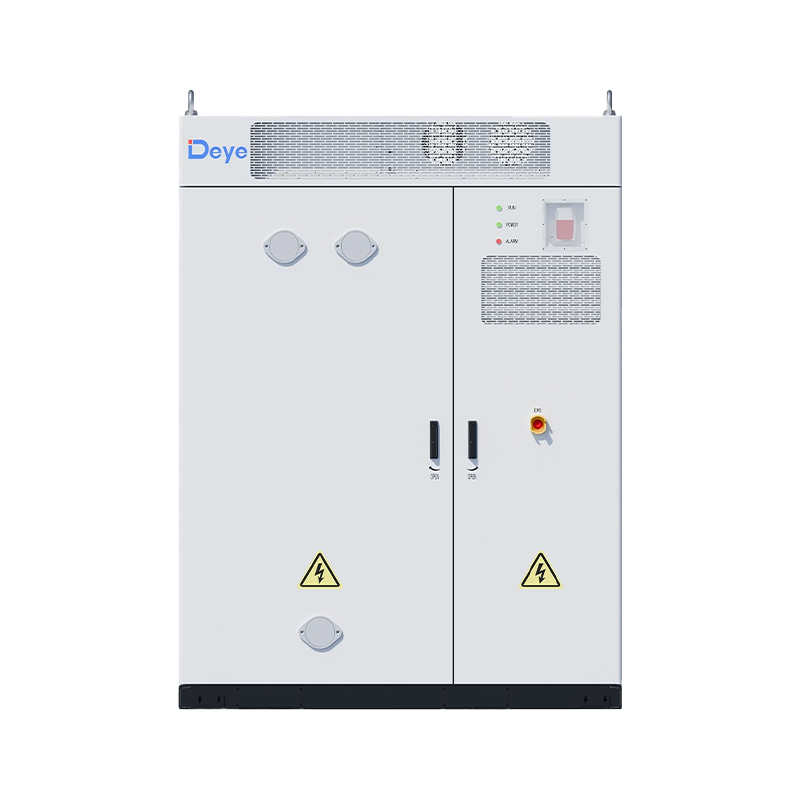 Deye MS-G215-2H3 100kW / 215kWh C&I Storage CabinetThis outdoor battery cabinet offers 215 kWh usable energy with a 100 kW rating, IP54 C5 enclosure, and 88% round-trip efficiency. It suits logistics hubs, workshops, and retail estates needing standardized capacity that can scale as load grows.View Product →
Where a single larger footprint is preferable, the all-in-one 430 kWh format concentrates the same logic into one cabinet. The Deye MC-L430-2H3 targets exactly the middle ground between the 215 kWh block and container-scale utility projects.
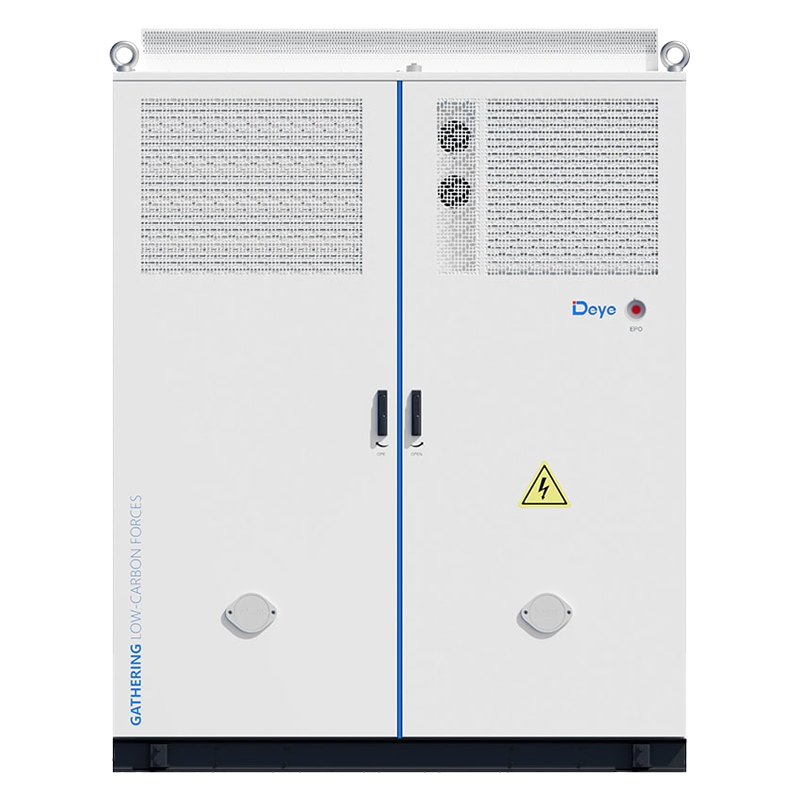 Deye MC-L430-2H3 All-in-One 430 kWh Storage CabinetPositioned between the 215 kWh block and container-scale projects, this integrated cabinet combines PCS, BMS, and EMS in one unit. Fast 10 ms switching and parallel expansion up to eight cabinets make it a solid middle-ground choice for industrial sites.View Product →
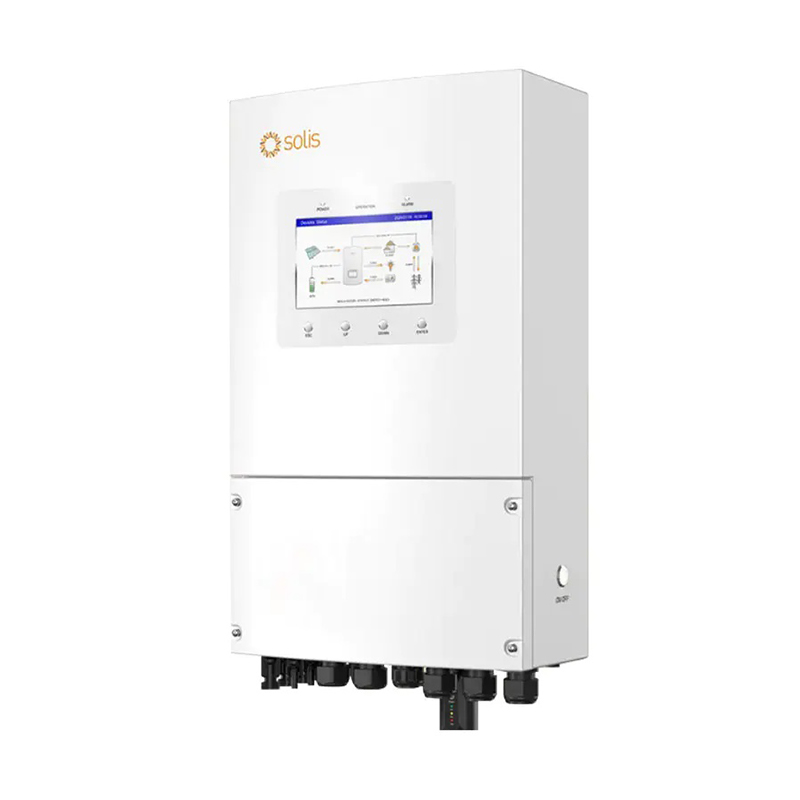
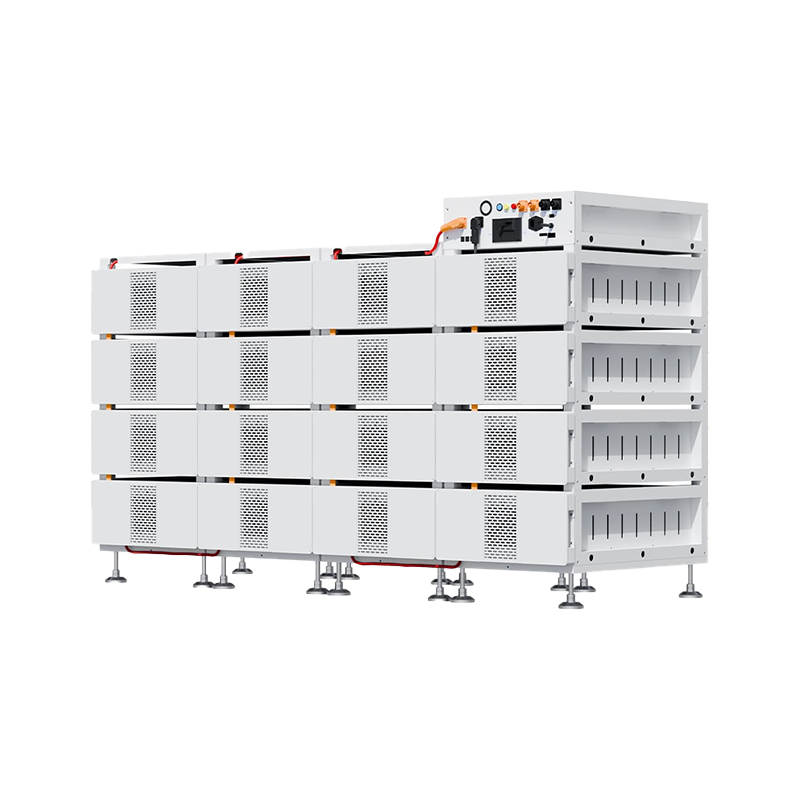
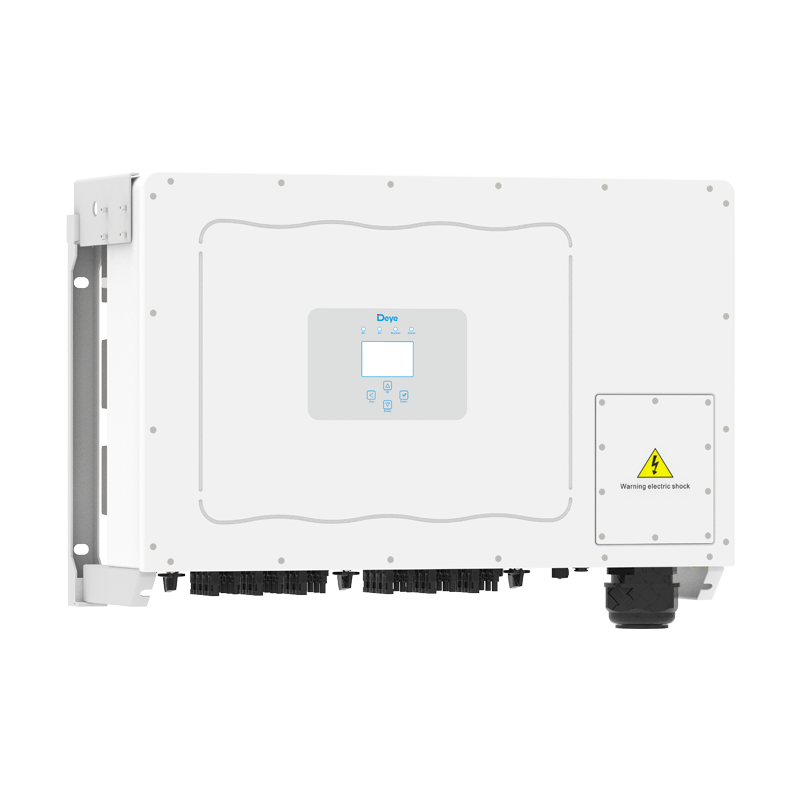
Not every commercial project wants a cabinet. Backup-heavy sites — agricultural operations, cold storage, workshops with unreliable supply — often suit modular high-voltage batteries paired with three-phase hybrid inverters. Deye's BOS-G high-voltage battery system follows this logic and connects to the same hybrid inverter family spanning 5 kW to 80 kW, while the 80–125 kW three-phase string inverters cover the purely grid-connected side of a mixed portfolio.
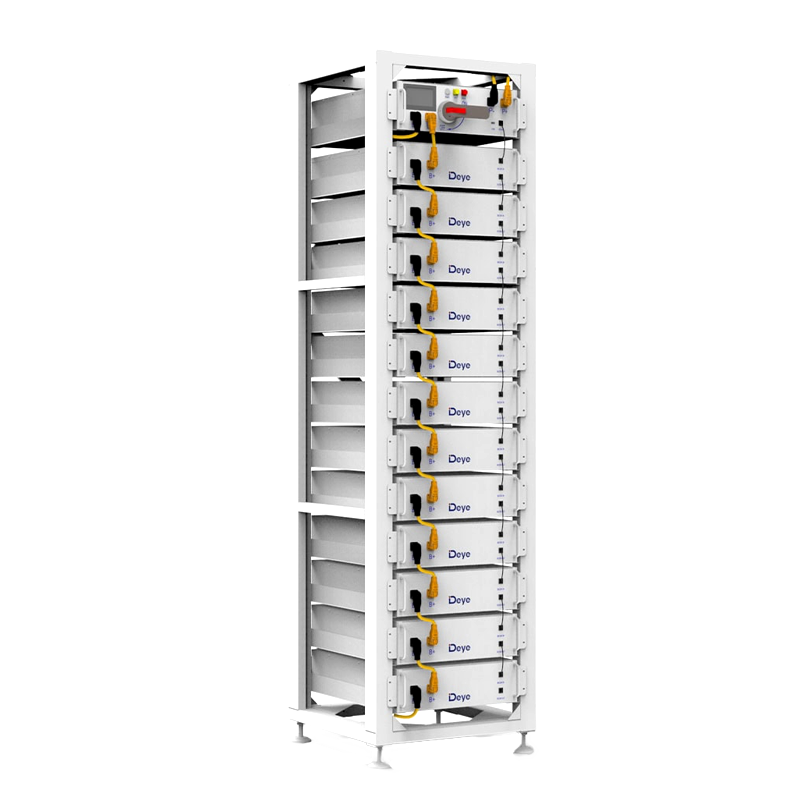 Deye BOS-G Modular High Voltage LFP Battery SystemFor backup-heavy sites that prefer modularity over a cabinet, BOS-G stacks 3–12 LFP modules for roughly 15–61 kWh at high voltage. It pairs with Deye's three-phase hybrid inverters and simplifies wiring through lower current architecture.View Product →
The point for EPC planning is not brand preference; it is that each format carries a different construction and commissioning profile. Cabinet systems trade layout flexibility for schedule certainty. Modular battery-plus-hybrid setups trade some assembly effort for site freedom and easier partial upgrades.
What an EPC Team Should Demand from an Equipment Supplier
- An authorized channel. Warranty claims travel through the distribution chain; buying outside it means the manufacturer never formally met your project.
- Multi-brand coverage across inverters, batteries, panels, and BOS components, so the hardware is matched to the project rather than the project forced onto the hardware.
- Regional stock as genuine schedule insurance, not just a brochure line.
- Commissioning-grade documentation — datasheets, manuals, and grid-relevant certificates — ideally in the languages the site crew actually reads. Manuals published in English, German, and Polish are a practical signal here.
This is the role SEETEK Power occupies in the supply chain. As an authorized Deye distributor, the company supplies the full inverter and storage range alongside multi-brand panels and BOS components, holds stock in EU and US warehouses, and reports more than 1 GWh of storage products delivered and over 15 GW of PV-related supply across ten-plus years in the industry, supported by five international service offices. For an EPC contractor, what matters in those numbers is narrower and more concrete: a supplier that can quote, document, and deliver from inside Europe removes an entire class of schedule risk from the critical path.
European BESS EPC is no longer a niche discipline — it is the delivery mechanism behind a market that added nearly half again its previous annual volume in a single year. Engineering capacity and construction crews exist; the binding constraint is procurement discipline. Freeze the hardware package early, verify certification paperwork before contract award, keep an EU-stock fallback for critical equipment, and align commissioning documentation with the network operator's requirements before the delivery truck is booked. Teams that do these four things consistently are the ones converting Europe's storage targets into energized, revenue-earning assets — and the ones whose next tender references a completed project rather than a promised one.









3+ Branch Offices
1+ Factory
Required fields are marked


Copyright @ Hangzhou Seetek New Energy Sci-tech Co., LtD. All rights reserved Solar Energy Storage Solution Solar Energy Storage Products Supplier
