


 Français
 2026.10.10
BESS Backup Power for Data Centers: A Practical Sizing and Design Guide
Content
- 1 Why Data Centers Are Adding BESS to the Backup Stack
- 2 Where BESS Sits in a Data Center Power Architecture
- 3 What BESS Backup Power Actually Delivers
- 4 Sizing a BESS: Duration, Power, and Load Profile
- 5 Choosing Hardware: Cells, Cabinets, and Integration
- 6 Practical Checks Before You Commit
- 7 Sourcing, Lead Time, and Support
- 8 Bringing It Together
Data centers have never been short of backup options. For decades the recipe has been the same: a utility feed, an automatic transfer switch, a bank of UPS batteries to cover the first few seconds, and diesel generators to cover the hours after that. It works, and it will keep working for a long time. But it is also getting more expensive, harder to permit, and a slightly awkward fit for the load profile a modern GPU cluster actually presents.
That is the gap battery energy storage systems (BESS) have started to fill. In our day-to-day conversations with installers, EPCs, and facility teams, the question is no longer whether storage belongs in a data center. It is how much storage, at which voltage level, and how to make it work alongside the equipment already in the room. The notes below are the ones we usually end up going through together.
Why Data Centers Are Adding BESS to the Backup Stack
Three pressures show up in almost every project we look at.
The first is the shape of the load. AI and high-density compute hardware does not draw power politely. Rack-level demand can swing by hundreds of kilowatts in fractions of a second as training jobs start and stop, while a traditional UPS is designed to ride through an outage, not to smooth a waveform all day. Batteries that respond in milliseconds do both jobs well.
The second is the grid connection. Interconnection queues in many markets now run for years, and available capacity is often the single hardest constraint on expansion. Storage lets an operator serve a larger peak load from the same service entrance, which can defer or remove the need for a second feed.
The third is diesel. Fuel contracts, emissions permits, noise limits, and corporate sustainability targets all point in the same direction. A BESS does not eliminate generators, but it can cut their run hours dramatically and, in some designs, replace one of two units outright.
Where BESS Sits in a Data Center Power Architecture
It helps to stop thinking about "a BESS" and start thinking about layers, because a data center usually ends up with more than one.
The Low-Voltage UPS Layer
This is the traditional position, close to the IT load and measured in seconds to minutes. Modern lithium iron phosphate (LFP) UPS cabinets are smaller, lighter, and more tolerant of high ambient temperatures than the lead-acid strings they replace, and they carry the load across the transfer to generator without dropping a transaction.
The Medium-Voltage Layer
Here the battery sits behind the medium-voltage switchgear, upstream of the UPS. Its job is different: absorb fast power swings, hold the site steady during a grid event, and carry the full facility load for a longer window, often one to four hours. This is where the largest share of new data center storage capacity is being installed.
The Generator and Fuel Layer
Generators remain the long-duration backstop, but their role shifts. With storage in front of them, they start less often, run at a more efficient load point when they do start, and no longer have to be sized for the full instantaneous step of the facility.
What BESS Backup Power Actually Delivers
Stripped of marketing language, the value shows up in a handful of places:
- Ride-through for voltage sags, frequency deviations, and short interruptions that would otherwise push the site onto generators.
- Load smoothing, so UPS batteries and switchgear see a flatter profile and last longer.
- Peak shaving and demand charge management, where tariffs reward a steadier import profile.
- Deferred capacity upgrades, because stored energy can cover peaks the existing feed cannot.
- More renewable content, since on-site solar can be stored and used rather than curtailed.
- Fewer diesel run hours, which helps with permits, local air quality rules, and reporting.
- Optional grid services revenue in markets that pay for fast, controllable response.
Sizing a BESS: Duration, Power, and Load Profile
Sizing starts with the load profile, not the battery datasheet. Collect at least a month of interval data at the point of interconnection, then decide what the storage is really for: ride-through, peak shaving, generator support, or a combination. The table below summarizes how the layers usually compare.
| Layer | Typical duration | Primary job | Typical scale |
|---|---|---|---|
| UPS battery (low voltage) | Seconds to 10 minutes | Protect the IT load during transfer | Rack to room level |
| MV-side BESS | 1 to 4 hours | Load smoothing, sag ride-through, grid interaction | Several MWh and above |
| Behind-the-meter cabinet BESS | 2 to 4 hours | Peak shaving, backup, capacity deferral | 215 kWh to several MWh |
| Diesel generator | Hours to days | Long outage coverage | Site dependent |
Two numbers decide most of the design: the power rating that sets how fast the system can respond, and the usable energy that sets how long it can hold. Round-trip efficiency, depth of discharge, and the auxiliary load of cooling all eat into the second number, so it pays to model them rather than assume them.
Choosing Hardware: Cells, Cabinets, and Integration
LFP chemistry has become the default for this application, for good reasons: thermal stability, cycle life, and a supply chain that has scaled quickly. What differentiates systems now is rarely the cell itself. It is how the battery, the power conversion system, the battery management system, and the switching logic are integrated, and whether the assembly has been tested as one unit rather than as a pile of parts.
For edge sites, colocation halls, and campus-level deployments, cabinet and container products in the 200 kWh to 500 kWh range are usually the most practical building block. They arrive pre-assembled, fit through a standard door or onto a pad, and can be paralleled as the load grows.
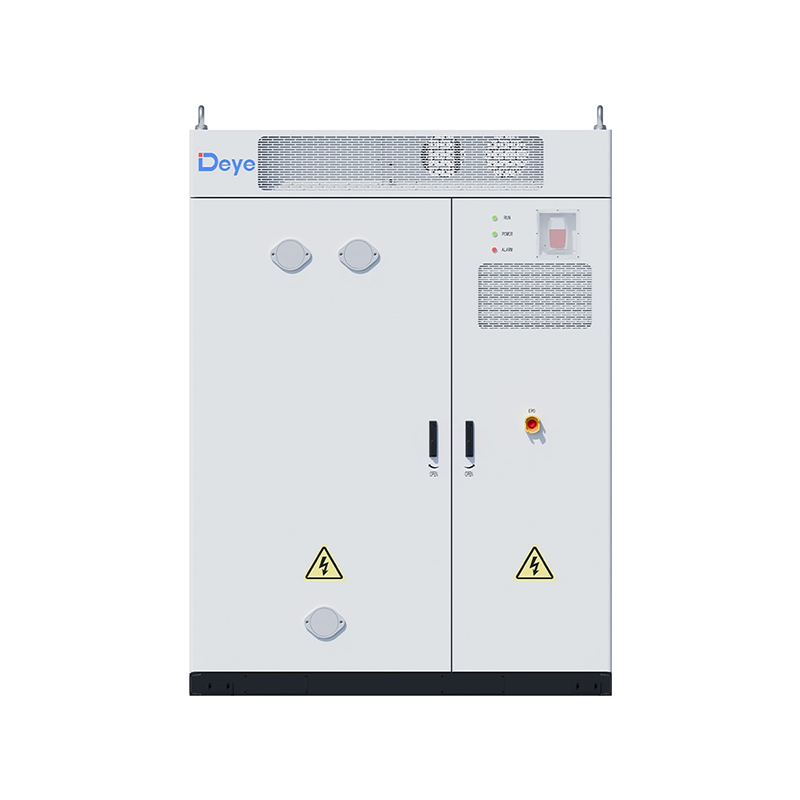 Deye MS-GS215-2H3 Solar and Battery Energy Storage SystemAn integrated PV and battery cabinet for C&I sites, combining 100 kW AC output, 200 kWp PV input, and 215 kWh capacity.View Product →
Where the design calls for rack-based batteries instead of a full cabinet, high-voltage battery systems give more freedom in how the room is laid out. They also let a project start smaller and expand module by module, which matters when the first phase of a data hall opens long before the last one.
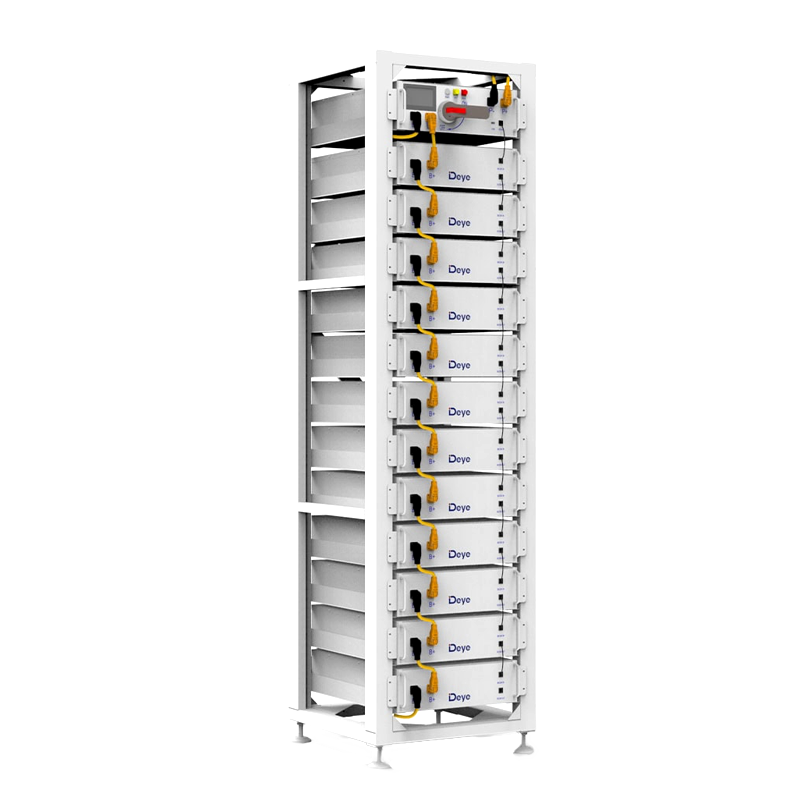 Deye BOS-G Modular High-Voltage LiFePO4 Battery SystemA modular LFP battery platform scaling from 15.36 to 61.44 kWh, suited to rack-based C&I layouts needing higher DC bus voltage and stepwise expansion.View Product →
When a single integrated unit has to handle a larger block of load, all-in-one systems in the 400 kWh class cover a lot of ground, and modular scaling means the same product family can carry a project from a few hundred kilowatt-hours into the megawatt range.
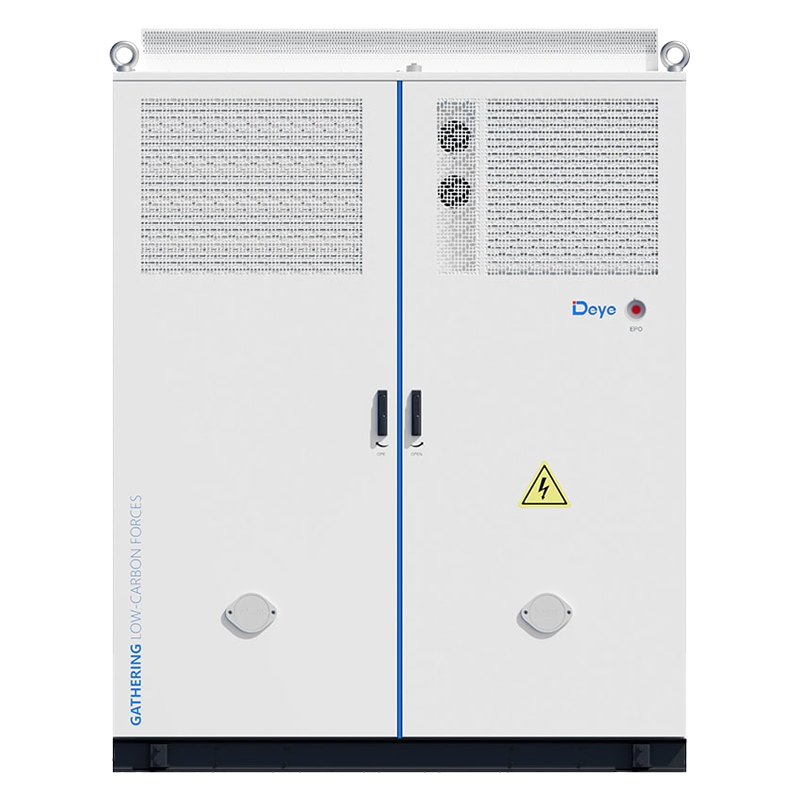 Deye MC-L430-2H3 All-in-One C&I Storage CabinetA 430.08 kWh cabinet integrating PCS, BMS, and EMS, with parallel scaling to eight units for larger C&I loads and resilient backup.View Product →
Integration is where projects are quietly won or lost. We have written up how a modern cabinet brings the energy management system, PCS, BMS, and static transfer switch together in one enclosure, and it is worth reading before you compare quotes, because it explains why two systems with similar nameplate numbers can behave very differently.
See the full breakdown in our note on how EMS, PCS, BMS, and STS work together in one cabinet.
Practical Checks Before You Commit
The engineering is only half the project. These are the items that most often delay a schedule:
- Safety and code path. Fire suppression, separation distances, ventilation, and the applicable regional standard need to be settled with the authority having jurisdiction early.
- Footprint and floor loading. Battery cabinets are heavy; a structural review is cheaper before delivery than after.
- Ambient conditions. Cooling strategy and derating assumptions should match the real room, not the datasheet's best case.
- Controls integration. Confirm the BESS can talk to existing SCADA, EPMS, and building management systems on the protocols they already support.
- Warranty and serviceability. Ask who performs first commissioning, who holds the warranty, and where spare parts sit.
- Lead time and shipping. A realistic delivery plan accounts for cell allocation, cabinet assembly, and freight, not just the quoted production window.
Sourcing, Lead Time, and Support
This is the part of the conversation where we are most useful. SEETEK Power International supplies solar and storage hardware as a one-stop platform, and we hold authorized distributor status with Deye. That means the inverters, batteries, and accessories in a data center or campus design come from the original production line with factory warranty intact, rather than through an anonymous trading chain.
In practice that comes down to three things project teams ask about first. Stock is held across EU and US warehouses as well as direct-from-China channels, so a schedule can be built around what is genuinely available. Technical documentation is provided in the languages local installation teams need. And pre-sales support comes from people who have shipped storage into commercial and industrial sites before, including campus-style loads where a data hall is only part of the picture, which is the scope covered by our work on industrial and commercial parks.
Bringing It Together
BESS backup power for data centers is not a replacement story. It is an addition story: storage placed in front of the UPS and the generator, doing the fast, repetitive work so the older assets can do what they were designed for. Get the load profile right, size power and energy honestly, choose hardware that is integrated and serviceable, and the result is a site that rides through disturbances quietly, defers expensive capacity work, and burns far less diesel along the way.
If you are at the stage of comparing options, send us the load profile and the site constraints. We will tell you what we would install.





3+ Branch Offices
1+ Factory
Required fields are marked


Copyright @ Hangzhou Seetek New Energy Sci-tech Co., LtD. All rights reserved Solar Energy Storage Solution Solar Energy Storage Products Supplier
