


 Français
 2026.09.04
Grid Forming Battery Inverters: Key Specs, Use Cases and Selection Tips
Content
A rooftop solar system in a European suburb keeps a family's refrigerator, heat pump, and lighting running through a two-hour distribution grid outage. That is not a story about off-grid living. It is what happens when a grid-forming battery inverter is paired with the right storage and control strategy. Unlike conventional grid-tied inverters, a grid-forming battery inverter operates as a voltage source, creating its own stable AC reference and actively supporting voltage and frequency when the external grid disappears. For installers and system integrators, this capability changes how they evaluate equipment: instead of asking only how efficiently the inverter converts DC into AC, they now need to know how quickly and precisely it can establish a stable AC waveform when the utility is unavailable.
What Makes a Battery Inverter Grid-Forming?
The distinction between grid-following and grid-forming control determines whether an inverter can keep a system alive during a blackout.
Grid-following inverters act as current sources. They constantly measure the grid voltage and adjust their current output accordingly. When grid frequency drifts outside a preset window, they disconnect. Grid-forming inverters act as voltage sources. They estimate the grid state, then produce an output voltage and frequency that local loads can follow. This allows them to operate autonomously in an islanded network, to contribute to black start sequences, and to provide inertia-like support in weak grid conditions.
A battery inverter is a natural fit for grid-forming control because storage provides the energy required for fast active power response. The inverter converts that stored energy into precise voltage and frequency behavior. Several control concepts fall under the grid-forming umbrella, including droop control, virtual synchronous machine emulation, and virtual impedance shaping. Each approach has different trade-offs in response speed, load sharing behavior, and compatibility with existing grid codes.
For procurement teams, this shifts the evaluation focus from simple conversion efficiency to the unit's ability to form a stable AC waveform within a specified response time. Look for documented performance when the unit runs in island mode with unbalanced loads or non-linear loads such as electric motors and switch-mode power supplies. These are the conditions where practical differences between product families become visible.
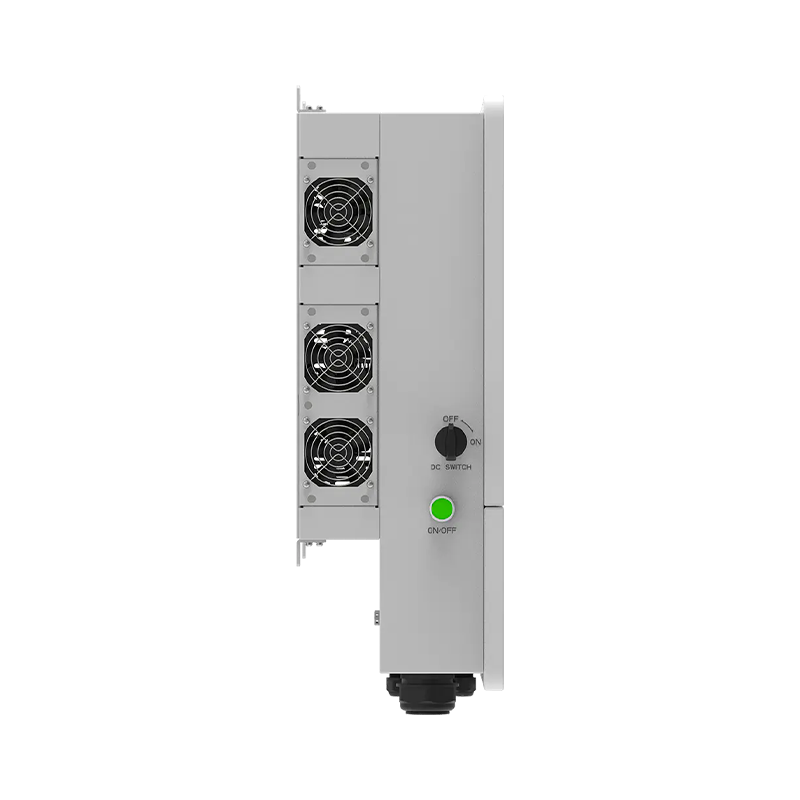 Deye SUN-12K-SG02LP1-EU-AM3 12kW Single-Phase Hybrid Inverter for Low-Voltage BatteriesThis 12kW single-phase hybrid inverter supports 40-60V low-voltage battery systems with up to 250A charge/discharge current, featuring three MPPT trackers and AC coupling capability. Its documented performance under unbalanced and non-linear loads makes it a key candidate for grid-forming applications requiring stable island operation.View Product →
Core Specifications to Compare Before You Buy
Rated AC power is only the starting point. When comparing grid-forming battery inverters, you need to check a broader set of parameters. The table below organizes the specifications that matter for system sizing and commissioning.
| Specification | What It Determines | Typical Range for Battery Inverters |
|---|---|---|
| Rated AC power | How much load the inverter can continuously supply | 5kW to 80kW in single-phase or three-phase models |
| Frequency droop support | Whether the inverter can establish a stable 50Hz/60Hz reference without grid input | ±0.5Hz to ±2Hz droop control ranges |
| Voltage control accuracy | How precisely the inverter maintains output voltage under load changes | Usually ±2% to ±5% of rated voltage |
| Grid-to-island switchover time | How long local loads lose power during transfer | Typically 4ms to 20ms for GFM-capable units |
| Surge power rating | Capacity to start motors or other inrush loads | Often 1.2 to 2 times rated power for 10 seconds |
| Battery voltage platform | Which storage batteries can be connected safely | Low-voltage (48V) or high-voltage (200V+) platforms |
| Operating efficiency | Total energy losses during grid-connected and islanded modes | Typically 95% to 98% peak efficiency |
| Protection rating | Suitability for indoor or outdoor installation environments | IP65 for outdoor, IP20 or higher for indoor units |
Understanding the difference between hybrid and on-grid inverters helps you decide whether a standard grid-tied unit is sufficient for your load profile.
Battery Pairing and System Integration
Grid-forming capability does not belong to the inverter alone. The battery supplies instantaneous active power during the first milliseconds of a disturbance and sustains voltage stability during islanded operation. That makes battery compatibility a primary selection criterion.
The first dimension to evaluate is the voltage platform. Low-voltage batteries, typically 48V, are common in 5kW to 20kW single-phase hybrid systems. They are simpler to install, carry lower upfront cost, and suit residential configurations. High-voltage batteries above 200V are used in larger three-phase systems or high-efficiency setups. They operate at lower current, allowing smaller cabling and reduced losses, but they require more complex BMS communication protocols.
The second dimension is peak discharge capability. A battery's C-rate must cover the inverter's transient demand. If a battery can only sustain 0.5C while the inverter requires double rated power during motor start-up, the system will trip overload protection. Verify both the continuous discharge rate and the short-duration boost curve of the battery against the inverter's surge rating listed in its datasheet.
The third dimension is communication and protection logic. Deye hybrid inverters and Deye batteries communicate through a defined BMS interface. Using matched components from the same manufacturer reduces commissioning time and eliminates many of the compatibility issues that delay projects. If you need to mix brands, insist on a written compatibility statement covering both hardware wiring and software protocol versions.
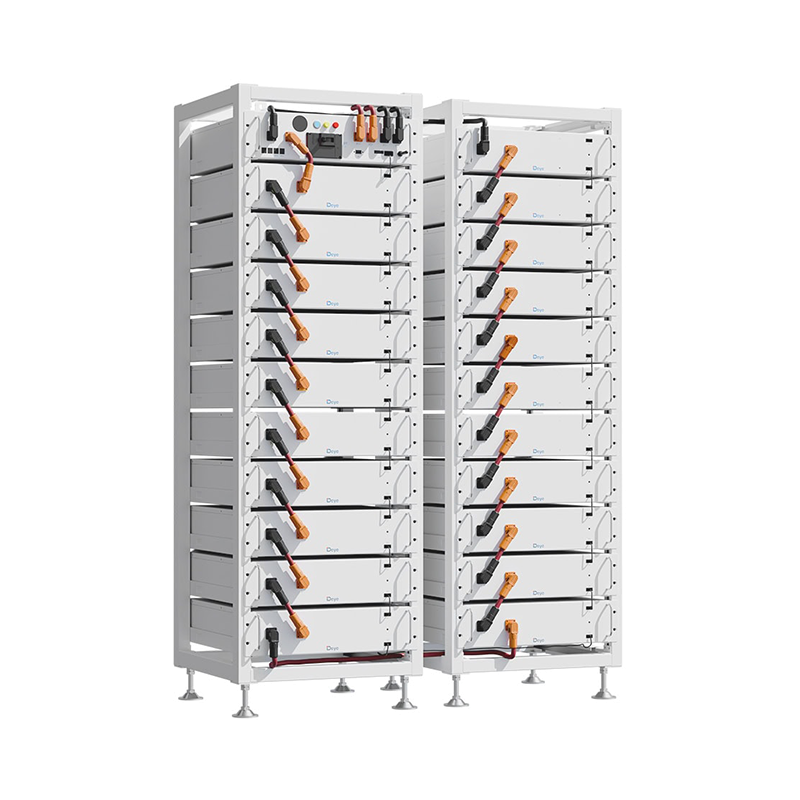
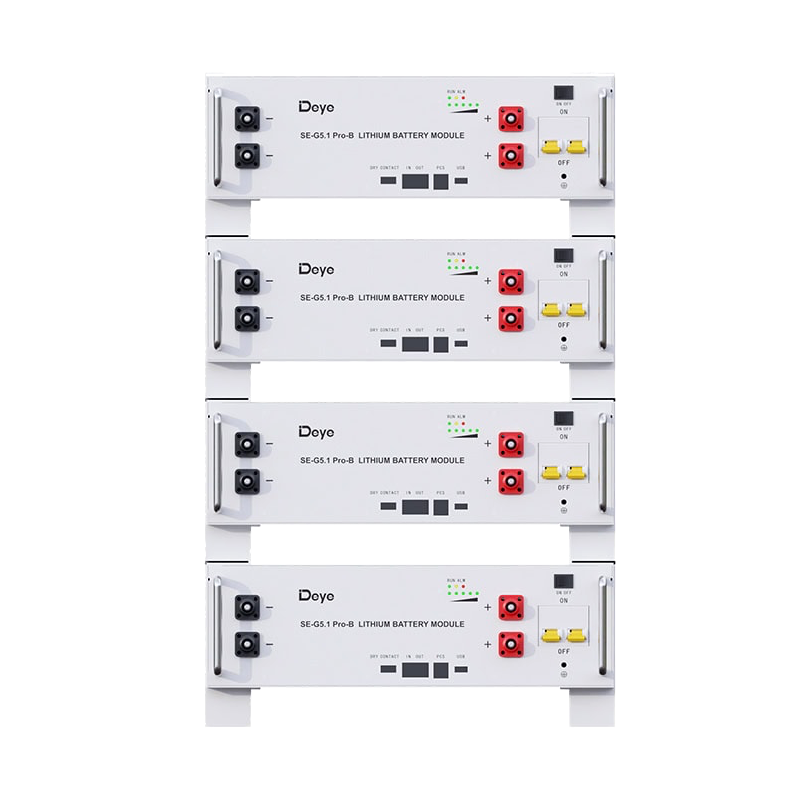
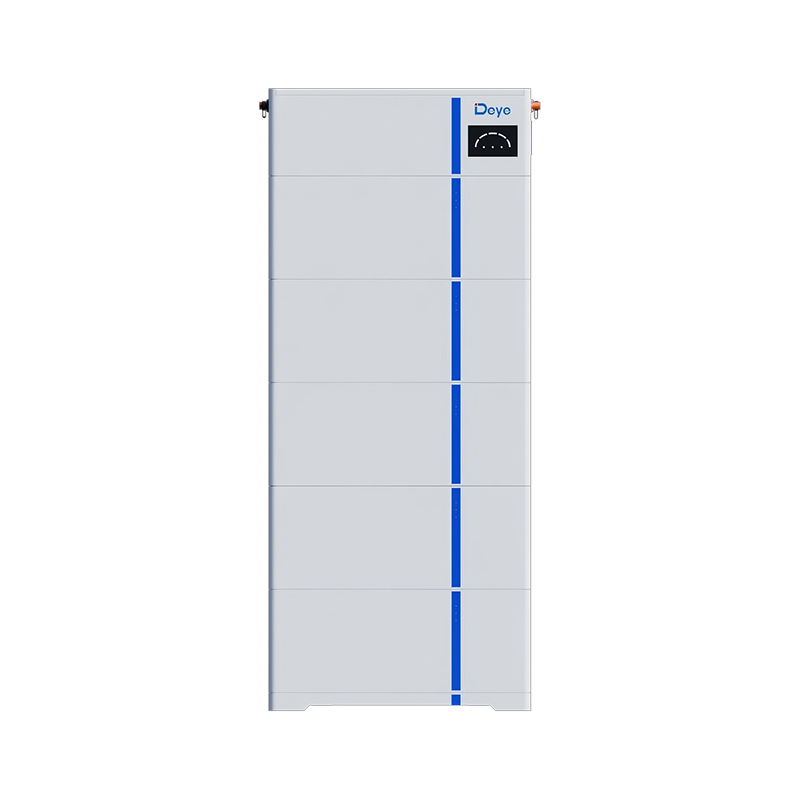 Deye AI-W5.1-B Low-Voltage Battery Module with Stackable DesignA compact 5.1kWh LV LFP battery with 90% usable capacity and 6000-cycle life, designed for modular stacking and IP65 protection. Its CAN2.0/RS485 communication integrates seamlessly with Deye hybrid inverters, reducing commissioning time and ensuring reliable BMS compatibility for residential storage systems.View Product →
Grid-Forming in Commercial and Industrial Projects
Commercial and light industrial facilities usually approach grid-forming technology for three reasons: peak-shaving economics, supply reliability, and renewable energy self-consumption. In these projects, the system must not only back up critical loads during outages but also operate independently for hours and then resynchronize with the utility without disruptive transitions.
Consider a two-hour distribution network fault. A 50kW grid-forming battery inverter paired with 100kWh of storage can supply HVAC, lighting, and safety equipment while maintaining voltage levels across the site. Once the grid returns, the system either synchronizes automatically under the configured grid code logic or switches back to grid-connected mode on its own schedule.
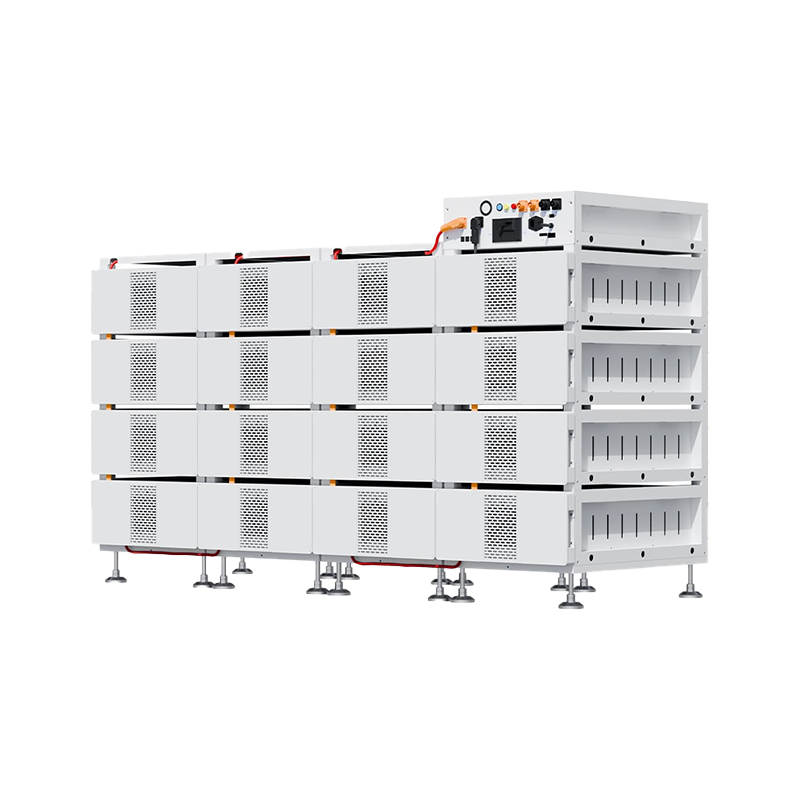
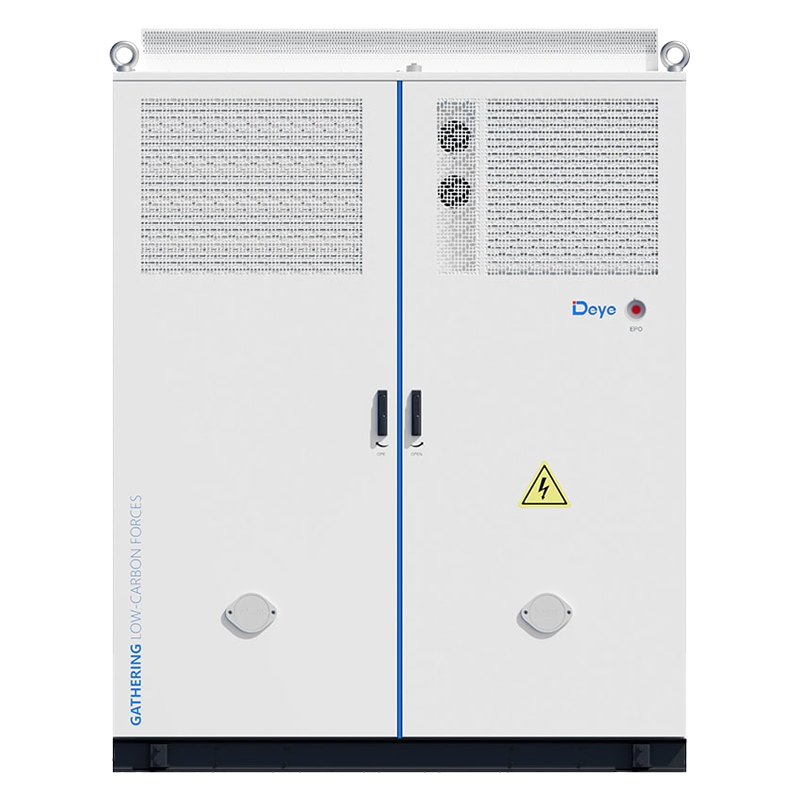 Deye MC-L430-2H3 All-in-One C&I Energy Storage System with 10ms SwitchingThis integrated commercial-industrial storage cabinet combines PCS, BMS, and EMS with built-in fire protection and 10ms grid-to-island switching. Scalable up to 8 parallel units, it supports peak shaving, PV self-consumption, and backup power, making it suitable for microgrids and facilities requiring rapid resynchronization after outages.View Product →
Larger applications require a closer look at three items:
- Storage capacity redundancy: does the system cover the full range from short islanding events to multi-hour autonomous operation?
- Transformer and switchboard modifications: is the installation designed for the short-circuit capacity changes that occur during islanding?
- Protection coordination: can protection settings avoid false trips when the grid returns with an unexpected phase or voltage angle?
Integrated commercial and industrial storage solutions simplify these decisions by packaging battery, power conversion, distribution, and monitoring into a single cabinet designed for grid-forming operation. For facilities that have multiple feeders or sensitive process equipment, a centralized C&I storage unit with grid-forming capability can provide clearer power management compared to distributed residential-scale units.
Procurement Risks and Selection Checkpoints
Sourcing a grid-forming battery inverter involves more than choosing a model from a catalogue. The risks that cause project delays are concentrated in three areas.
Certification and compliance
Grid-forming requirements differ across jurisdictions. European markets typically demand conformity with interconnection standards such as VDE-AR-N 4105, while North American installations reference UL 1741 and IEEE 1547. Confirming that the supplier can provide certificates valid for the installation country is the first step in avoiding acceptance tests that fail late in the project.
Product consistency and quality control
For multi-unit purchases, firmware versions, protection parameters, and operating logic must be identical across the fleet. Mismatched settings cause unequal load sharing when inverters operate in parallel. Favoring one brand and one production batch reduces commissioning uncertainty. Ask the supplier whether they perform batch-level quality checks on firmware version and protection settings before dispatch.
After-sales support and technical information
Grid-forming systems demand more commissioning effort than standard grid-tied inverters. A supplier's ability to provide complete manuals, local-language service, spare parts, and remote fault-log analysis directly influences long-term uptime. A practical way to vet a supplier before purchase is to ask these questions:
- Can the manufacturer supply a test report showing the grid-to-island switchover time for the exact model?
- Are the battery BMS communication protocols listed in writing, avoiding ambiguity during system integration?
- Does the supplier stock the inverter and battery in regional warehouses to meet project lead times and after-sales response targets?
Prioritize units that demonstrate autonomous load-carrying capability, active frequency and voltage support, and proven battery communication protocols during initial evaluation.








3+ Branch Offices
1+ Factory
Required fields are marked


Copyright @ Hangzhou Seetek New Energy Sci-tech Co., LtD. All rights reserved Solar Energy Storage Solution Solar Energy Storage Products Supplier
